

More
July 10, 2020
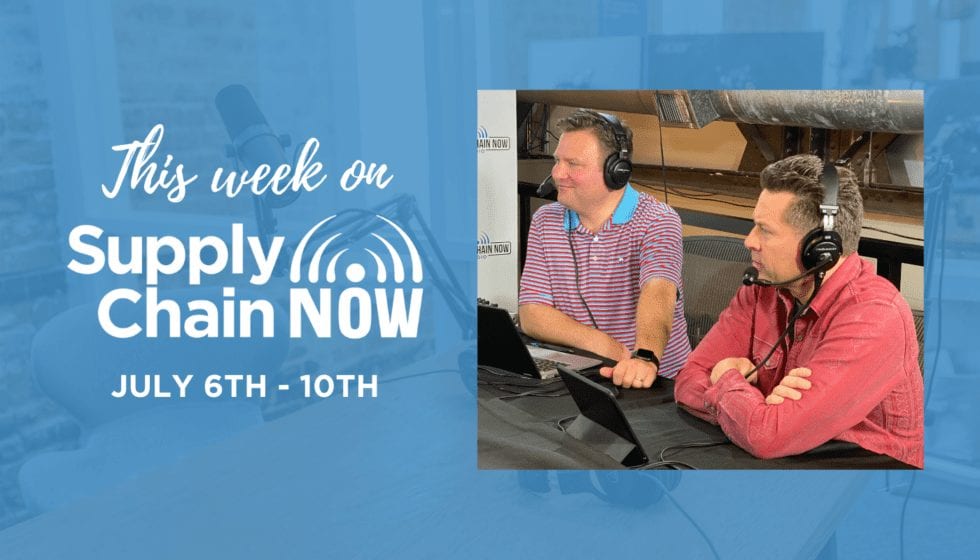
This Week on Supply Chain Now- July 6th – 10th
Another great week here at Supply Chain Now! Did you catch all the episodes? If not, you can check them all out here: We kicked off the week with This Week in Business History, where Scott looks back at some of the biggest historical events in business history for the week ahead, including the birth of the Coca-Cola Company. Supply Chain Now · “This Week in Business History for July 6th: The Birth of the Coca-Cola Company” Then on Tuesday, Scott and Greg welcomed John Buglino with Optessa to the podcast to discuss simplifying and streamlining operations. Supply Chain Now · “Simplifying & Streamlining Operations: John Buglino with Optessa” On Wednesday we published the Supply Chain Buzz, where Greg and Scott discussed the top supply chain news of the week, and were joined by special guest Tevon Taylor, with FedEx Supply Chain. Supply Chain Now · “Supply Chain Buzz for July 6th: Featuring Tevon Taylor with FedEx Supply Chain” On Thursday, we continued our new series, TECHquila Sunrise with Greg White, where Greg shares the latest investments, acquisitions, innovations, and glorious implosions in Supply Chain Tech every week. Supply Chain Now…
warranty management optimization
June 2, 2026
Your Supply Chain Isn’t Broken. Your Data Is.
written by Chris Cunnane with InterSystems Supply chain leaders are under constant pressure to move faster, reduce costs, improve resilience, and respond to disruptions in real time. Yet despite billions invested in technology, many organizations still struggle with stockouts, delayed shipments, excess inventory, and unreliable forecasts. The problem may not be the supply chain itself. It may be the data behind it. Most organizations today operate with more supply chain data than ever before. ERP systems, warehouse management platforms, transportation tools, supplier portals, IoT devices, and analytics dashboards generate a nonstop flow of information. On paper, this should create unprecedented visibility. But visibility is not the same as confidence. When inventory data is delayed, supplier updates are inconsistent, and demand signals are fragmented across systems, organizations are forced to make critical decisions using incomplete or unreliable information. The result is a distorted picture of reality, and costly mistakes follow. Companies expedite shipments they didn’t need. They over-order inventory “just in case.” They miss shortages that were hiding in plain sight. And they spend valuable time reconciling conflicting reports instead of solving problems. The Real Problem: Fragmented Data The challenge isn’t a lack of data. It’s that the data…