

More

inventory
November 18, 2025
From War Rooms to Winning Strategies: How High-Tech Brands Tame Supply Chain Chaos
Special Guest Blog Post written by Jeff Echel and Steve Lykken with e2open Supply chain planners in high-tech don’t just manage shipments; they’re crisis managers, data detectives, and sometimes, referees in a high-stakes game of inventory tug-of-war. Why do these planners find themselves huddled in “war rooms,” surrounded by spreadsheets and urgent emails? It starts with relentless pressure: customers expect rapid, reliable service, but the reality is a maze of long lead times, outsourced manufacturing, and unpredictable global logistics. Securing critical components can take months, and a single misstep, like overstocking or missing a shipment, can ripple through the business, impacting revenue and margins. The chaos: War rooms and spreadsheet battles Add to that, the complexity of forecasting demand. Planners reconcile noisy, inconsistent data from retailers and distributors, often with little visibility, into . Forecasts are built, torn down, and rebuilt, sometimes manually, as teams try to align bottom-up channel data with top-down financial targets. Meanwhile, supply plans are constantly threatened by shortages, excess inventory, and last-minute changes. When demand surges or supply is disrupted, channels compete for limited stock, sometimes “stealing” from each other, and sometimes winning simply by being the loudest voice in the room. All of…
July 31, 2020
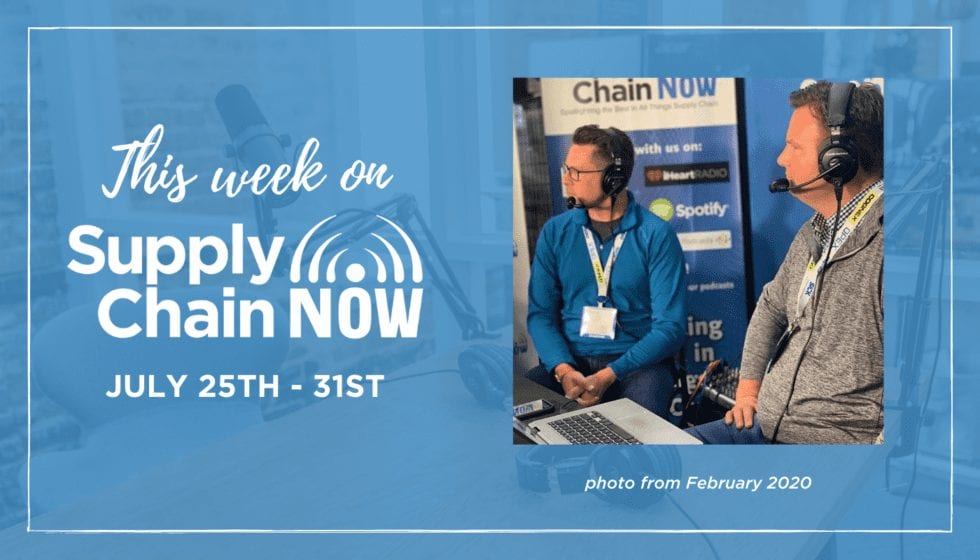
This Week on Supply Chain Now- July 25th – 31st
Did you catch all the episodes from Supply Chain Now this week? If not, get a quick summary and listen here! We added TWO additional episodes this week starting on Saturday, July 25th. We continued our Logistics with Purpose series, sponsored by Vector Global Logistics, and welcomed Kevin Carvajal with Salesian Missions. Supply Chain Now · “Logistics with Purpose: Kevin Carvajal with Salesian Missions” On Sunday, we featured our recent webinar, “Stand Up & Sound Off: A Conversation About Race in Industry,” and welcomed panelists Dyci Sfregola and David Burton to Supply Chain Now. Supply Chain Now · “Stand Up & Sound Off: A Conversation About Race in Industry” We featured another great episode in This Week in Business History on Monday, where Scott looks back at some of the biggest historical events in business history for the week ahead. This week, he spoke about the past, present, and future of the cannabis industry. Supply Chain Now · “This Week in Business History for July 27th: The Past, Present, & Future of the Cannabis Industry” Then on Tuesday, we shared our live-stream with Jeff Cashman of GreyOrange with our podcast audience, as…