
More
fulfillment automation
February 20, 2026
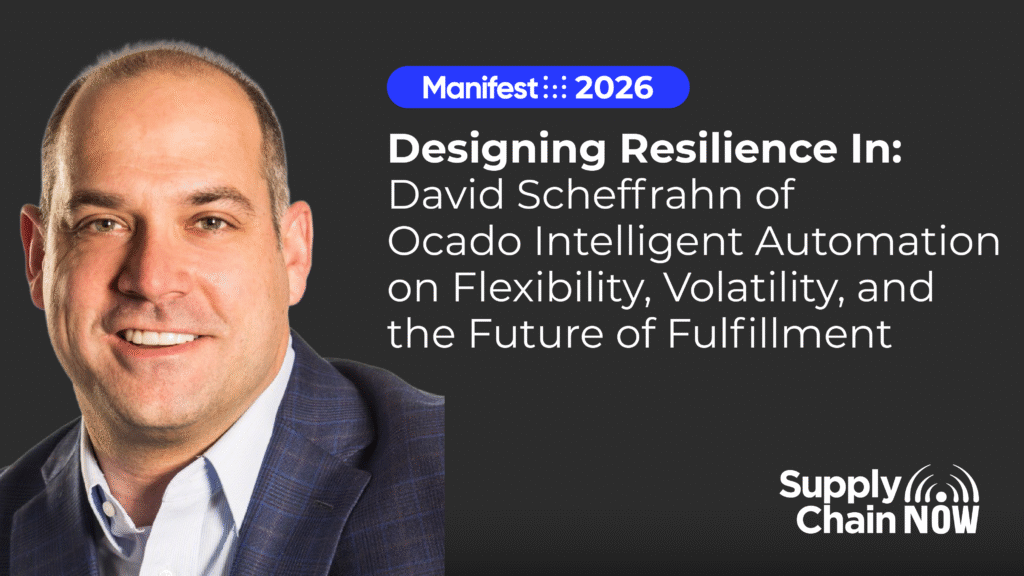
Designing Resilience In: David Scheffrahn of Ocado Intelligent Automation on Flexibility, Volatility, and the Future of Fulfillment
From Grocery Innovator to Global Tech Enabler At Manifest 2026, Scott Luton spent time with David Scheffrahn, Vice President of Sales with Ocado Intelligent Automation, to explore how fulfillment technology is evolving in an era defined by volatility. While Ocado is widely known in the UK and Europe for its e-commerce grocery leadership, Scheffrahn explained that the company’s North American focus is different. Over 25 years of building its own advanced grocery e-commerce and fulfillment operations, Ocado developed a powerful technology stack to drive efficiency. “What we’ve done in the last five years,” he shared, “has taken the tech stack that we built for our own use, and now we’re offering it to other companies to buy and use for their operations.” Today, Ocado supports 3PLs and global brands with end-to-end automation solutions that enable companies to maintain greater control over their omnichannel fulfillment, especially those looking for alternatives to marketplace giants. Volatility Hasn’t Gone Away When asked about dominant supply chain themes heading into 2026, Scheffrahn was direct: “Volatility has not gone away.” He described 2025 as “a massive shock in the system,” with tariffs and shifting trade policies forcing customers to pause projects and reassess strategy. “Almost…
collaborative planning
February 18, 2026
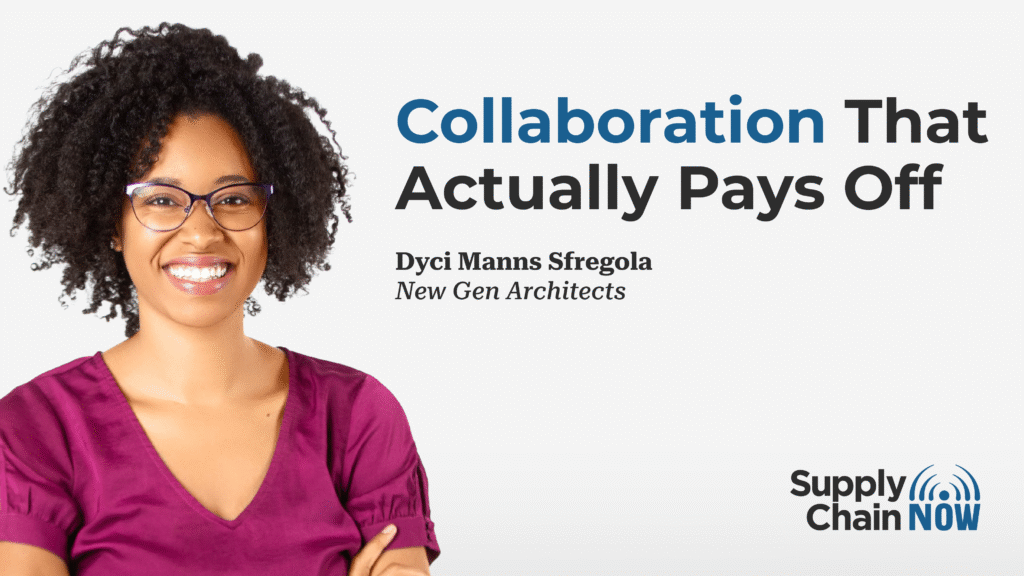
Collaboration That Actually Pays Off
Special Guest Blog Post written by Dyci Sfregola Why planning, procurement, and leadership must move beyond coordination theater Collaboration is one of the most overused (and misunderstood) words in both modern supply chain and construction management. Everyone claims to value it. Few organizations design their operating models to make it work. In a recent conversation, Scott Luton sat down with Dyci Sfregola, author of Next Level Construction Management, to unpack what real collaboration looks like in practice; and why so many well-intentioned efforts fail to deliver measurable results. What “True” Collaborative Planning Really Means According to Sfregola, real collaboration isn’t about more meetings or more dashboards. It’s about working together to create one plan, one set of assumptions, and real tradeoff analysis – – all owned collectively across functions. That includes finance, commercial, marketing, manufacturing, planning, and procurement all working from the same reality. Capacity, labor, cash flow, and constraints are visible. Decisions are documented. Actions actually change what happens next. The most common failure? Confusing information sharing with alignment. Teams often circulate data and emails and call it alignment, but no one in the room has clear decision rights – – or the authority to commit resources…