

More

supply chain planning
December 15, 2025
Uncovering Hidden Costs in Supply Chain Planning: Tom Moore of ProvisionAI on What Companies Miss
In today’s increasingly complex global supply chain landscape, Tom Moore keeps his message refreshingly straightforward: ProvisionAI helps large companies discover hidden costs and eliminate them. Organizations such as Procter & Gamble, Nestlé, and Unilever have leveraged the company’s technology to uncover and eliminate inefficiencies—particularly in transportation and warehousing—that traditional systems fail to detect. The outcome is significant and often delivers immediate savings. But Moore believes many of these problems stem from misunderstandings about the very technologies companies rely on. Misnamed Systems & Misaligned Expectations Before the interview officially began, Moore reflected on the surprisingly inaccurate names assigned to modern supply chain technologies. ERP systems rarely plan resources across the enterprise, despite what their name suggests. Warehouse Management Systems, while certainly used in warehouses, don’t actually “manage” much at all. People behind keyboards still make most of the critical decisions. This disconnect in terminology shapes faulty expectations. Many organizations believe their planning systems will truly plan the supply chain, yet most tools merely react to demand signals. If ABC Company orders ten cases, the system automatically replenishes—without considering warehouse capacity, transportation availability, downstream implications, or cost-to-serve. Moore characterizes this as both an old problem and a new one, and it…
November 6, 2020
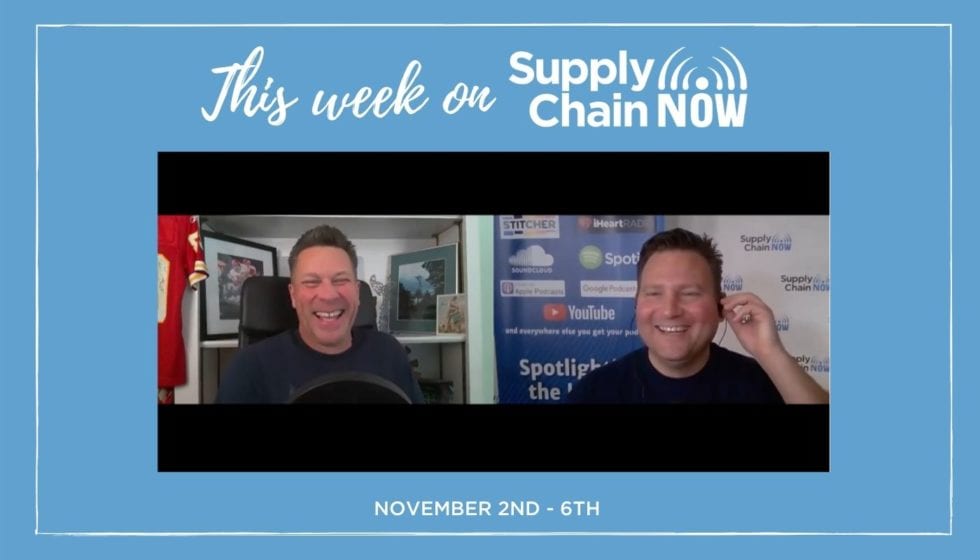
This Week on Supply Chain Now: October 31st – November 6th
Get ready to increase your supply chain IQ! Check out all the latest episodes, interviews, conversations, and livestreams from this week right here! On Saturday, Karin Bursa welcomed Manda Hunt from the Empty Stocking Fund to TEK TOK to talk about how the organization transformed from a brick and mortar model to an online virtual gift selection. On Sunday, Scott and Greg welcomed Mark Morley from OpenText to the podcast to share his key observations in the latest supply chain tech. On Monday’s podcast episode, Wasim Munayyer from the Munayyer Group joined Jamin on Logistics & Beyond to talk about the three traits needed to succeed when it comes to optimizing technology in the freight space & the importance of leveraging available resources and information related to tech. On Tuesday, Scott Luton and special co-host Page Siplon with TeamOne Logistics welcome an esteemed panel of mental health advocates on the podcast: John Hearn with The Benefit Company and established healthcare leader, Yinka Ajirotutu. On Wednesday, Scott Luton and Greg White welcome Eric Olson with Total Quality Logistics and Bobby Holland with U.S. Bank to talk about the U.S. Bank Freight Payment Index.…