

More
supply chain thought leadership
February 19, 2026
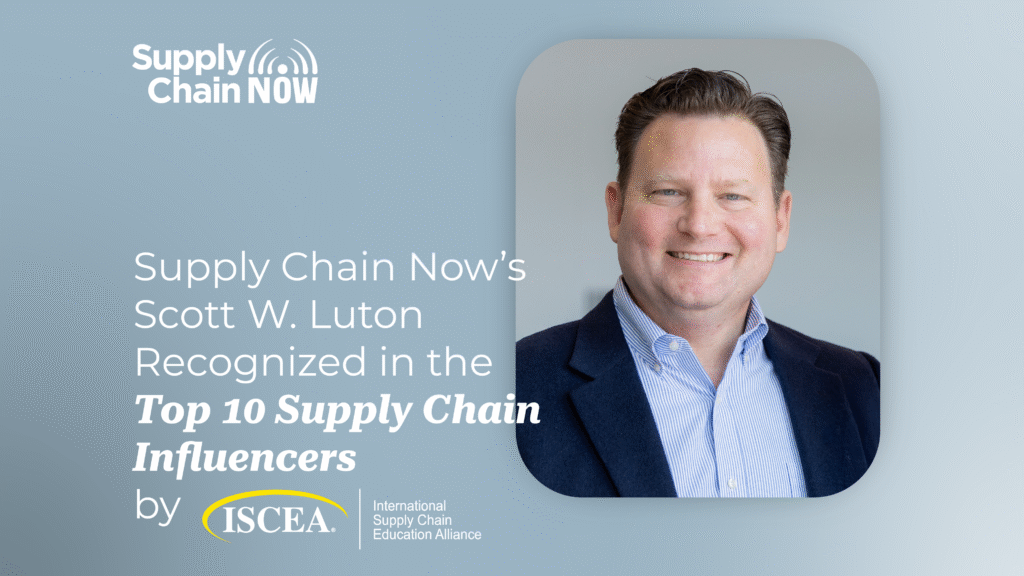
Supply Chain Now’s Scott Luton Recognized in the Top 10 Supply Chain Influencers by ISCEA
We’re proud to celebrate another industry recognition for Supply Chain Now Founder, CEO, and Host Scott Luton – he has been named one of the ISCEA Top 10 Supply Chain Influencers of 2026. The International Supply Chain Education Alliance (ISCEA) highlights leaders who actively shape the profession by sharing research, perspectives, and practical insights that help advance the global supply chain conversation. (ISCEA) Scott’s inclusion reflects the spirit of the Supply Chain Now community: real conversations, practical takeaways, and a commitment to connecting practitioners across industries and roles. Through interviews, events, and ongoing dialogue with leaders around the world, his goal has always been to amplify voices and help move the industry forward together. We’re grateful to our listeners, partners, and guests; this recognition belongs to the entire community that shows up and shares knowledge every day. Check out the entire list and learn more about ISCEA here.
May 14, 2025
How to Scale Operations Without Scaling Your Payroll
In a world where customer demands are rising and budgets are tightening, operational leaders face a tough mandate: scale faster, deliver more — all without growing the team. If you’re feeling the pressure to expand capabilities without expanding payroll, this eBook is your roadmap to making it happen. “How to Scale Operations Without Scaling Your Payroll” is a practical, executive-ready eBook from OrderEase that explores how modern logistics leaders are optimizing performance, increasing output, and driving growth — all without adding to their headcount. Download this ebook to: Get a blueprint for smarter scaling in a tight labor market Learn how to stretch your team’s impact without overworking them Discover smart automation – Learn how to turn messy emails and PDFs into structured data that flows seamlessly into your systems. Whether you’re a logistics leader, operations executive, or eCommerce manager, this eBook will help you take your operations further — efficiently, sustainably, and strategically. Download the ebook here to learn more