

More
February 14, 2021
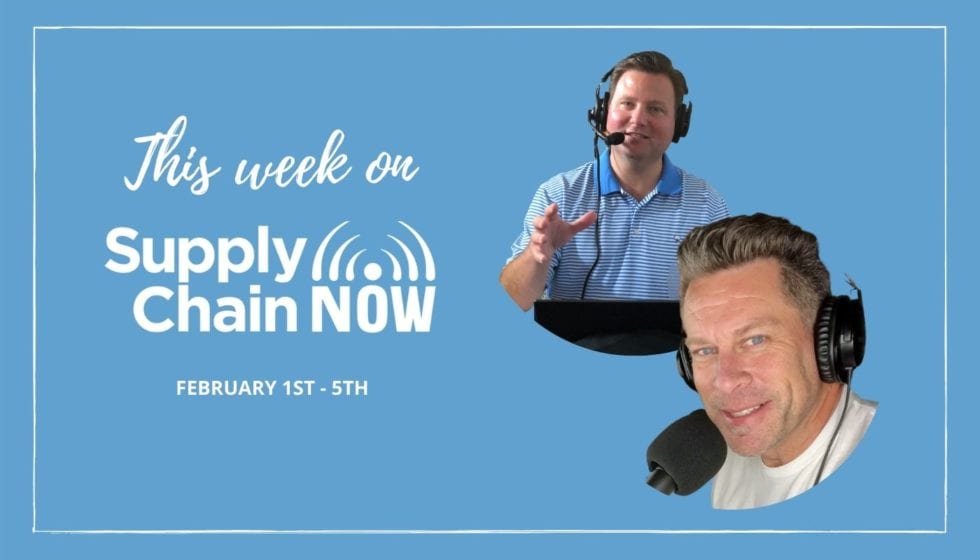
This Week on Supply Chain Now: February 1st – 5th
Hot off the Press! We’ve got all the latest news in supply chain this week right here. Read up and make sure you’re in the know about everything happening here on Supply Chain Now, including all the latest podcasts, livestreams, & more! On Monday, Supply Chain Now hosts Jeff Miller (Supply Chain Is The Business) and Jamin Alvidrez (Logistics and Beyond!) sat down with Wayne Cragg – a professional driver, photographer and social media influencer. On Tuesday, Bobby Holland from U.S. Bank and Frank Hurst of Roadrunner Freight shared the results of the on the Q4 2020 report, interpreting what they may mean for the economy and the shipping industry in the short and longer term with Greg White and Scott Luton On Wednesday, Mario Rivera of ID Logistics joined the Supply Chain Now podcast to talk about creative, real-world problem solving with Co-hosts Greg White and Scott Luton On Thursday, Scott, Greg, & Karin sat down with Lee Klaskow from Bloomberg Intelligence, one of the leading industry analysts, especially as it relates to logistics and transportation On Friday, Scott Luton tackled a variety of developments including from this past week on the…
content creation
October 16, 2025
Breaking Through: The Power of Supply Chain Podcasts
In a world of constant digital noise, marketing leaders need more than impressions—they need attention, trust, and measurable results. Supply chain podcasts have emerged as one of the most effective ways to achieve that, offering a platform to extend your reach to hard-to-access decision-makers, build authentic thought leadership, drive demand and generate qualified leads, and strengthen both brand recognition and visibility. Inside This White Paper, You’ll Learn: Why 80% of podcast listeners take action after hearing an ad—and how to leverage that to drive pipeline. How to usestorytelling to humanize your brandand create lasting audience loyalty. Proven ways podcasts canelevate brand awareness, support sales enablement, and accelerate deal cycles. Four key stepsto producing standout podcasts that deliver measurable ROI. Real-world success storiesfrom leading brands like Mattel, Colgate-Palmolive, Georgia-Pacific, and more. DOWNLOAD NOW