

More
warranty management optimization
June 2, 2026
Your Supply Chain Isn’t Broken. Your Data Is.
written by Chris Cunnane with InterSystems Supply chain leaders are under constant pressure to move faster, reduce costs, improve resilience, and respond to disruptions in real time. Yet despite billions invested in technology, many organizations still struggle with stockouts, delayed shipments, excess inventory, and unreliable forecasts. The problem may not be the supply chain itself. It may be the data behind it. Most organizations today operate with more supply chain data than ever before. ERP systems, warehouse management platforms, transportation tools, supplier portals, IoT devices, and analytics dashboards generate a nonstop flow of information. On paper, this should create unprecedented visibility. But visibility is not the same as confidence. When inventory data is delayed, supplier updates are inconsistent, and demand signals are fragmented across systems, organizations are forced to make critical decisions using incomplete or unreliable information. The result is a distorted picture of reality, and costly mistakes follow. Companies expedite shipments they didn’t need. They over-order inventory “just in case.” They miss shortages that were hiding in plain sight. And they spend valuable time reconciling conflicting reports instead of solving problems. The Real Problem: Fragmented Data The challenge isn’t a lack of data. It’s that the data…
execution
May 1, 2026
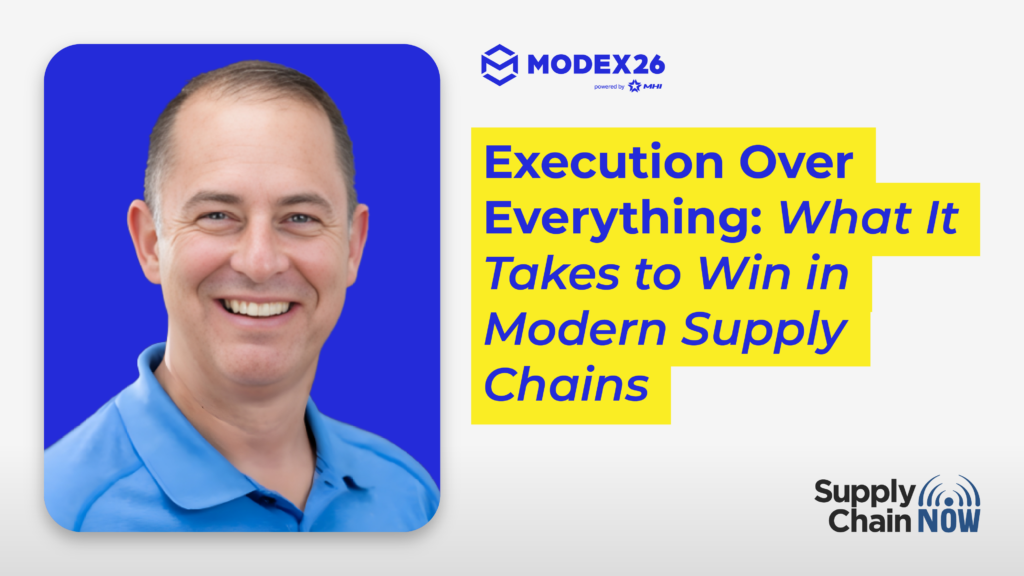
Execution Over Everything: What It Takes to Win in Modern Supply Chains
At MODEX 2026 in Atlanta, Scott Luton sat down with Tevon Taylor, Senior Vice President of Contract Logistics at Pegasus Logistics Group, for a candid conversation about what’s really driving success (and failure) in today’s supply chains. From tariffs and AI to warehouse inefficiencies and leadership mindset, Taylor’s perspective cuts through the noise with a simple truth: technology matters, but execution matters more. Disruption Is the New Normal If there’s one constant in 2026, it’s disruption. Tariffs, geopolitical uncertainty, and shifting trade lanes are no longer occasional challenges. They’re baked into the system. “You can’t stick to the old methods of running your supply chain. You must constantly find new ways to gain resilience,” Taylor explains. That resilience starts with flexibility. Companies that rely on rigid, linear networks are increasingly vulnerable. Instead, supply chain leaders must rethink how they design and operate their networks. Taylor emphasizes the need for multi-threaded strategies: nearshoring, domestic sourcing, and diversified transportation routes. In short, supply chains must evolve from static systems into adaptable ecosystems. AI Is More of a Requirement Than a Buzzword While some technologies come and go as industry cliches or flavor of the month, Taylor is clear that artificial…