

More

supply chain planning
January 16, 2026
Breaking Down Silos and Gaining Speed: Manhattan Associates on Unifying Planning and Execution
At the Gartner Supply Chain Planning Summit in Denver, Scott Luton sat down with two leaders from Manhattan Associates—Brett Lindner, Director of Product for Supply Chain Planning, and Ryan Gifford—Senior Director of Strategic Business Development. Together, the conversations painted a clear picture of one of the most persistent challenges in supply chain—and one of the biggest opportunities ahead: unifying planning and execution to drive agility, visibility, and better outcomes. A Unified View of the Supply Chain Manhattan Associates is widely known for its strength in supply chain execution, spanning warehouse management, transportation management, labor management, and order management. As both Lindner and Gifford emphasized, what differentiates Manhattan today is its unified platform that brings execution and planning together—not as loosely connected systems, but as a single, cohesive foundation. Lindner explained that Manhattan helps companies model and design their future supply chains, enabling better planning decisions that directly inform execution. Gifford echoed that point, describing Manhattan’s approach as “two formerly siloed applications now dancing in unison”—all driven by a shared inventory and decision framework. The Old Problem That Won’t Go Away: Silos When asked about old and new challenges in supply chain planning, both leaders pointed to the same…
September 17, 2021
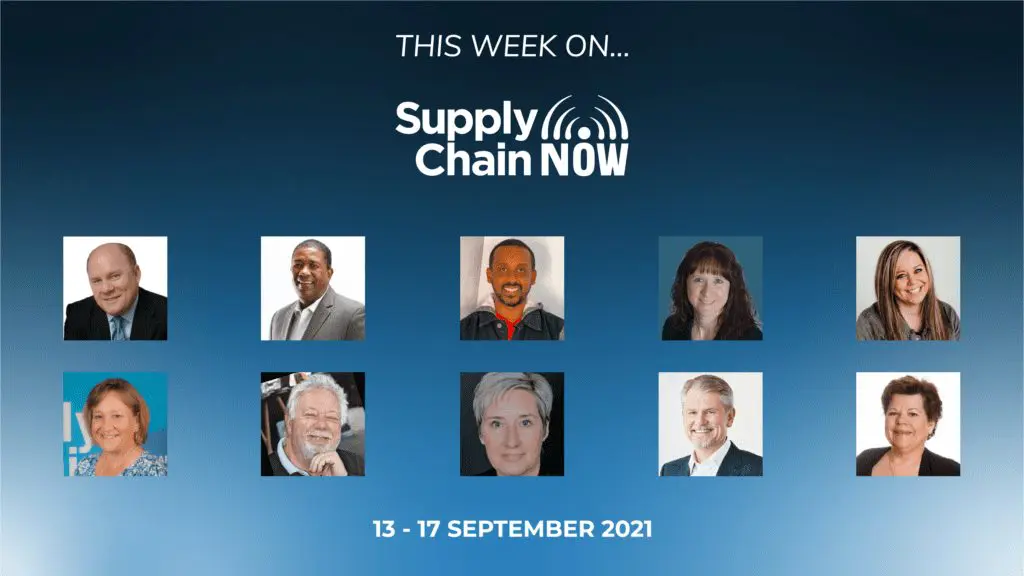
This Week In Supply Chain Now: September 13th – September 17th
Stay up to date on all the latest conversations, interviews, and episodes we released this week here at Supply Chain Now! On Monday we started the week off with an episode of Supply Chain Now with Scott Luton and TEKTOK host Karin Bursa! The two welcomed COO of SAPICS, Jenny Froome, and the Business Development Executive at SAPICS, Tonya Lamb. On Tuesday, we published a new episode of This Week In Business History with host Kelly Barner. On Tuesday, Scott reflects on the 2021 global summit with Lora Cecere, Kelly Barner, and Kevin L. Jackson. These four talk about some of the most impactful conversations that happened during the event, including effective leadership and how it goes hand in hand with supply chain planning, and more. On Wednesday we released an episode of Logistics With Purpose. This episode features Henok Berhanu, Founder & CEO of Carry 117, and Ashley Bohinc, Executive Director of Carry 117. On Thursday we published a new episode of the Freight Insider with host Page Siplon. Page welcomed Christian Fischer, President and CEO of Georgia Pacific, to the show. On Friday, we published the podcast version of our Monday Supply Chain Buzz livestream, with special guest,…