

More
circular economy
April 3, 2026
Are You Sure Consumers Are the Unlock for Circularity?
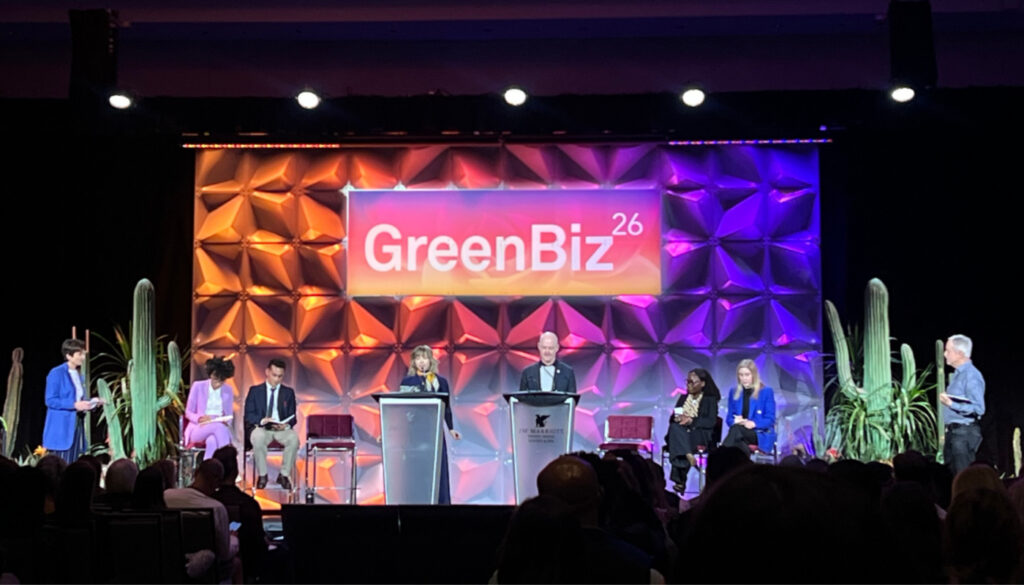
written by Deborah Dull, on site at GreenBiz 2026 One of the most repeated excuses in the circular economy space is that American consumers just do not care enough. They will not sort their waste. They will not pay a premium for sustainable products. They will not participate in take-back programs. Europe is different, the story goes. Americans are a lost cause. Today I sat through a panel where that story got taken apart, piece by piece, with actual data. On this panel were Tom Szaky the CEO at TerraCycle and Loop, Gary Lewis the CEO at Resourcify, Rob Whitter the Head of Climate and Sustainability at Visa, and Casper Venbjerg Hansen the Senior Director of Sustainability Risk & Compliance for Ambu A/S; all facilitated by Lauren Phipps of MOLG. A company that runs in-store recycling programs across more than a million locations in 20 countries looked at their numbers. Whether someone was bringing back a wetsuit in Japan, cosmetics in France, or gear in the United States, the behavior was statistically identical. You could not tell the countries apart. American consumers who chose to participate were participating at the exact same rate as everyone else. Then there was…
shipping
February 6, 2026
Boxed for Success: How FabFItFun Saved Millions with EasyPost Enterprise + MagicLogic
As customization and volume surged, FabFitFun partnered with EasyPost Enterprise and MagicLogic to eliminate waste, reduce costs, and scale shipping with confidence. As FabFitFun evolved from curated to fully customizable subscription boxes, shipping complexity—and cost—rose quickly. Larger cartons, mixed ecommerce orders, and reliance on a single carrier network made it difficult to scale efficiently without sacrificing margins or speed. By implementing intelligent cartonization through MagicLogic and multi-carrier rate shopping via EasyPost Enterprise, FabFitFun transformed its fulfillment operation—cutting waste, improving resilience, and unlocking multimillion-dollar savings in record time. What You’ll Learn in This Case Study How FabFitFun eliminated 80% of overboxing through right-sized packaging How multi-carrier rate shopping drove millions in quarterly shipping savings Why cartonization delivered ROI in less than one week How enterprise shippers can reduce costs without slowing down growth This case study shows how enterprise brands can turn shipping from a cost center into a competitive advantage—delivering immediate financial impact, operational efficiency, and long-term scalability. Download the case study to see how FabFitFun did it—and what’s possible for your operation. DOWNLOAD NOW