
More

inventory write-offs
August 20, 2026
Stop Material Risk Before It Becomes a Write-Off
Manufacturers across chemicals, life sciences, and consumer packaged goods lose more than $120 billion annually through inventory write-offs, but those losses are often the end result of material risks that began months earlier. Forecast changes, supplier delays, quality events, aging inventory, and shifting production priorities can quietly compound into shortages, excess inventory, scrap, and lost margin when they aren’t identified and addressed early enough. The State of Material Risk & Recovery explores how leading batch manufacturers are moving beyond traditional inventory management to identify risk earlier, coordinate decisions across functions, and protect the value of materials throughout their lifecycle. Discover the Prevent, Mitigate, Recover framework and how AI-enabled decision intelligence can help teams connect signals across systems, understand root causes, prioritize the highest-impact actions, and intervene before operational risk becomes financial loss. Download the report to learn how to: Spot material risk earlier, before it turns into excess and obsolete inventory, production disruption, or a write-off. Close the gap between ERP visibility and actionable decisions by understanding not just what happened, but why and what to do next. Apply the Prevent, Mitigate, Recover framework to improve material readiness and unlock more recovery opportunities. Use AI to turn scattered signals into…
August 20, 2021
This Week In Supply Chain Now: August 16th – 20th
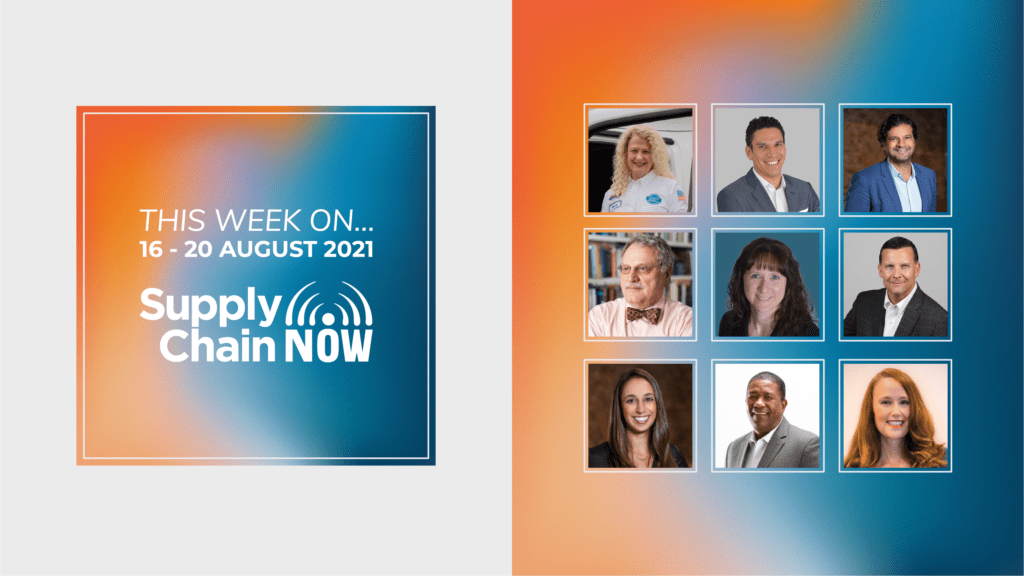
Stay up to date on all the latest conversations, interviews, and episodes we released this week here at Supply Chain Now. On Monday we released a Supply Chain Now episode with special guest, VP of UPS Ocean Freight, Steve McMichael. During this episode, Steve gives some insightful information on how companies can manage more effectively so that their operations can run in a more timely manner. On This Week in Business History, Kelly Barner talks about the difficulties that came along with Laying the First Transatlantic Telegraph Cable across the Atlantic Ocean. On Monday we also re-released a classic Supply Chain Now en Español episode with Erique Alverez and special guest, Josue Vasquez. In this episode of Logistics With Purpose hosts Enriquez Alvarez and Kristi Porter have a conversation with MAP International Vice President of Global Giving, Jodi Allison. She talks about the global impact that the company has had when it comes to the necessary efforts needed for a crisis such as COVID-19. On Wednesday’s episode of Supply Chain Now, Scott Luton and Greg White welcome Walmart truck driver, April Coolidge, to the show. During this episode, she gives insight into her being a woman in a male-dominated field…