

More
leadership development
July 30, 2026
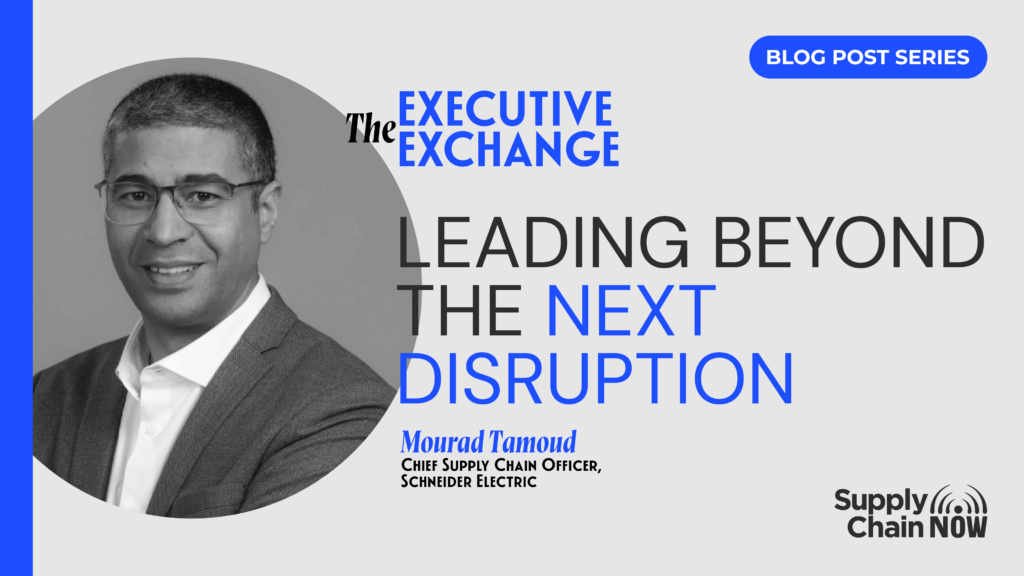
Leading Beyond The Next Disruption
Over the past three decades, supply chain has transformed from a back-office function focused on efficiency into one of the most strategic capabilities in business. Few leaders have witnessed (and helped shape) that evolution more closely than Mourad Tamoud, Chief Supply Chain Officer at Schneider Electric. In a recent conversation with Scott Luton, Tamoud shared lessons from a career that began as a factory-floor intern and now spans global leadership. His perspective offers a compelling roadmap for organizations navigating AI, digital transformation, resilience, and the ever-changing demands of global supply chains. Supply Chain Has Become a Strategic Function Looking back on his early days at Schneider Electric, Tamoud noted just how dramatically the profession has changed. “When I started, I was coached with the understanding that supply chain was all about the ‘Just in Time’ approach and focused on cost reduction,” he said. “Today, supply chain sits at the center of business strategy. It is about supporting growth, anticipating resilience with agility.” That evolution has also reshaped leadership itself. “My biggest lesson has been that leadership is less about having all the answers and more about defining a long-term vision and building great teams, listening and helping people succeed. That’s…
Reuters Events Supply Chain
May 21, 2026
Supply Chains That Bend, Not Break
This post is written in partnership with Reuters Events: Supply Chain. Reuters Events connects the world’s most senior supply chain leaders through conferences, research, and digital content. Learn more: events.reutersevents.com/supply-chain/usa When decisions cannot keep pace with change There is a moment most planning leaders recognise right now: A tariff announcement lands. A carrier pulls capacity. Demand accelerates faster than the forecast adjusts. The decision window compresses, and by the time there is confidence in the data, the cost of delay is already building. These pressures across supply chains are not new. What has changed is the speed at which conditions move underneath a decision, often faster than organisations are set up to respond. Customer expectations do not flex when supply does not. The cost of a wrong call, whether inventory in the wrong market, capacity committed too early, or service levels slipping before anyone flags them, compounds quickly. Most organisations have responded by investing. Better tools. More data. AI pilots. Network reviews. The core problem persists: decisions are still being made without full confidence. Planning and execution do not align when conditions change. In many cases, the issue is not disruption itself. It is how long organisations take to…