

More
MODEX 2026
May 11, 2026
Beyond the Robot: Why Software Is Driving the Next Wave of Warehouse Automation
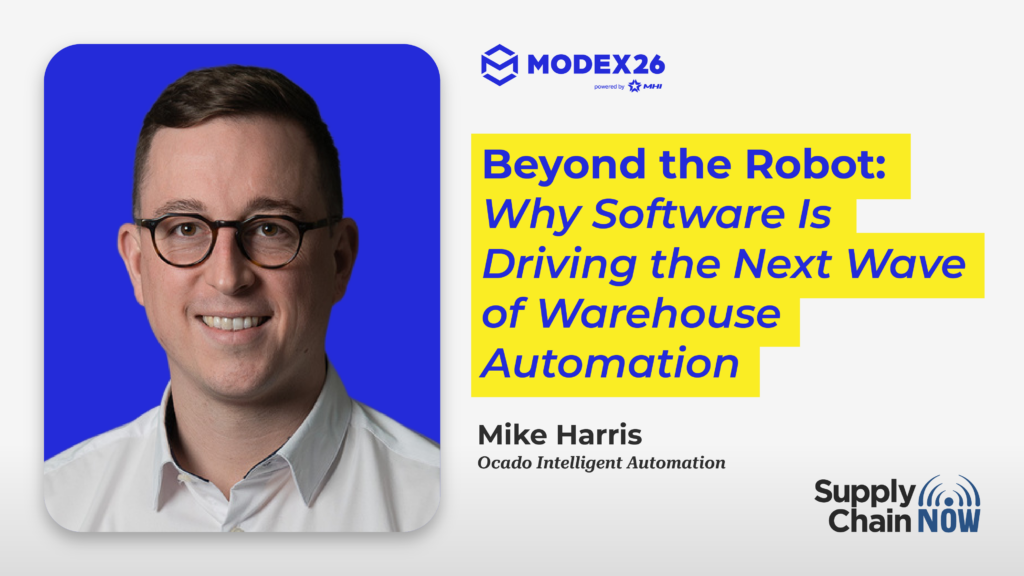
At MODEX 2026 in Atlanta, Scott Luton caught up with Mike Harris, VP of OMRS at Ocado Intelligent Automation, to explore how robotics, software, and evolving customer expectations are reshaping modern warehouse operations. While robots may grab the spotlight, Harris makes it clear: the real value lies beneath the surface, as in the intelligence that powers them. Rising Expectations and the Cost-to-Serve Challenge Warehouse operators are under increasing pressure from both ends of the supply chain. Costs continue to climb, while customer expectations are rising just as quickly. “Cost to serve is continuing to increase and customers expect things faster and completely accurate” Harris explains. This dynamic creates a constant balancing act. Organizations must improve speed and accuracy while controlling costs, a challenge that requires more than incremental improvements. It demands smarter, more adaptive systems. Flexibility and Long-Term Thinking Take Center Stage In today’s volatile environment, Harris sees a clear shift in how companies approach automation investments. “We’re finding that customers are looking to invest in technologies and partners that they want to stay with for a while,” he notes. Rather than chasing one-off solutions, organizations are prioritizing long-term partnerships and scalable platforms that can evolve with their…
June 4, 2021
This Week In Supply Chain Now: May 31st – June 4th
Check out everything that’s been happening at Supply Chain Now! We’re looking back on all the latest conversations, interviews, and episodes right here. On Monday, we released a special Memorial Day episode of Veteran Voices, hosts Scott W. Luton and Kelly Barner share their own personal messages, including what Memorial Day means to them and a few examples of those incredible individuals that sacrificed it all for others. On Tuesday, we released 2 new episodes! On this TEKTOK Classic Episode, host Karin Bursa speaks with Lora Cecere, CEO of Supply Chain Insights and industry trailblazer, about her career journey. On TECHquila Sunrise, host Greg White continues his conversation with Jack Freeman of PeakSpan Capital, discussing the current investment environment for supply chain tech. On Wednesday, Dr. Marcell Vollmer with Boston Consulting Group and Jacob Gorm Larsen with Maersk Group joined hosts Kelly Barner and Scott Luton on Dial P for Procurement to discuss digital procurement transformation. On Thursday, we released this week’s episode of The Supply Chain Buzz, powered by OpenText. In this episode, Supply Chain Now Co-hosts Greg White and Scott Luton are joined by Kelly Barner (Host of Dial P for Procurement) to talk about the 2021 Supply…