

More
November 12, 2021
This Week In Supply Chain Now: November 8th – November 12th
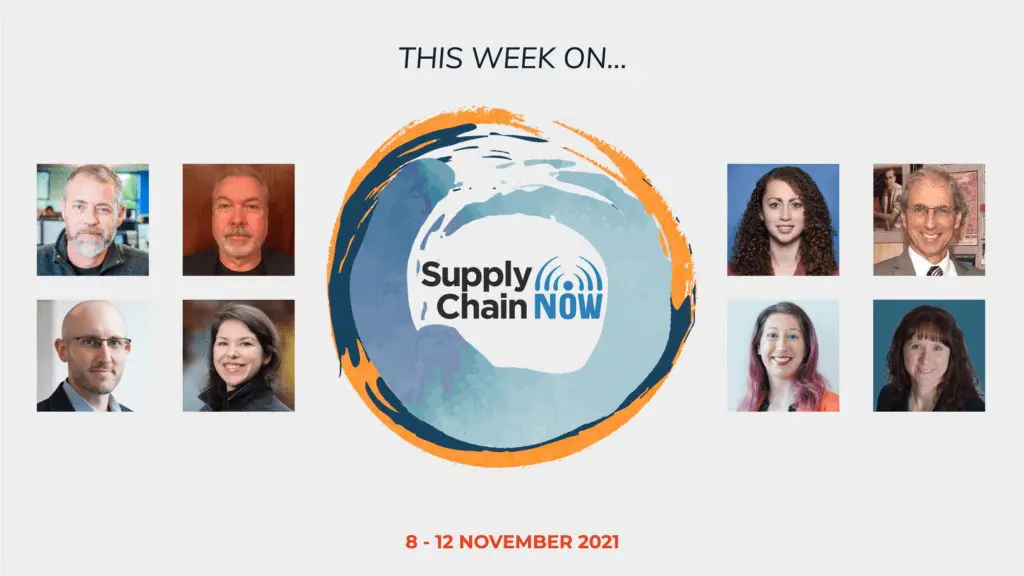
Stay up to date on all the latest conversations, interviews, and episodes we released this week here at Supply Chain Now! We started this week off with a very special episode of Supply Chain Now. Host Scott Luton and special co-host Allison Giddens get to converse with a pair of very powerful women in the manufacturing business. Scott and Allison talk with Stacey Schroeder the President and Founder of EVelop; and the Value Improvement Project Engineer at Polaris Industries, Coral Huffmaster. Together they discuss the Key Takeaways from the 2021 Women in Manufacturing Summit. For Monday’s This Week In Business History episode, Kelly Barner explores a car invention that was created over 120 years ago. On Tuesday, we released a new episode of Supply Chain Now with Scott Luton and Greg White. This episode features two of Manhattan Associates’ reputable representatives. Rob Schaefer the Vice President of Transportation Management Sales and Gregg Lanyard the Director of Product Management for Manhattan Associates. During this episode, they all offer their perspectives on the supply chain outlook for 2022. On Wednesday we released an episode of Logistics With Purpose with host Enrique Alvarez and Kristi Porter. This episode features Michael Broidy the Senior…
AI
September 25, 2025
The 3 Critical Questions Enterprise Shippers Ask Me About AI
Special Guest Blog Post written by Matt McKinney, Co-Founder and CEO of Loop I spend most of my time with supply chain and innovation leaders at major enterprises who are sitting on significant AI budgets but struggling to show measurable business impact in an increasingly complex and volatile supply chain environment. These conversations have evolved dramatically. A year ago, executives were asking basic questions about AI feasibility. Today, the questions have shifted to strategic implementation at enterprise scale. Based on hundreds of these discussions, three questions consistently emerge that separate companies making transformational progress from those stuck in pilot purgatory. How do we move from AI experiments to enterprise-scale impact? Most organizations have yet to see organization-wide, bottom-line impact from AI use. This is the strategic challenge keeping C-suite leaders awake at night. The problem isn’t the technology. It’s the application of the technology. Too many enterprises are trying to treat AI like a magic wand they can bolt onto existing systems. But garbage in, garbage out. If your underlying data is fragmented and inconsistent, AI won’t solve your problems; in fact they’ll get worse. At its core, anything automated is powered by…