

More
global supply chain
January 29, 2026
Constant Supply Chain Disruption Promises to Keep Logistics Entertaining, Exciting, & Challenging
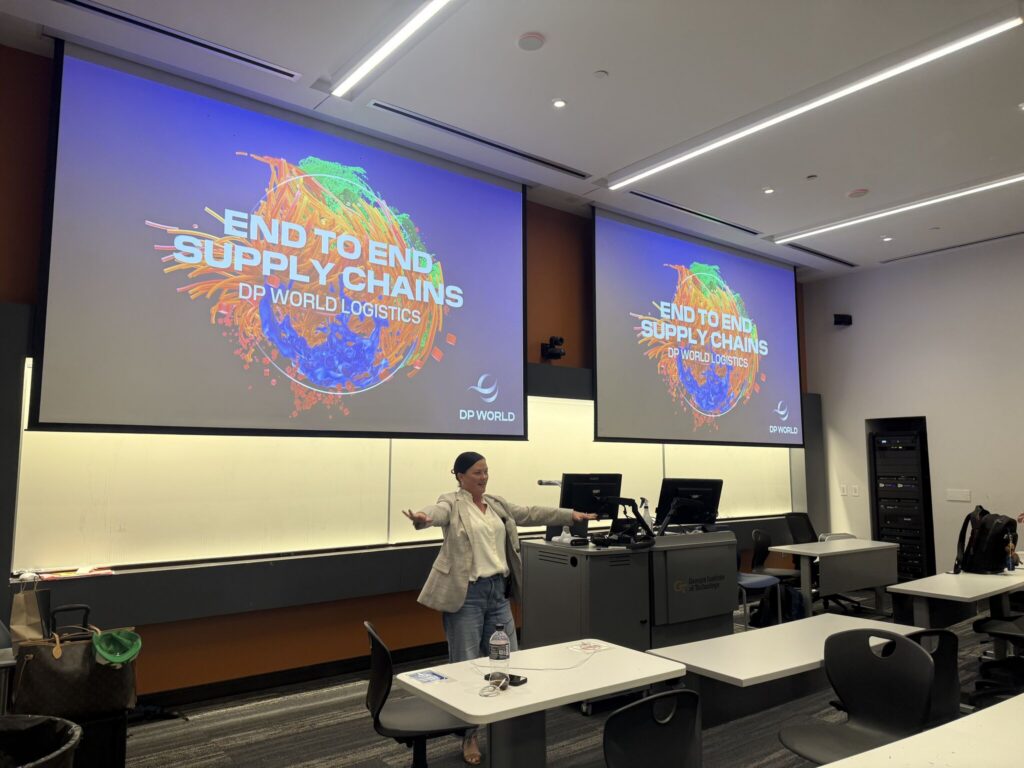
Special Guest Blog Post written by Brittany Caskey, Chief Commercial Officer – Logistics with DP World Americas I was recently invited to speak with students in the Supply Chain and Logistics Organization at Georgia Tech, and it reminded me why I still find this industry so energizing. I walked them through my own path — starting in logistics right out of college, building my foundation at UPS in sales and sales management, and eventually stepping into my role today as Chief Operating Officer at DP World in the Americas. What I shared with them is something I still believe deeply: logistics keeps life interesting, because no two days are ever the same. Customer expectations change. Geopolitical realities shift. Trade lanes evolve. Weather, labor, technology — everything is in constant motion. That constant change is what keeps logistics professionals sharp and solutions focused. It’s also why customer experience has become the true differentiator in today’s supply chains. Because while disruption is unavoidable, how you manage it is a choice. Customers Don’t Care Why — They Care That It Works One message I emphasized with the students is the same one I reinforce with customers and teams every day: customers…
AI in supply chain
March 2, 2026
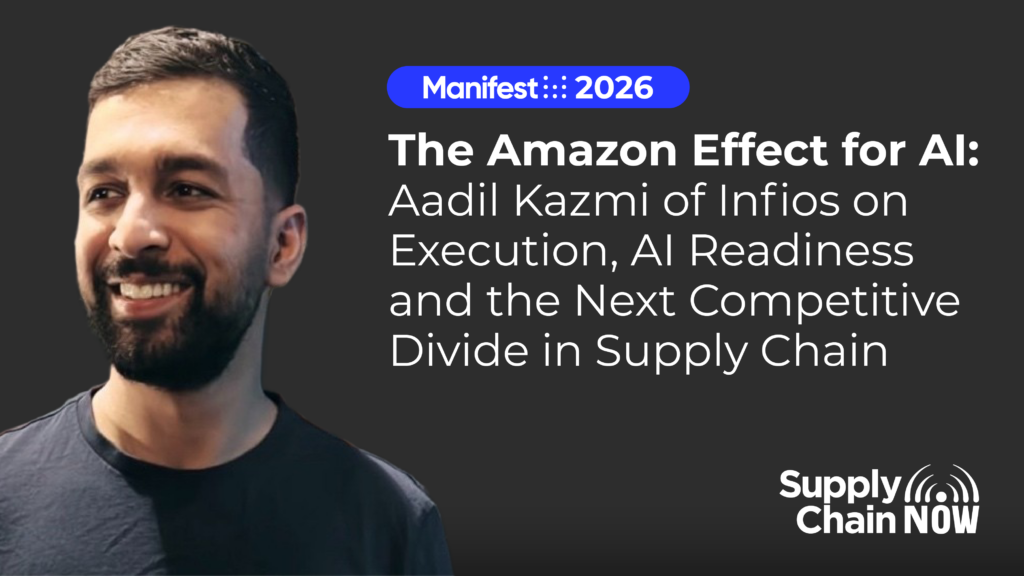
The Amazon Effect for AI: Aadil Kazmi of Infios on Execution, AI Readiness and the Next Competitive Divide in Supply Chain
Execution Is Everything At Manifest 2026, Scott Luton spoke with Aadil Kazmi, Head of AI at Infios, to discuss the next chapter of intelligent supply chain execution. Infios provides an integrated suite of supply chain execution software: order management, warehouse management, and transportation management – all running on a single data model. “When a supply chain runs on a single data model, you can make better decisions,” Kazmi explained. Fragmented systems require expensive data lakes and normalization efforts before even basic BI is possible. An integrated ecosystem simplifies intelligence from the start. For Kazmi, AI is not about flashy demos. But rather, it is about execution. The most advanced technologies mean little if companies cannot execute faster, smarter, and more resiliently in the real world. Disruption Isn’t Going Away Reflecting on 2025, Kazmi did not sugarcoat reality. Ports closed. Trade wars escalated. Wildfires disrupted domestic production. Shipping lanes tightened. “We don’t believe that supply chain disruptions are going away anytime soon,” he said. Volatility is becoming the baseline, not the exception. But what is changing in 2026 is mindset. Kazmi describes what he calls the “Amazon effect for AI.” Just as Amazon forced retailers to rethink last-mile execution a…