

More
November 6, 2025
Leading Transformation in the AI Era: Why Digital Success Starts with People
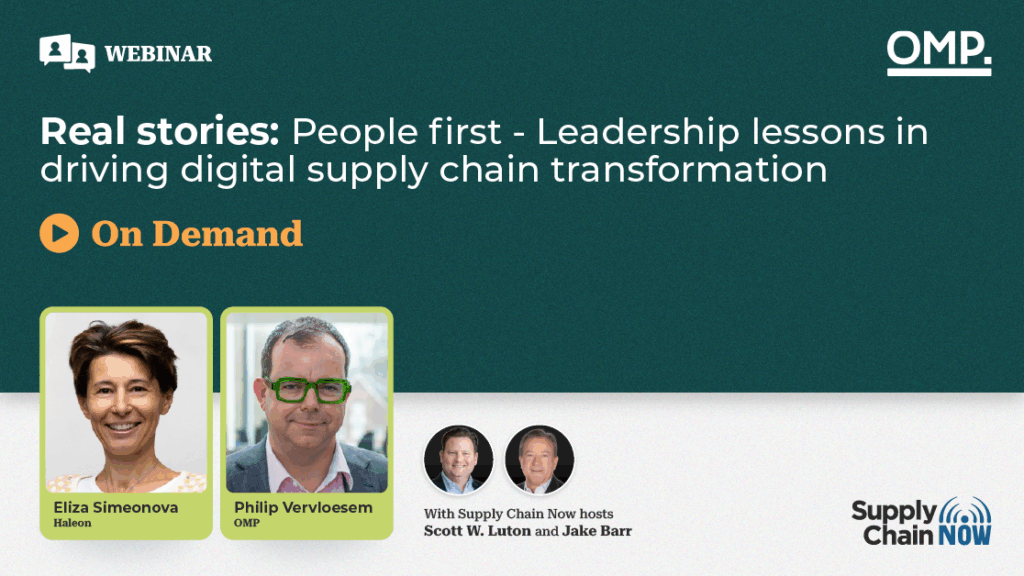
In today’s supply chain landscape, digital transformation is no longer optional—but as the panelists in the latest Supply Chain Now webinar revealed, it’s also not just about technology. Hosted by Scott Luton and Jake Barr, this conversation brought together two powerhouse leaders: Eliza Simeonova, Quality Supply Chain Operations Officer at Haleon, and Philip Vervloesem, Chief Commercial & Markets Officer at OMP. Together, they tackled one of the most pressing challenges of our time—how to lead meaningful, people-centered transformation in an age increasingly defined by AI. A few insights stood out: Technology isn’t the hero—people are. True digital transformation begins with clarity of purpose, disciplined simplification, and leaders who stay close to the work. AI amplifies human intelligence, it doesn’t replace it. The most successful organizations empower their teams to collaborate with technology, not compete against it. Waiting for perfection is the biggest risk. Progress comes from experimentation, agility, and the courage to act before every variable is known. From redefining leadership mindsets to practical strategies for upskilling teams, this discussion offered an inspiring roadmap for supply chain leaders ready to embrace what’s next. Watch the full webinar on demand: Register to view the replay »Download the companion resource: 5 Must-Know…
May 7, 2021
This Week In Supply Chain Now: May 3rd – 7th
Listen up! We’re kicking May off with some great conversations you won’t want to miss. Take a look back on the latest episodes, interviews, conversations, and livestreams from this week right here. On Monday, we released 3 new episodes! In this episode of Supply Chain Now, Scott welcomes JD Redmon back to the podcast for a frank conversation about accessing the marketing solutions you need, the trend towards diversity marketing and hiring, how to use your voice to achieve what you need, and so much more. On This Week in Business History, Scott Luton explores the genesis of The Clorox Company, from the early entrepreneurial struggles to their international expansion, innovation & growth. On Supply Chain Now en Espanol, Enrique Alvarez welcomed Alex Meza with RioRev Partners to the podcast to talk about growing up in Mexico and the United States, Alex’s professional experience, and trade between the two countries. On Tuesday, we released 2 new episodes! On this episode of TEKTOK Digital Supply Chain Podcast, powered by Supply Chain Now, host Karin Bursa welcomes Jason Tham with Nulogy to the podcast to tackle the question- is your supply chain agile or fragile? On TECHquila Sunrise, host Greg White dives…