

More
MODEX 2026
May 26, 2026
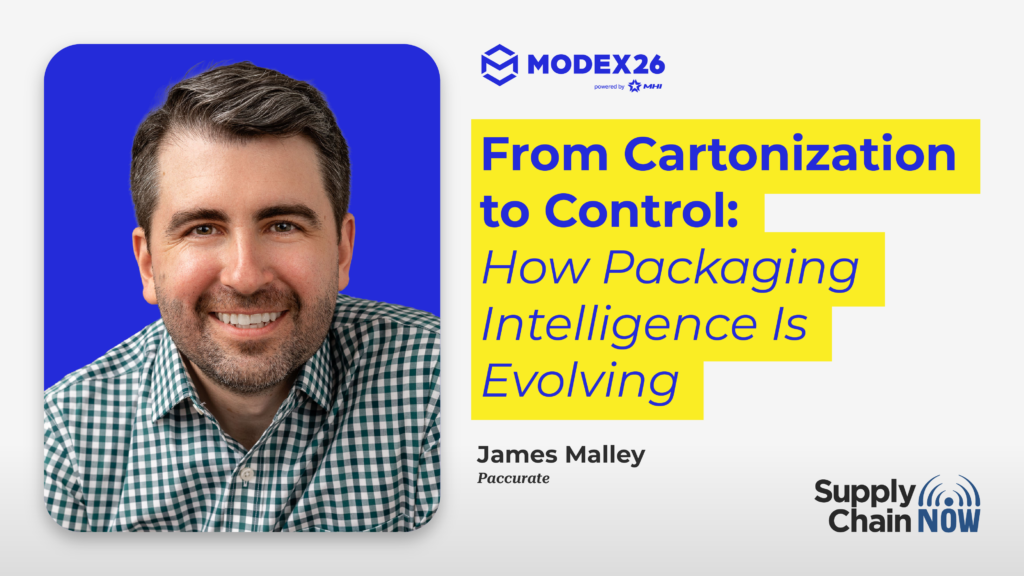
From Cartonization to Control: How Packaging Intelligence Is Evolving
At MODEX 2026 in Atlanta, Scott Luton reconnected with James Malley, Co-Founder and CEO of Paccurate, for a conversation that blended humor, operational insight, and a fresh perspective on where warehouse technology is headed. While the discussion included everything from Disney World to hot dog bun conspiracies, the core message was serious: supply chain organizations are entering a new phase where control, visibility, and operational simplicity matter more than flashy technology demos. MODEX 2026: Less Hype, More Optimization After nearly a decade of attending MODEX events, Malley sees a clear shift in this year’s show floor dynamic. “I notice in some years at MODEX, there will be all kinds of wild technology that’s kind of futuristic. And in other years, the vibe seems to focus more on the maturation of technology in very established categories,” he explains. “This year is more of the latter.” In other words, the industry appears to be moving from experimentation toward optimization. Rather than chasing the next shiny object, many supply chain leaders are focusing on getting more value from the systems and automation they already have in place. Deeper analytics, better visibility, and operational refinement are becoming bigger priorities than headline-grabbing robotics demonstrations.…
MODEX 2026
May 28, 2026
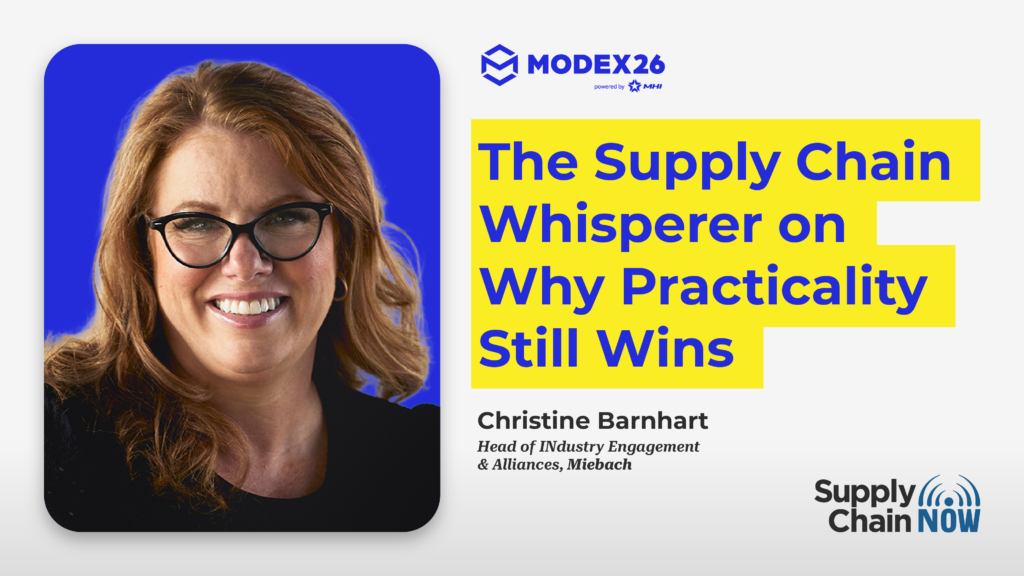
The Supply Chain Whisperer on Why Practicality Still Wins
At MODEX 2026 in Atlanta, Scott Luton sat down with Christine Barnhart, Head of Industry Engagement & Alliances at Miebach. She is known by many across industry as “The Supply Chain Whisperer.” Their conversation covered everything from AI and supply chain maturity to workforce evolution and the importance of practical execution. Through it all, Barnhart offered a grounded perspective shaped by years of operational leadership and transformation work. And if there’s one central takeaway from the discussion, it’s this: the companies that succeed won’t be the ones chasing hype. But they WILL be the ones building resilient, executable supply chains. There Is No “Normal” Anymore Supply chain leaders have spent years navigating disruption, but Barnhart believes the industry has finally reached an important realization. “People have finally come to this conclusion that there is no such thing as normal anymore,” she explains. That mindset shift is changing how organizations think about planning, investment, and agility. Network design exercises that once happened every three to five years are now being revisited continuously. Companies are investing in tools that shorten decision cycles and improve responsiveness in near real time. The old approach that focused on “design once, optimize later” – –…