

More
April 23, 2021
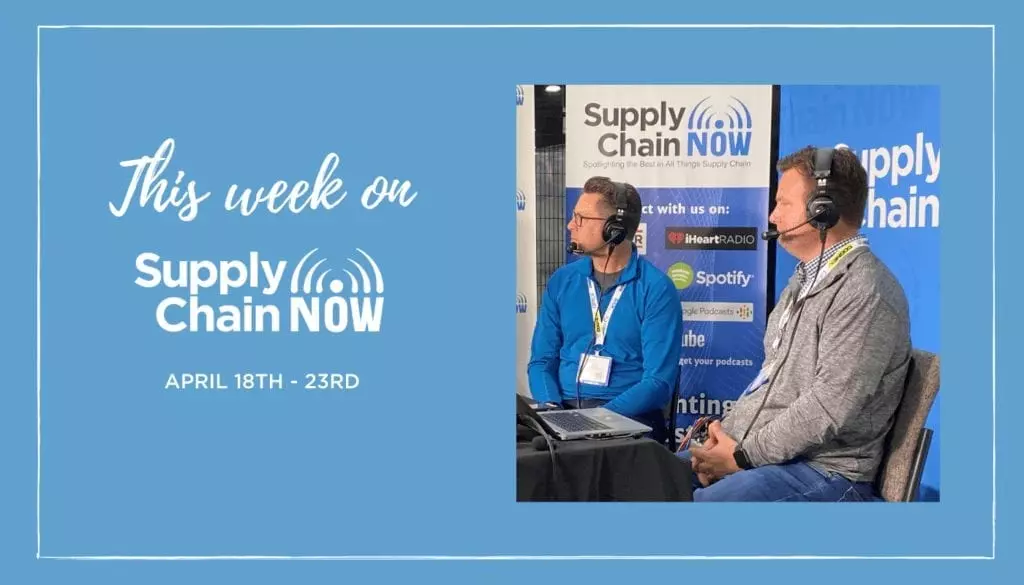
This Week In Supply Chain Now: April 18th – 23rd
Listen up! Catch up on all the latest episodes, interviews, conversations, and livestreams from this week right here. On Monday, we released 3 new episodes! On Supply Chain Now, hosts Scott Luton and Ben Harris welcomed Colton Griffin, CEO of Flourish Software, to talk about how the supply chain for cannabis operates and how it could influence the modern supply chain. On This Week in Business History, host Scott W. Luton dives into 10 things that you may not know about the Suez Canal, a modern engineering marvel that has been the subject of global fascination recently. On Supply Chain Now en Espanol, hosts Enrique and Jose Miguel welcome Ignacio Alcalde with TW Logistica to the podcast. On Tuesday, we released 2 new episodes. On this episode of TEKTOK, powered by Supply Chain Now, hosts Karin Bursa and Scott Luton welcome Transplace CEO Frank McGuigan to the podcast to discuss how disruptions drive supply chain innovations and advancements. On TECHquila Sunrise, host Greg White sat down with Peter Stangeland, Chief Commercial Officer of DB Schenker, to talk about the exciting progress his teams have made in clearing the path to sustainability through innovative forms of transportation and his advice for…
March 8, 2025
6 Strategies for Building an Adaptive Supply Chain
Traditional supply chains react, while Adaptive Supply Chains are built to anticipate and evolve. Learn how these strategies can transform your supply chain and multiply margins despite today’s turbulent market environment. Supply chains are more than just something to manage. They’re a strategic asset to the organization – driving long term, sustainable growth by constantly adapting to a fast-changing world. In this white paper, you’ll learn: The three pillars that make up an adaptive supply chain Six practical strategies that can help you achieve the three pillars of an adaptive supply chain Real life use cases on how companies like yours are using these strategies to maximize operational performance, profitability, and sustainability Download the “6 Strategies for Building an Adaptive Supply Chain” white paper here to learn more