

More
execution
May 4, 2026
From Dragon Boats to Data Capture: Synchronizing the Modern Supply Chain
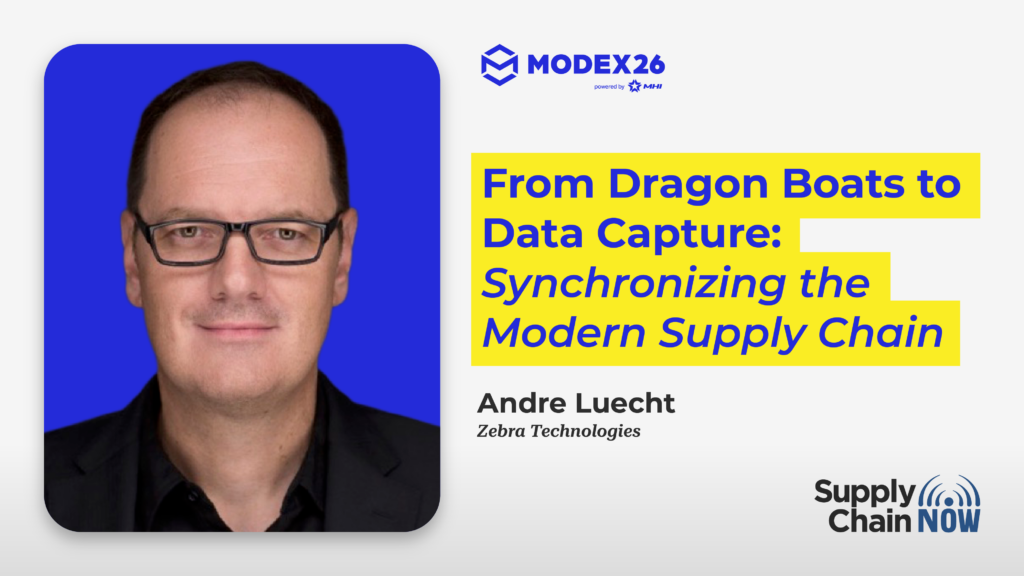
At MODEX 2026 in Atlanta, Scott Luton sat down with Andre Luecht, Global Strategy Lead for Transportation, Logistics & Warehousing at Zebra Technologies, to explore how synchronization, visibility, and practical innovation are shaping the next phase of supply chain performance. Interestingly, the conversation began not with technology, but with competitive dragon boat racing, a hobby of Andre Luecht’s that he enjoys in his free time. For Luecht, the analogy is clear: success depends on alignment. “The team that is the most synchronized team is the one that wins,” he explains, a principle that applies just as much to supply chains as it does to sport. Turning Data Into Decisions At the Edge Zebra Technologies has long been known for enabling visibility across supply chains, from barcode scanning to RFID and beyond. But today, the focus is evolving toward something more powerful: decision-making at the edge. Luecht describes a world where frontline workers are empowered with real-time intelligence directly on their devices. “AI… is what you can build into a device in the hand of someone who has to decide what truck a certain pallet goes onto,” he says. This concept, what Zebra calls “frontline AI”, brings intelligence closer to…
January 26, 2021
How to improve retail customer experience: Listen to The Youth
Scott Luton wrote, “How to Improve the Customer Retail Experience: Listen to the Youth” for SAP. Read the Full Article Here.