

More

supply chain resiliency
September 26, 2024
Supply Chain Now’s Guide to Resilience in the Supply Chain
The resiliency of the supply chain has been tested time and time again — strained by weather-related events like hurricanes, global crises such as COVID-19, disasters like the Francis Scott Key Bridge collapse, and security breaches from cyberattacks. Supply chain resilience will continue to be tested. In fact, a major supply chain crisis could be just days away as the International Longshoremen’s Association (ILA) could stage a strike at ports all along the East and Gulf coasts of the United States as soon as Oct. 1. Beyond the Buzz: What is Supply Chain Resilience? “Supply chain resilience refers to the ability of a supply chain to prepare for unexpected events, adapt to disruptions, and recover quickly to restore its normal service levels,” Inbound Logistics said. “It’s not merely about preventing disruptions but being able to turn challenges into opportunities for growth and improvement.” Supply Chain Dive said because of events like COVID-19, the Panama drought, and Houthi attacks in the Red Sea, supply chain disruptions have become “part of the public’s consciousness and everyday nomenclature.” “The risk in our global economy is that supply chain disruptions are guaranteed to continue, but no forecast exists to tell us when or how…
April 17, 2020
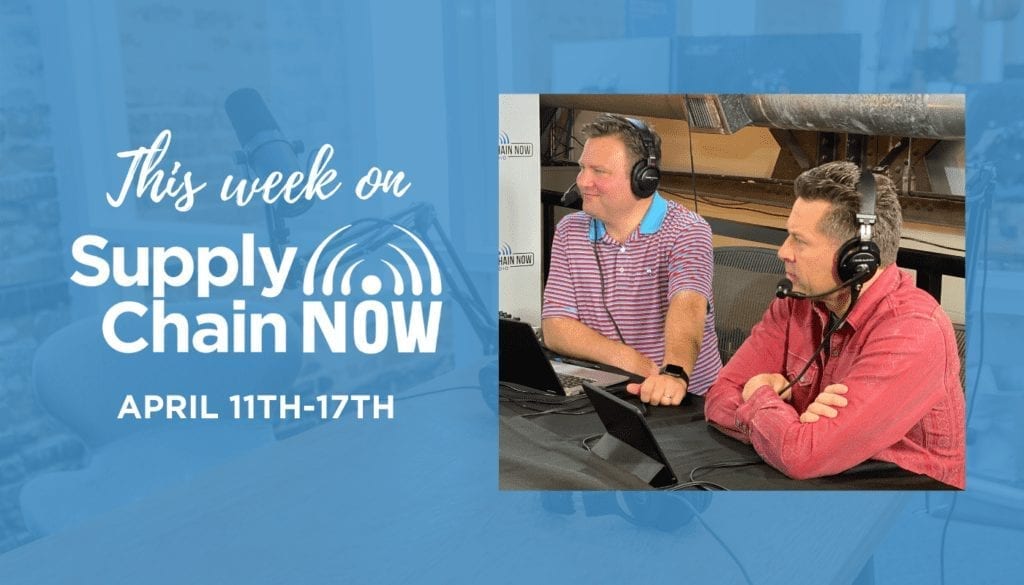
This Week on Supply Chain Now: April 11-17
It has been a big week (as usual) for Supply Chain Now! Did you miss an episode? Check them all out here: Listen as Daniel Studdard with the Atlanta Regional Commission, talks with Greg and Scott from MODEX 2020 about keeping freight moving: Rodney Apple with SCM Talent Group joins Greg and Scott from MODEX 2020 to chat about securing top supply chain talent: On Tuesday, Scott and Greg were joined remotely by Jan van Niekerk with SpotSee, to talk about leveraging technology to protect your shipments during transit: Scott and Greg were joined by Bob Bova with Accuspeech Mobile from MODEX 2020 and discussed voice automating workflows: On Thursday we published the new and improved Supply Chain Buzz, with Scott and Greg sharing and discussing the latest news and events in Supply Chain and beyond: And to finish out the week, Mark Messina and Rick DeFiesta with Geek+ joined Scott and Greg for a discussion about COVID-19’s impact on consumer behaviors, warehouse operations, automation initiatives, and more: Make sure you subscribe to Supply Chain Now so you never miss an episode and we will see you next week with all new livestreams and…