

More
August 7, 2020
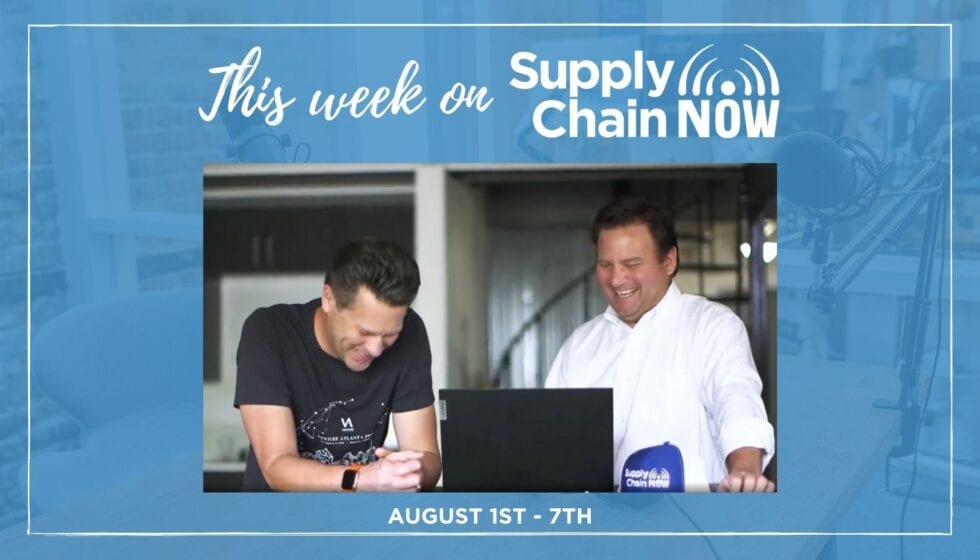
This Week on Supply Chain Now: August 1st – 7th
Another BIG week at Supply Chain Now! If you missed an episode, get a quick summary and listen here! We added another TWO additional episodes this week starting on Saturday, August 1st. If you didn’t catch our Supply Chain Buzz livestream last week, you got another chance to see Scott and Greg cover the top news in Supply Chain on Saturday. Supply Chain Now · “The Supply Chain Buzz for July 27th: Brand Rationalization, CSCO Diversity, & More” On Sunday, we continued our Logistics with Purpose series with a great interview with Jon Thompson with Comunidad Connect. Supply Chain Now · “Logistics with Purpose: Jon Thompson with Comunidad Connect” On Monday, Scott and Greg spoke with Andrea Kerr, the VP of Product Management with SpotSee, all about optimizing supply chain visibility. Supply Chain Now · “Optimizing Supply Chain Visibility: Angela Kerr with SpotSee” On Tuesday we had ANOTHER great new program debut! We published the first episode of the Jamin Logistics & Transportation Experience, as Jamin Alvidrez interviewed our very own, Scott Luton! Supply Chain Now · “Adapt & Thrive: Lessons from the Air Force, Andy Griffith & Granddad with Guest…
demand spikes
May 26, 2026
When Demand Spikes Overnight: A Practical Guide to Demand Signal Management
Demand can change in an instant. A flash promotion takes off faster than expected. An influencer post sends a niche SKU into the stratosphere. A heat wave flips seasonal demand on its head. And suddenly, your forecast—carefully crafted weeks ago—feels like yesterday’s weather report. This is where demand signal management earns its keep. Instead of reacting too late or overreacting too early, it helps supply chain teams interpret what’s really happening and respond with confidence. For retailers and consumer brands navigating constant demand volatility, it’s the difference between chasing noise and acting on insight. The problem: demand forecasts lag reality Traditional forecasting has a fundamental challenge: timing. Forecasts are built on historical patterns and planning cadences that move at a measured pace, but demand levels today won’t wait for the next planning cycle. Modern demand shocks often arrive without warning: a promotional discount goes viral, a competitor runs out of stock, weather drives sudden regional swings, or a trend outpaces merchandising plans. In these moments, planners face a familiar tension. React too slowly, and shelves go empty. React too aggressively, and you’re stuck with excess inventory once the spike fades. What demand signals are (and what they aren’t)…