

More
February 25, 2021
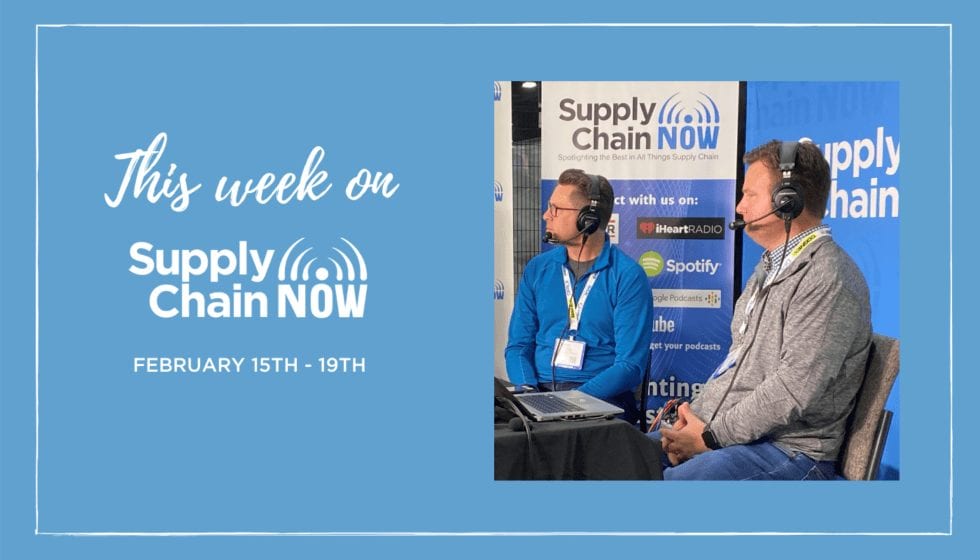
This Week on Supply Chain Now: February 15th – 19th
It’s time for Supply Chain Now! Make sure you’re up to date on all the latest episodes, interviews, conversations, and livestreams right here! On Monday, Tracie Ohonme & Angela Carlson with Samaritan’s Feet International joined us to talk about how their outreach has shifted due to COVID-19, leading with a servant-leader mentality, & more! On Tuesday, Scott and Greg welcomed, VP of Client Solutions with Alloy, Logan Ensign, a business leader from an industry dynamo that is empowering companies to successfully bridge the gap between plans and reality. On Wednesday, Mike Griswold, VP Analyst at Gartner, joined us to discuss the latest in retail supply chains from an analyst’s perspective. On Thursday, Scott and Greg welcomed Jon Gold with NRF to share the key NRF takeaways and trade issues to keep an eye on. On Friday, we replayed a recent livestream that kicked off our new partnership with The Assoication for Manufacturing Excellence (AME). Scott & Greg heard from Lee Alves with Simpler Consulting (an IBM Company), Jan Freyburgher with OpusWorks, Tony Spielberg with Cambridge Air Solutions, and Errette Dunn with Rever about the prevailing trends may drive manufacturing in 2021. Which was…
inventory control
July 16, 2026
The Sales You’re Losing to an Inventory Record
Inventory audits may be one of retail’s most overlooked revenue opportunities. Every large retailer has invested in software that predicts demand, triggers replenishment, and manages shelf space with precision. Almost none of that software questions whether the inventory number it’s reading is actually correct. A recent study in the Journal of Business Logistics suggests that blind spot is expensive, and that fixing it is one of the more overlooked levers a retailer has for growing sales. The researchers, working with a major UK grocery chain, examined roughly 24,000 products across 11 stores to understand why inventory records drift from what’s physically on the shelf, a problem known in the industry as inventory record inaccuracy. They then ran a field experiment to measure what happens to sales when a store corrects those records through a full audit. The results reframe a task most retailers treat as a nuisance into something closer to a growth strategy. Start with why the records go wrong in the first place. The study found that products carrying more inventory and products replenished more often were significantly more prone to inaccuracy. That makes intuitive sense: every case broken down, every unit moved from backroom to shelf, is…