

More
May 1, 2020
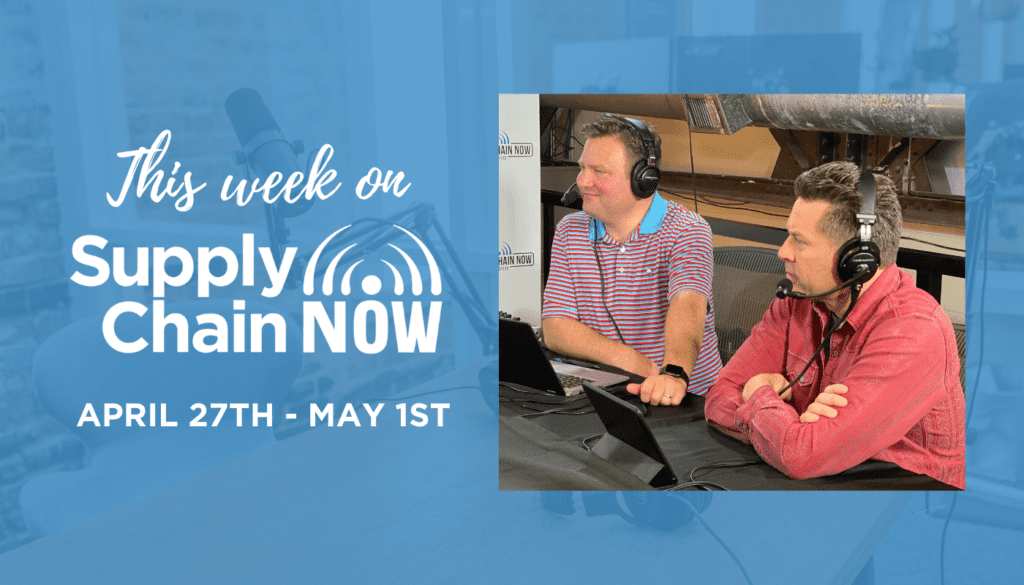
This Week at Supply Chain Now: April 27th – May 1st
BIG THINGS happening here at Supply Chain Now! Have you listened to all the episodes from this week? If not, no worries! Check them all out here: We started out the week wrapping up our last episode from MODEX 2020 with supply chain visionary Diego Pantoja-Navaja with Oracle. Supply Chain Now · “Supply Chain Visionary: Diego Pantoja-Navajas with Oracle” On Tuesday, Scott and Greg were joined by Enrique Alvarez and Adrian Purtill with Vector Global Logistics as they continued the Logistics with Purpose series with special guest Patrick Plonski with Books for Africa. Supply Chain Now · “Logistics with Purpose: Patrick Plonski, PhD with Books for Africa” Then we published the new and improved Supply Chain Buzz, with Scott and Greg sharing and discussing the latest news and events in Supply Chain and beyond. Supply Chain Now · “The Supply Chain Buzz: Week of April 27th” Scott and Greg were joined by Bobby Holland with U.S. Bank and Lee Klaskow with Bloomberg Intelligence on Thursday as they discussed the key takeaways from the Q1 2020 U.S. Bank Freight Payment Index. Supply Chain Now · “Analysis of Q1 2020 U.S. Bank Freight Payment…
inventory control
August 13, 2026
Blame Follows the Messenger
Customers blame retailers less when the delay notification comes from someone else When something goes wrong, most companies reach for the same playbook: communicate early, communicate often, and keep customers informed. It is difficult to argue with that logic. Customers hate surprises, and transparency has become a cornerstone of good service. Whether the issue is a delayed shipment, a production disruption, or a missed commitment, managers generally assume that more communication demonstrates accountability and builds trust. New research published in the Journal of Business Logistics suggests the real lesson is narrower and more useful than “communicate more.” The study shows that communication does more than transfer information. It also shapes how customers assign responsibility. The volume of communication was not what mattered. The identity of the messenger was. Researchers presented consumers with identical delivery delays following an online purchase. In the study, the same standard emails were sent to every participant: an order confirmation, a shipment notice, and a delivery confirmation. What varied was only how customers learned about the delay itself. Some received a delay notification from the retailer, some from the carrier, and others discovered the delay on their own through package tracking. The delivery outcome was…