

More
supply chain podcast
March 31, 2025
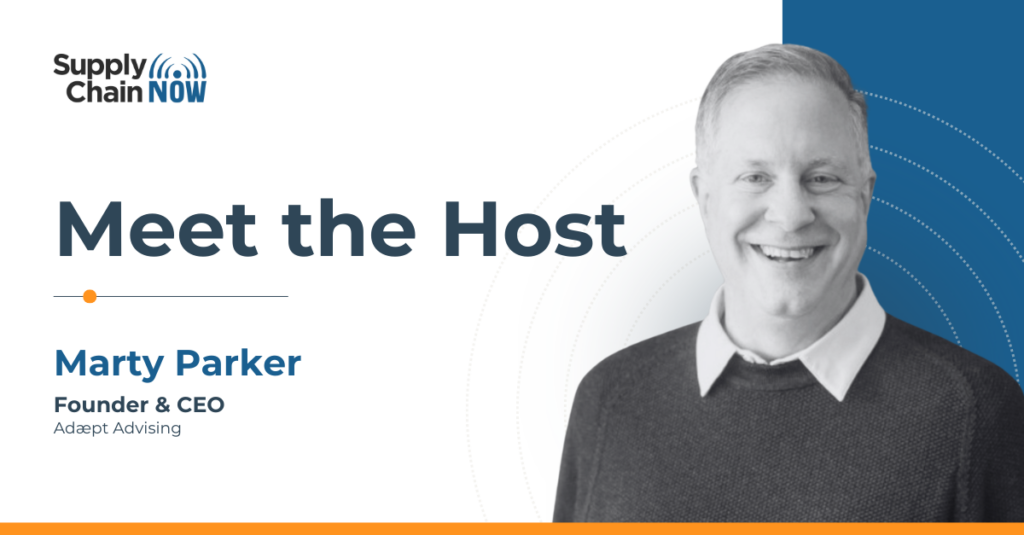
Meet the Supply Chain Now Host: Marty Parker
Supply Chain Now is the voice of the supply chain industry, and our hosts are experts in the field. Podcast listeners tune in to hear the words of wisdom from host Marty Parker, whose practical advice is taken everywhere from the classroom to the C-suite. An Educated Voice in Supply Chain Parker certainly has the supply chain chops to back up his advice. He has 30 years of experience in the supply chain C-suite (COO, CMO, CSO), is the founder and CEO of Adæpt Advising, and is an award-winning senior lecturer in supply chain and operations management at the University of Georgia. He also founded and leads UGA’s Supply Chain Advisory Board, is the academic director of the university’s Leaders Academy, and serves on multiple advisory boards, including the Trucking Profitability Strategies Conference, Zion Solutions Group, and Carlton Creative Co. Mentoring on Campus and in the C-suite Parker’s mentoring carries supply chain stakeholders from their student days to the C-suite. At UGA, he helps his students network and land internships and post-graduation jobs. Through Adæpt Advising, he works with C-suite executives to improve their skills, become better leaders, and develop strategic plans with detailed action steps and financial targets. He…

March 12, 2020
Scott Luton was featured in the TechRepublic article
Scott Luton was featured in the TechRepublic article, “Nearly 200 cybersecurity incidents impacted supply chain entities in 2019,” listing cyberthreats as one of the biggest issues facing global supply chains in 2020. VIEW ARTICLE HERE.