

More

March 3, 2025
Unlocking Fulfillment Potential: Robotic-Assisted Picking Engineered to Boost Your Profits
Zebra Robotics Automation is revitalizing AMR-assisted picking to optimize fulfillment efficiency and productivity with up to 30% fewer robots need in comparison to legacy systems. Their innovative approach can help significantly lower your cost per unit by combining workers and robots into a streamlined partnership that increases throughput without sacrificing performance rates, accuracy or reliability. Maximize AMR-assisted picking efficiency with Zebra’s three-fold strategy: Balanced Utilization: Use low-cost carts for buffering instead of extra robots or labor, reducing costs. Increased Capacity: Carts boost pick density and eliminate AMR wait times, handling 150-300% more items while cutting robot needs by up to 30%. Optimized Workflows: Seamless coordination ensures every picker and robot stays productive—no idle time, no wasted effort. Download the “Unlocking Fulfillment Potential” eBook here to learn more
May 8, 2020
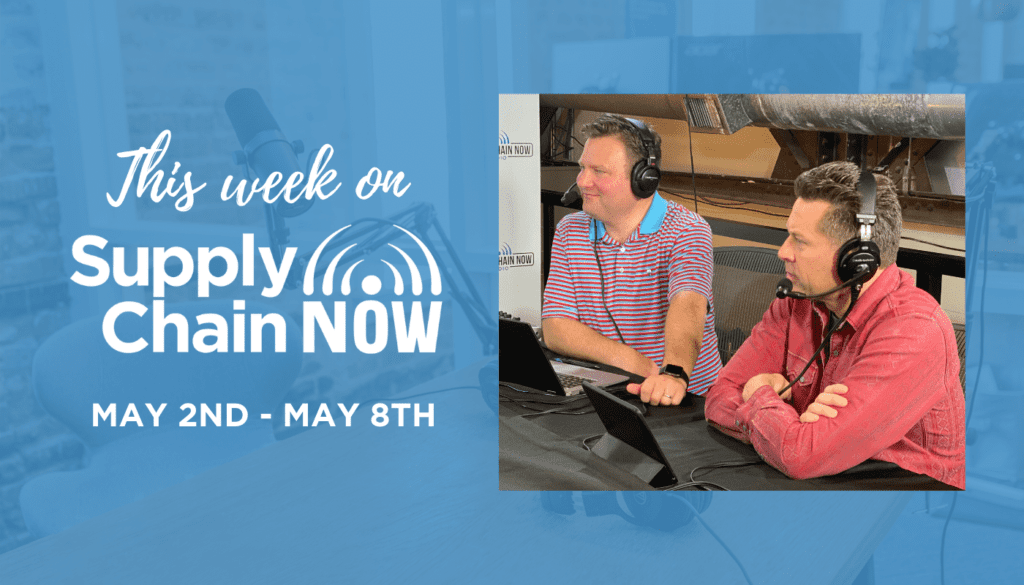
This Week in Supply Chain Now: May 2nd – 8th
Another great week here at Supply Chain Now! Have you listened to all the episodes? If not, no worries! Check them all out here: We added a special Saturday episode on May 2nd and featured the first of three speakers from the 2020 AIAG CR Summit and their insights from the conference. First up was Michael Wurzman… …Then on Monday we featured Tolga Yaprak with iPoint… …And then on Tuesday, we featured Bruno Sarda. On Wednesday, we published another episode in the fantastic Logistics with Purpose series sponsored by Vector Global Logistics. Our special guest was Lauren Noce with Hungry. Then we published the new and improved Supply Chain Buzz, with Scott and Greg sharing and discussing the latest news and events in Supply Chain and beyond. And to wrap up the week, Scott chatted with the Resilience360 team about their upcoming webinar about the 2020 Hurrican Season. Which was your favorite episode? Make sure you tune in next week for more great conversation, timely topics, and exceptional guests on Supply Chain Now!