
More
December 7, 2020
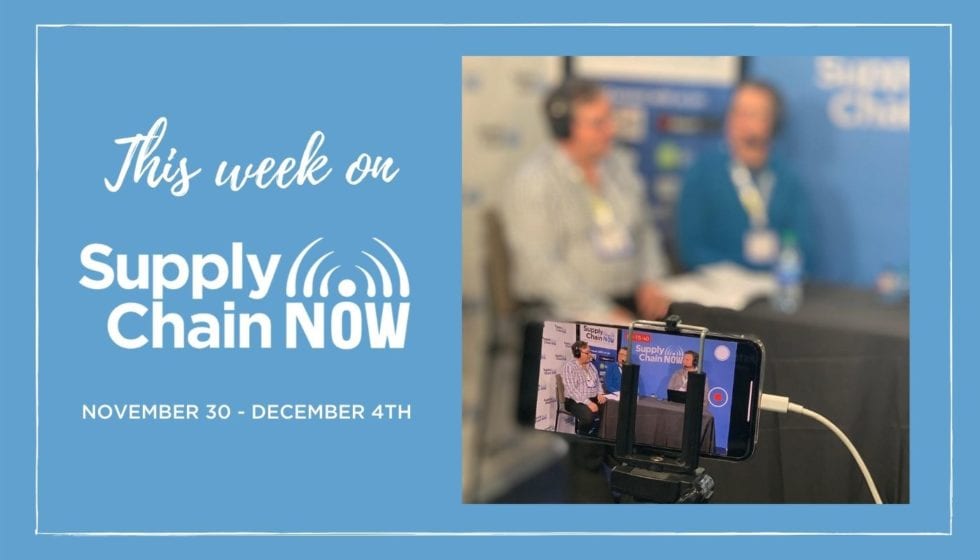
This Week on Supply Chain Now: November 30th – December 4th
Another great week here at Supply Chain Now! Have you listened to all the episodes? If not, you can check them all out here: On Monday, Scott and Greg welcomed Mark Messina & Simon Houghton of Geek+ to the podcast! Scott and Greg also welcomed Mike Griswold from Gartner to SCN Live to talk about all the latest supply chain news. On Tuesday, Scott and Greg welcome Allison Krache Giddens of Win-Tech, Inc. to the podcast in collaboration with AIAG’s Supply Chain Summit. Michael Neme joined host Jamin Alvidrez on Logistics & Beyond on Tuesday as well to share his mindset and some of the keys to his passion: Supply Chain Consultative Sales. On Wednesday, Scott and Greg welcomed Karin Bursa and Jamin Alvidrez for the Supply Chain Buzz, to discuss the top news in supply chain for the week. Also, Scott and Greg discussed the top news in supply chain with special guest, Guy Courtin of 6 River Systems On TECHquila Sunrise this Thursday, Greg White welcomed Kinaxis CEO John Sicard to the podcast. And on Friday, we ended the week with Scott & Greg…
August 25, 2025
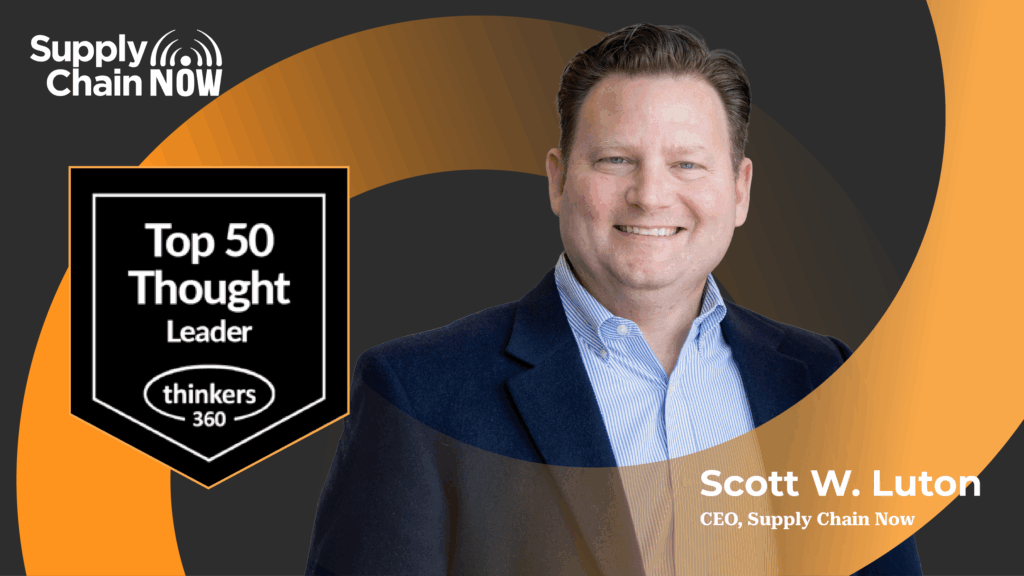
Scott Luton Named #1 Global Thought Leader & Influencer on Supply Chain 2025 by Thinkers360
We are proud to announce that Scott Luton, Founder and CEO of Supply Chain Now, has once again been recognized as the #1 Global Thought Leader and Influencer on Supply Chain for 2025 by Thinkers360—marking his second consecutive year at the very top of this prestigious list. This exceptional distinction reaffirms Scott’s ongoing leadership and influence in the global supply chain arena. Under his dynamic stewardship, Supply Chain Now has grown into an award-winning digital content platform—delivering podcasts, livestreams, webinars, and virtual events that resonate across more than 60 countries. Scott’s voice continues to shape and empower the industry, inspiring professionals worldwide with insights that drive innovation and progress. Learn more here.