

More
digital supply chain
February 27, 2026
Five Key Supply Chain Trends for 2026: Navigating the Road to Transformation
This post is written by our friends at e2open. E2open is the connected supply chain software platform that enables the world’s largest companies to transform the way they make, move, and sell goods and services. Moving as one.™ Learn More: www.e2open.com. Supply chains are entering a pivotal stretch of highway into the future. It’s a route marked by regulatory detours, geopolitical potholes, and rising expectations for speed, intelligence, and resilience. The journey ahead demands connected data, embedded AI, and agile decision-making. Below are the five major “mile markers” defining the road to supply chain transformation, and how e2open helps organizations navigate the way forward with confidence. 1. Tariff and non‑tariff compliance risks: avoiding costly road hazards Tariff volatility and non‑tariff barriers create regulatory road conditions that can change quickly. For cost-focused leaders, this unpredictability can feel like driving through dense fog. One wrong move can result in delays, penalties, or unplanned expenses. Forward‑thinking organizations are installing automated guardrails: integrated trade compliance systems, dynamic landed‑cost modeling, and synchronized import/export workflows. These tools help reduce blind spots and ensure companies don’t veer into costly territory. The e2open Global Trade suite puts the world’s most comprehensive, continuously updated regulatory content directly…
supply chain decision velocity
February 17, 2026
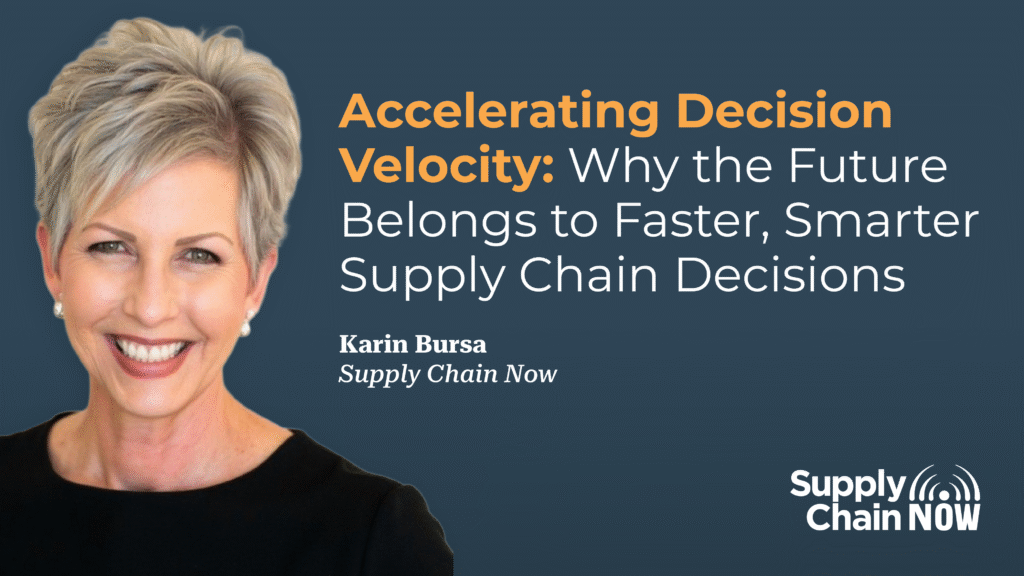
Accelerating Decision Velocity: Why the Future Belongs to Faster, Smarter Supply Chain Decisions
Special Guest Blog Post written by Karin Bursa, Supply Chain Industry Advisor and Supply Chain Now Host Here is a diagnostic question I use with supply chain leaders: when disruption hits, do your teams spend most of their time debating the data, debating the scenarios, debating the plan, or debating the decision? Or all of the above? Seriously though, in 2026, that distinction matters. Network shifts driven by tariffs, geopolitics, cost pressure, and sustainability are accelerating. Gartner’s 2025 U.S. Trade and Immigration Policy Survey indicate 77% of respondents selected network changes among their top actions in response to tariff impacts. [2] If the physical network is moving, the digital planning platform must move even faster. The environment is forcing decisions to be made faster, more frequently, and with more variables than ever before. Gartner says supply chain decisions are becoming 71% more complex, happening 52% more frequently, and need to be made 57% faster. That triple constraint cannot be accomplished with cadence-based batch planning cycles as a default operating model. This is why I am focused on a single, practical outcome for supply chain teams: accelerating decision velocity. The ability to move from data to insights to actions faster…