

More
book club
February 2, 2026
First Edition: Between the Lines by Supply Chain Now
At Supply Chain Now, we talk a lot about innovation, resilience, and what’s next for our industry. But behind every great conversation, great idea, and great community is something even more fundamental: curiosity. We read because we’re curious. We read to learn. We read to grow. And sometimes, we read simply because it’s fun! That’s why we created Between the Lines by Supply Chain Now, a space for our community to share what we’re reading, what’s making us think, and what we’re excited to recommend to others. This isn’t a traditional book club where everyone follows the same reading list. Instead, it’s a shared shelf, built by the Supply Chain Now team and our broader community. You’ll find business books and personal development reads alongside novels, memoirs, histories, and unexpected favorites. No required genres. No assigned chapters. Just real people sharing real recommendations. Because great books shape us in different ways. Some help us sharpen our skills. Some challenge how we see the world. Some help us slow down, escape, or recharge. And often, the most meaningful growth comes from reading something we never would have picked up on our own. With Between the Lines, our goal is to create…
global supply chain
January 29, 2026
Constant Supply Chain Disruption Promises to Keep Logistics Entertaining, Exciting, & Challenging
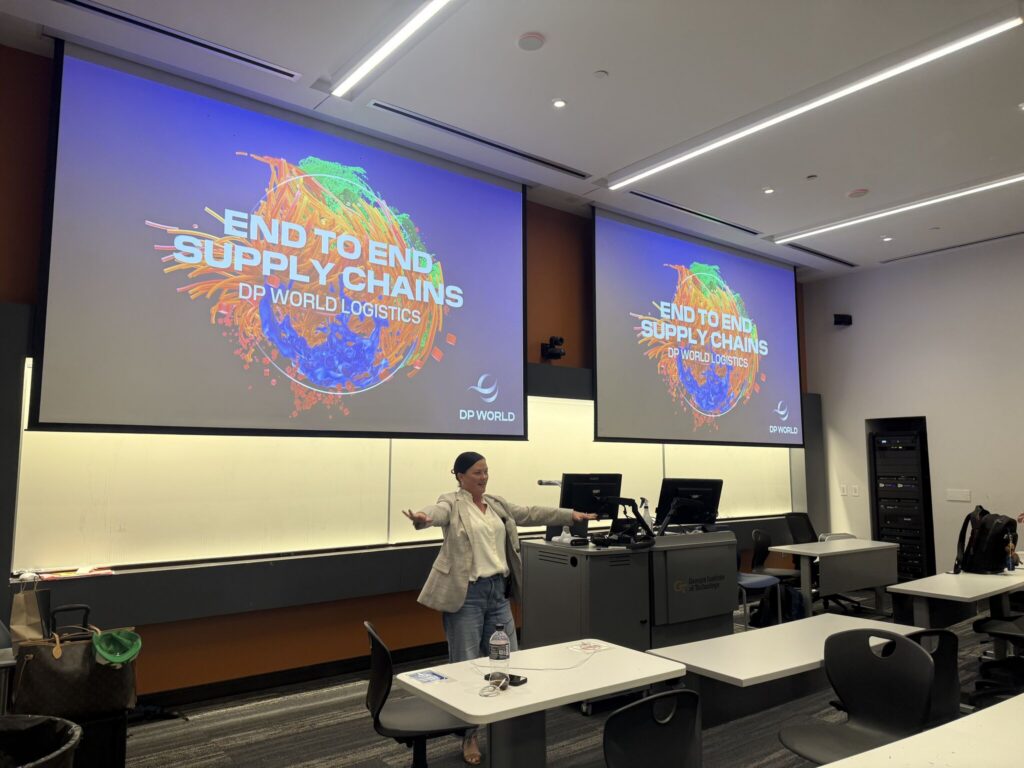
Special Guest Blog Post written by Brittany Caskey, Chief Commercial Officer – Logistics with DP World Americas I was recently invited to speak with students in the Supply Chain and Logistics Organization at Georgia Tech, and it reminded me why I still find this industry so energizing. I walked them through my own path — starting in logistics right out of college, building my foundation at UPS in sales and sales management, and eventually stepping into my role today as Chief Operating Officer at DP World in the Americas. What I shared with them is something I still believe deeply: logistics keeps life interesting, because no two days are ever the same. Customer expectations change. Geopolitical realities shift. Trade lanes evolve. Weather, labor, technology — everything is in constant motion. That constant change is what keeps logistics professionals sharp and solutions focused. It’s also why customer experience has become the true differentiator in today’s supply chains. Because while disruption is unavoidable, how you manage it is a choice. Customers Don’t Care Why — They Care That It Works One message I emphasized with the students is the same one I reinforce with customers and teams every day: customers…