

More
AI
September 25, 2025
The 3 Critical Questions Enterprise Shippers Ask Me About AI
Special Guest Blog Post written by Matt McKinney, Co-Founder and CEO of Loop I spend most of my time with supply chain and innovation leaders at major enterprises who are sitting on significant AI budgets but struggling to show measurable business impact in an increasingly complex and volatile supply chain environment. These conversations have evolved dramatically. A year ago, executives were asking basic questions about AI feasibility. Today, the questions have shifted to strategic implementation at enterprise scale. Based on hundreds of these discussions, three questions consistently emerge that separate companies making transformational progress from those stuck in pilot purgatory. How do we move from AI experiments to enterprise-scale impact? Most organizations have yet to see organization-wide, bottom-line impact from AI use. This is the strategic challenge keeping C-suite leaders awake at night. The problem isn’t the technology. It’s the application of the technology. Too many enterprises are trying to treat AI like a magic wand they can bolt onto existing systems. But garbage in, garbage out. If your underlying data is fragmented and inconsistent, AI won’t solve your problems; in fact they’ll get worse. At its core, anything automated is powered by…
October 9, 2020
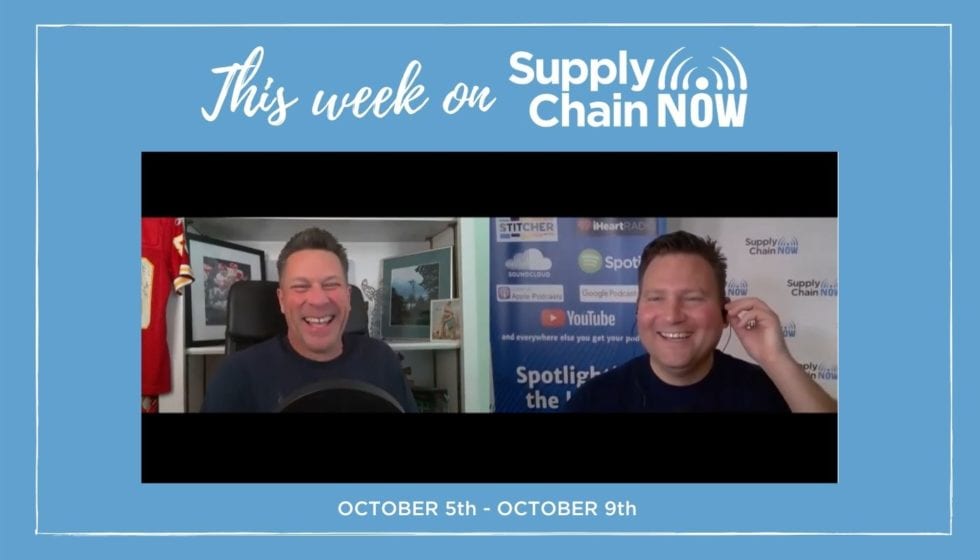
This Week on Supply Chain Now: October 5th – 9th
We continued this week on Supply Chain Now with more great interviews, conversations, livestreams, and episodes! Did you miss any episodes? On Monday, Scott and Karin Bursa introduced our newest Supply Chain Now program, TEKTOK, to our audience! On Tuesday, Scott and Greg welcomed Dan Reeve with Esker back to Supply Chain Now for a conversation about increasing supply chain visibility and cash flow. We published our Supply Chain Buzz on Wednesday, where Scott & Karin discussed the top news in supply chain for the week, and also welcomed featured guest, Lora Cecere with Supply Chain Insights to the podcast. On Thursday, we continued with the second half of Greg’s interview with Sarah Barnes-Humphrey for TECHquila Sunrise. And to wrap up the week, Scott and Greg welcomed Ashfaque Chowdhury, PhD with XPO Logistics to the podcast for a great conversation. Which was your favorite episode this week? Never miss an episode by subscribing to Supply Chain Now! Make sure you tune in next week for more great conversation, timely topics, and exceptional guests.