

More
April 17, 2020
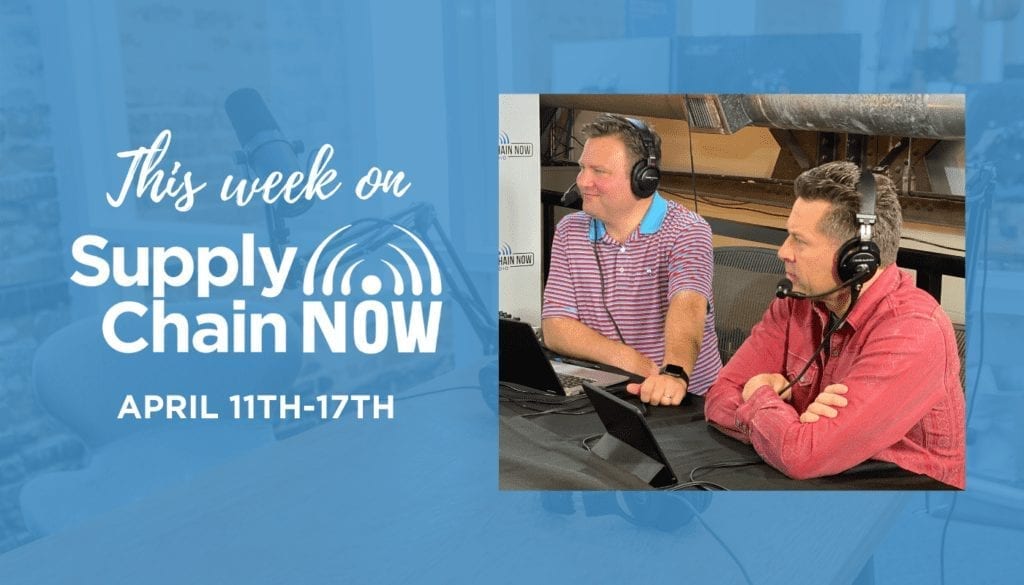
This Week on Supply Chain Now: April 11-17
It has been a big week (as usual) for Supply Chain Now! Did you miss an episode? Check them all out here: Listen as Daniel Studdard with the Atlanta Regional Commission, talks with Greg and Scott from MODEX 2020 about keeping freight moving: Rodney Apple with SCM Talent Group joins Greg and Scott from MODEX 2020 to chat about securing top supply chain talent: On Tuesday, Scott and Greg were joined remotely by Jan van Niekerk with SpotSee, to talk about leveraging technology to protect your shipments during transit: Scott and Greg were joined by Bob Bova with Accuspeech Mobile from MODEX 2020 and discussed voice automating workflows: On Thursday we published the new and improved Supply Chain Buzz, with Scott and Greg sharing and discussing the latest news and events in Supply Chain and beyond: And to finish out the week, Mark Messina and Rick DeFiesta with Geek+ joined Scott and Greg for a discussion about COVID-19’s impact on consumer behaviors, warehouse operations, automation initiatives, and more: Make sure you subscribe to Supply Chain Now so you never miss an episode and we will see you next week with all new livestreams and…
orchestration
November 4, 2025
Unifying Real-Time Data for End-to-End Supply Chain Orchestration
Special guest post written by Chris Cunnane with InterSystems Supply chain orchestration is the coordinated management of end-to-end supply chain activities, across planning, sourcing, production, logistics, and delivery, using technology, data, and processes to ensure that every moving part works together seamlessly. It enables organizations to attain an agile and resilient supply chain model through the use of decision intelligence. This is achieved through the See > Understand > Optimize > Act framework, which gives organizations the confidence to plan and respond to disruptions with assurance in their supply chain stability. See: gather raw data and information from your environment or a situation. Understand: analyze the information you’ve seen to build a comprehensive understanding of the context, your knowledge, and potential complexities. Optimize: develop the best possible solution or course of action to address the situation. Act: implement your chosen solution, putting your knowledge into practice. From a practical standpoint, this framework powers your supply chain application ecosystem with end-to-end visibility, insights, and better decisions. It helps organizations reach their supply chain goals by enabling them to align processes, stakeholders, and technology toward desired outcomes. The end result is reduced costs, improved operating margins, and optimized sustainability decisions, among others.…