

More
logistics
October 30, 2025
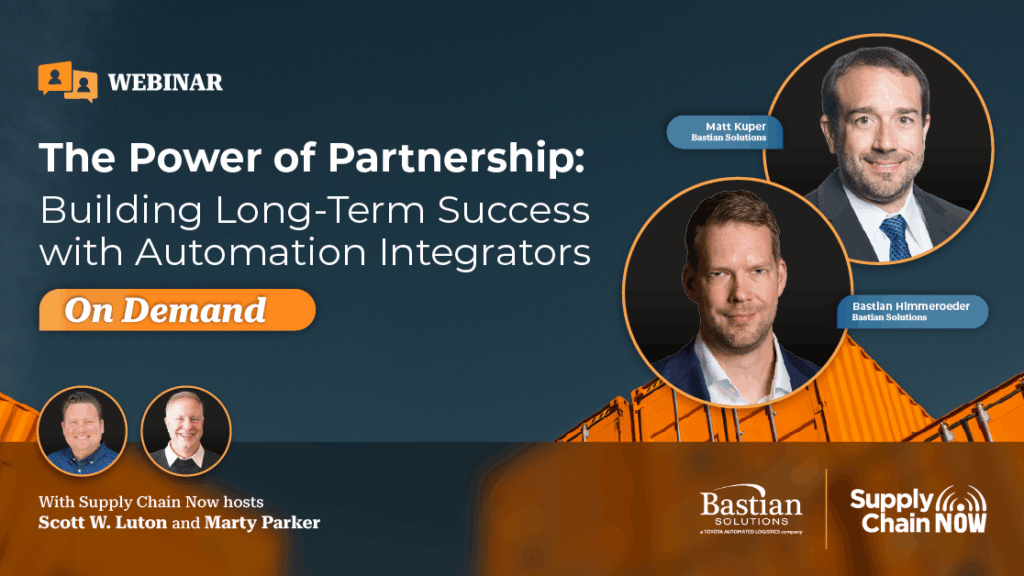
The Power of Partnership in Supply Chain Automation
Key Takeaways from the Supply Chain Now Webinar with Bastian Solutions In today’s fast-changing world of logistics and manufacturing, one truth is clear: there’s no hiding from automation. Whether you’re a global enterprise or a growing regional player, success depends on choosing the right technology—and, just as importantly, the right partner. In a recent Supply Chain Now webinar, The Power of Supply Chain Partnerships, hosts Scott Luton and Marty Parker sat down with Matt Kuper and Bastian Himmeroeder from Bastian Solutions, a Toyota Automated Logistics company, for an in-depth conversation about how to unlock the true potential of automation through strong integrator relationships. Here are a few key takeaways that stood out: 1. Strategic Partnerships Trump One-Off Projects According to Bastian, the age of “one-and-done” automation projects is over. Today’s complexity demands long-term, strategic relationships between companies and their integrators—ones built on transparency, shared values, and a deep understanding of each other’s goals. 2. Culture Fit Matters as Much as Technology Matt emphasized that cultural alignment is the first critical element in selecting an integrator. Shared values, open communication, and mutual respect ensure that the partnership thrives well beyond implementation. 3. Experience and Support Drive Success Choosing a partner with…

August 29, 2025
Modified Agile for Electronics Development: A Smarter Path to High-Value Solutions
Modified Agile for Electronics Development Electronics development has never been more complex—or more critical. Traditional waterfall methods often slow teams down with long cycles, costly redesigns, and missed deadlines. While software teams have thrived with agile, hardware development requires a different approach. This white paper introduces the Modified Agile for Hardware Development (MAHD) Framework™, designed specifically for electronics teams. By adapting agile principles to hardware’s unique challenges, MAHD enables faster timelines, reduced risk, and higher-value solutions. If your organization struggles with shifting requirements, late-stage changes, or cross-disciplinary silos, this guide provides a smarter way forward. Why Download This White Paper? Understand why traditional methods fall short and how hardware-specific agile solves the challenges waterfall and “faux agile” can’t. Get a clear introduction to the MAHD Framework™, a proven model that accelerates development by 25–50% while reducing costly risk. Learn practical strategies and tools—from system-level user stories and tailored prototyping to Altium’s solutions for agile electronics success. What You’ll Take Away: A framework purpose-built for hardware and electronics – not a software agile retrofit Practical methods to reduce wated effort, improve predictability, and accelerate time-to-market Real-world examples of how electronics teams can align strategy, execution, and customer…