
More
October 23, 2020
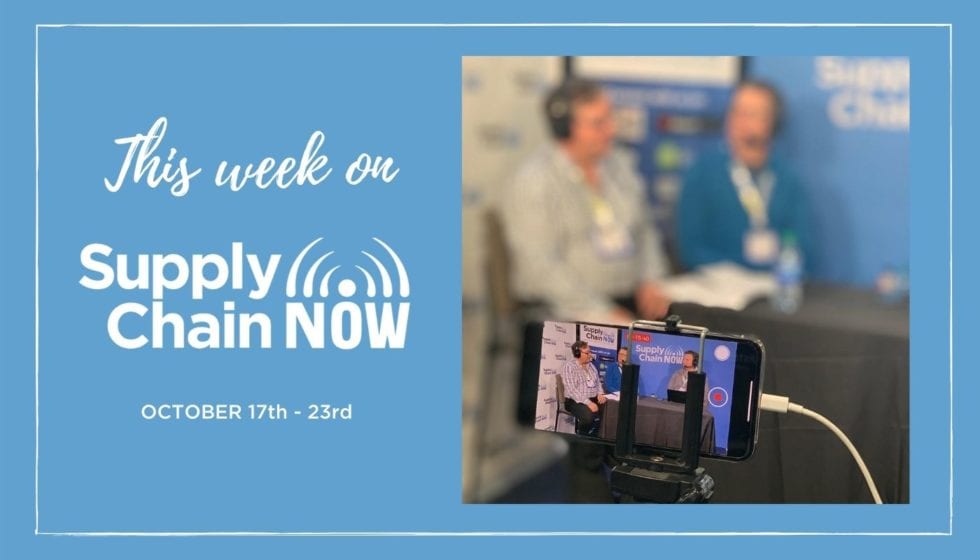
This Week on Supply Chain Now: October 17th – 23rd
This week at Supply Chain Now has been full of great conversations and key takewaways you don’t want to miss. Check out all the latest episodes, interviews, conversations, and livestreams right here! On Saturday, Scott & Greg Chat Automotive & Leadership with Jim Liegghio & Elba Pareja-Gallagher On Monday, Scott and Greg welcome SAP business leaders that are fueling industry 4.0, Mike Lackey and Robert Merlo, who share key takeaways from a wide variety of initiatives right here. On Tuesday, Scott and featured guest Jonathon Karelse, CEO of Northfind Management, lead the conversation surrounding the next big idea for decision making and planning in most companies: Behavioral Economics. On Wednesday, Scott and Greg hosted welcomed Kara Brown and Will Haraway from LeadCoverage to Supply Chain Buzz where they discussed recent developments in supply chain, key takeaways surrounding customer experience, democratization in the TMS space and technology trends. On Thursday, Scott and Greg welcomed two business leaders from OMNIA Partners, Lisa Wittmer and Dan Grant, for a discussion on how modern GPO is future-proofing the global supply chain. And we ended the week with an episode of TECHquila Sunrise. Featured guest Jason Perez, CEO of YARDZ,…
automation
April 27, 2026
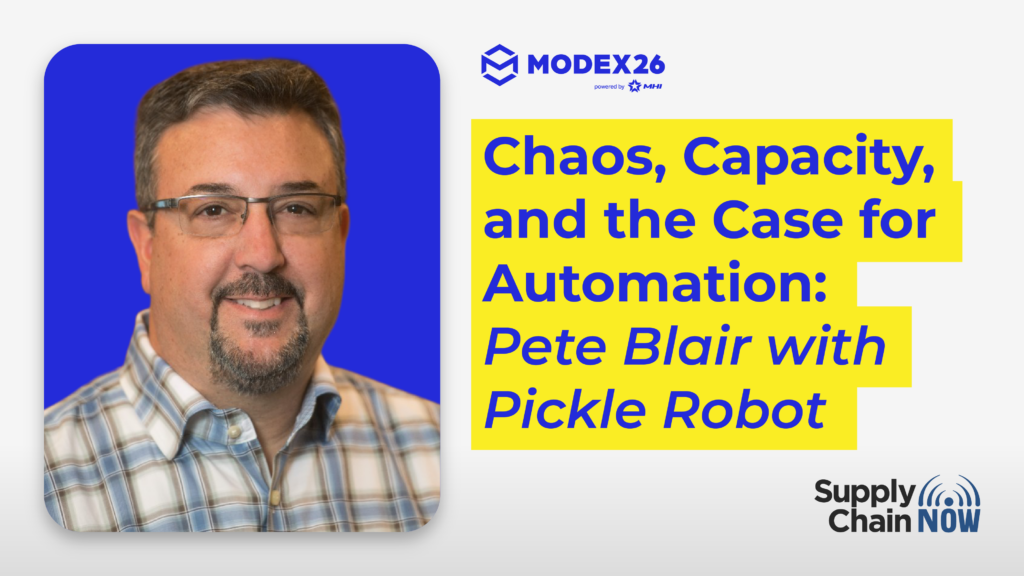
Chaos, Capacity, and the Case for Automation: Pete Blair with Pickle Robot
At MODEX 2026 in Atlanta, the energy was unmistakable. With thousands of supply chain professionals gathered, one theme echoed across conversations: uncertainty is no longer episodic. It’s constant and seemingly endless. In a candid discussion with Scott Luton, Pete Blair, VP of Product & Marketing at Pickle Robot, unpacked how organizations are navigating volatility, workforce challenges, and the growing role of automation in keeping operations moving. Navigating Tariffs and a Moving Target If there’s one word defining today’s global supply chain environment, it’s unpredictability. Blair points to tariffs as a prime example; and not just their presence, but their volatility. “The biggest thing we see… is the chaos of tariffs. It’s not so much that customers have to pay tariffs or not pay tariffs, it’s that they don’t know how to plan,” Blair explains. That lack of predictability is forcing organizations to rethink their networks in real time. Companies are shifting sourcing strategies, standing up temporary distribution centers in new geographies, and even making drastic decisions about whether importing goods makes financial sense at all. What’s particularly challenging isn’t the cost itself. But rather, it’s the inability to forecast. Supply chains, while resilient, aren’t designed for abrupt swings like…