
More
supply chain
February 6, 2026
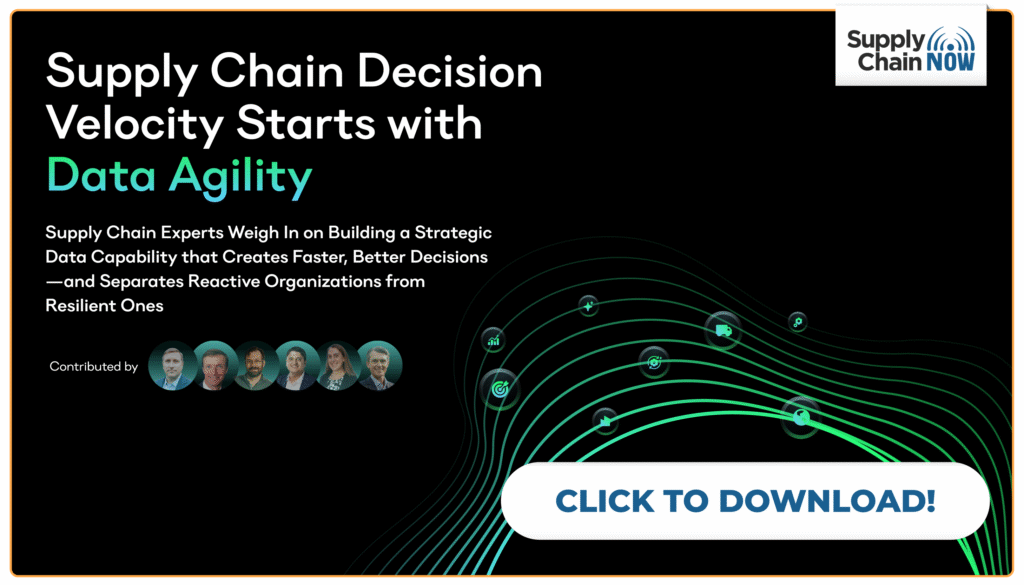
Supply Chain Decision Velocity Starts with Data Agility
Six industry leaders reveal how to build data agility—and why it’s the key to competitive advantage. Most teams spend 70–90% of their time preparing data—not analyzing it. By the time data is ready for analysis, the market has moved. Opportunities vanish. Competitors act. One company nearly built a $400M facility 550 miles from the optimal location. The cost of that mistake would have been $2 billion over the plant’s lifetime. They caught it with always-on data analytics. Would you? “In uncertainty-driven environments, expanded analytical capacity translates directly to resilience. Organizations that can model more futures make more informed commitments.” Download the white paper to discover: Why data—not talent or technology—is the real bottleneck How leading organizations are building reusable data infrastructure that cuts prep time by 80% What data agility unlocks: faster refreshes that deliver savings now, coverage across every business and region, and the capacity to finally tackle cost-to-serve, risk analysis, and inventory optimization The shift from ad-hoc projects to always-on decision-making capability Featuring insights from veterans of Cargill, Nestlé, McKinsey, and more. DOWNLOAD NOW
carriers
February 6, 2026
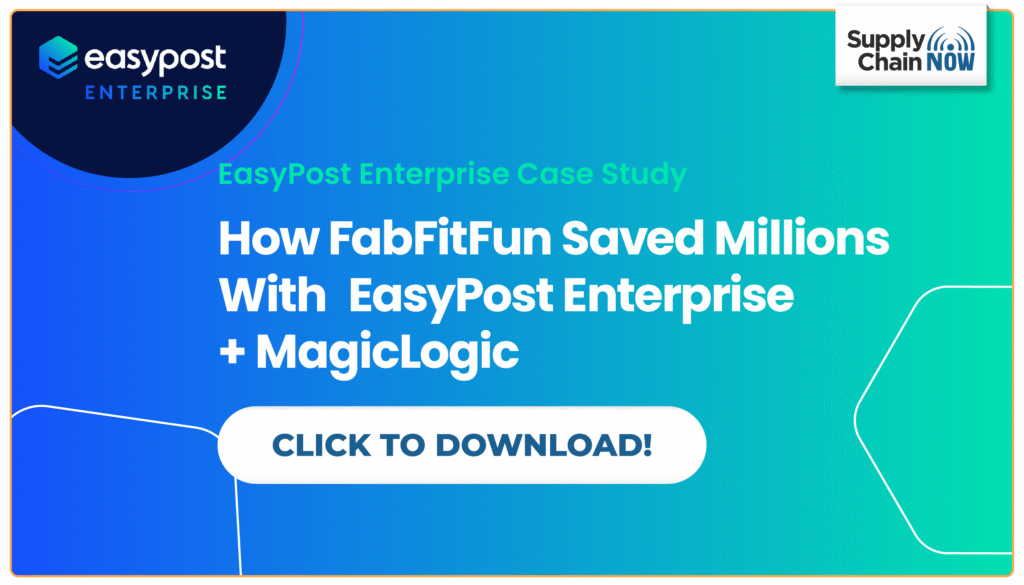
Boxed for Success: How FabFItFun Saved Millions with EasyPost Enterprise + MagicLogic
As customization and volume surged, FabFitFun partnered with EasyPost Enterprise and MagicLogic to eliminate waste, reduce costs, and scale shipping with confidence. As FabFitFun evolved from curated to fully customizable subscription boxes, shipping complexity—and cost—rose quickly. Larger cartons, mixed ecommerce orders, and reliance on a single carrier network made it difficult to scale efficiently without sacrificing margins or speed. By implementing intelligent cartonization through MagicLogic and multi-carrier rate shopping via EasyPost Enterprise, FabFitFun transformed its fulfillment operation—cutting waste, improving resilience, and unlocking multimillion-dollar savings in record time. What You’ll Learn in This Case Study How FabFitFun eliminated 80% of overboxing through right-sized packaging How multi-carrier rate shopping drove millions in quarterly shipping savings Why cartonization delivered ROI in less than one week How enterprise shippers can reduce costs without slowing down growth This case study shows how enterprise brands can turn shipping from a cost center into a competitive advantage—delivering immediate financial impact, operational efficiency, and long-term scalability. Download the case study to see how FabFitFun did it—and what’s possible for your operation. DOWNLOAD NOW