

More
April 24, 2020
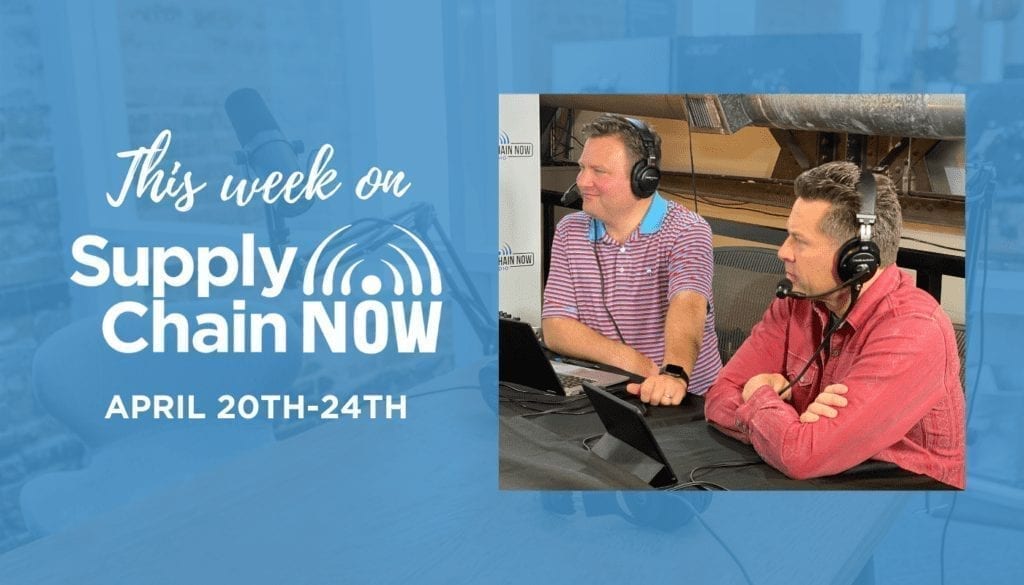
This Week on Supply Chain Now: April 20-24
It has been another busy week for Supply Chain Now! Did you catch all the episodes? If not, no worries! Check them all out here: We started out the week with a new episode in our Logistics with a Purpose series sponsored by our good friends at Vector Global Logistics. Listen as Scott, Greg, and Enrique have a great conversation with Mickey Horner with Rise Against Hunger. On Tuesday, Scott and Greg were joined by AIAG’s CR Summit speaker Joerg Walden, CEO of iPoint. Then we published the new and improved Supply Chain Buzz, with Scott and Greg sharing and discussing the latest news and events in Supply Chain and beyond. Scott and Greg were joined by Randy Strang with MedShare on Thursday for another episode in the Logistics with a Purpose series, sponsored by Vector Global Logistics. And to wrap up the week, Scott and fellow host Fred Tolbert with Demand Solutions were proud to host three exceptional Supply Chain students from the University of Georgia’s Terry College of Business.
January 12, 2021
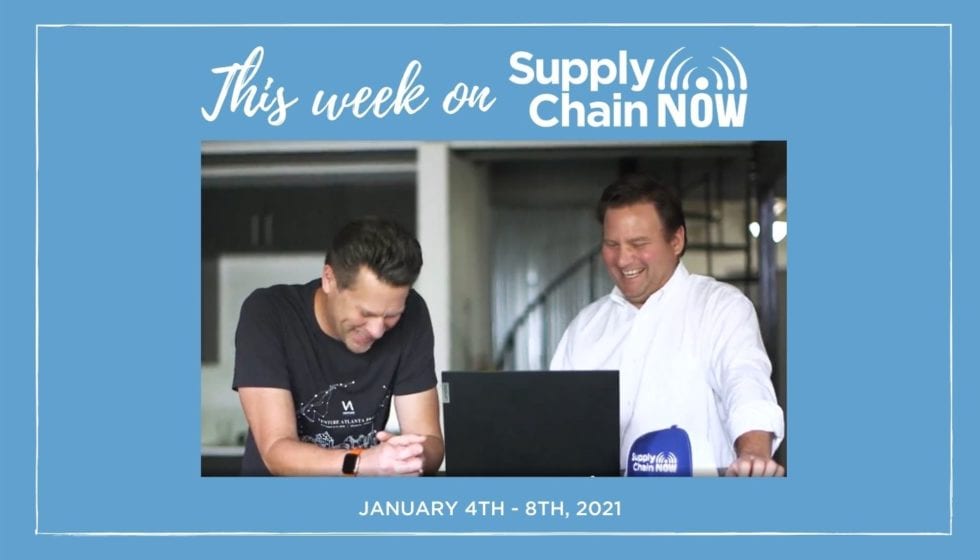
This Week on Supply Chain Now: January 4th – 8th
Get Ready to increase your supply chain IQ! We’ve got all the latest episodes, interviews, conversations, and livestreams right here from Supply Chain Now this week. On Monday, TEKTOK host Karin Bursa sat down with Scott to look back on 2020 and discuss what’s on the horizon for 2021 On Tuesday’s podcast episode, Kelly Barner joined Scott to discuss the lessons learned in 2020 and what’s to come in 2021. On Wednesday, Scott welcomed Joe Donnell and Karl Fillhouer with Circle Logistics to talk about the recruiting and talent challenges they faced in 2020, consumer demand predictions after pandemic restrictions are lifted, & the next frontier in technological innovation. On Thursday, Scott and Greg welcome Nurfad Nadarevic to the Supply Chain Buzz to discuss the COVID-19 vaccine distribution, automotive changes ahead, and more top news in supply chain this week. We ended the week with an episode of TEKTOK, powered by Supply Chain Now, where host Karin Bursa shared the 3 Things C-Level execs need to know about Sales & Operations Planning & Inventory Optimization. Which was your favorite episode this week? Never miss an episode by subscribing to Supply Chain Now! Make sure you…