

More
supply chain podcast
April 8, 2025
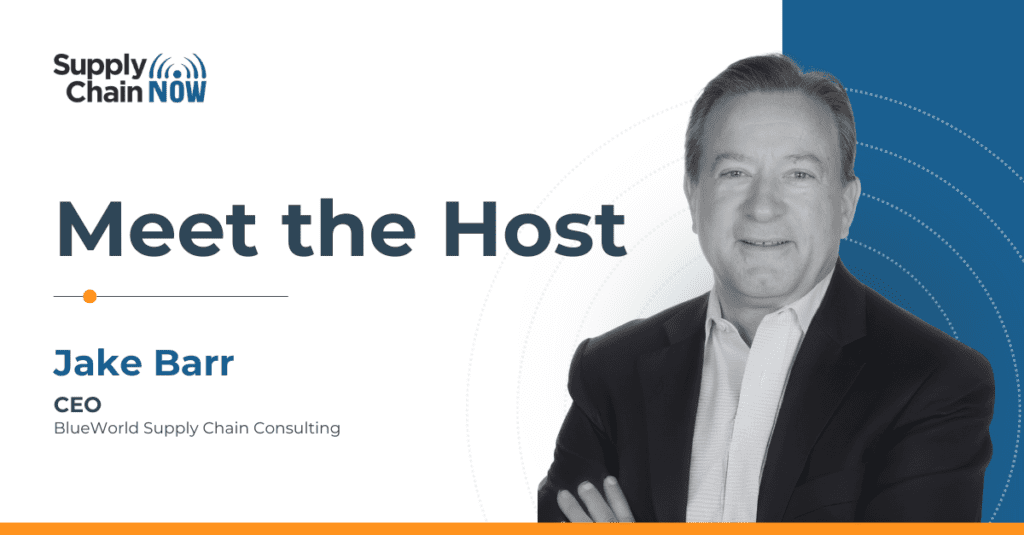
Meet the Supply Chain Now Host: Jake Barr
Supply Chain Now is the voice of the supply chain industry, and our hosts are experts in the field. Podcast listeners and webinar viewers tune in to hear the sage advice of host Jake Barr, heralded as an architect of global supply chain strategy and creator of “profit powerhouses.” Earning His Spot on Stage Barr today is the CEO of BlueWorld Supply Chain Consulting, which provides support to such Fortune 500 companies as Cargill, Caterpillar, 3M, PepsiCo, and Pfizer and helps them bring products to market. “We place a premium on accelerating speed to market by leveraging supply chain transformation,” he says. “The result is better operating margin performance and the opportunity to drive faster growth in revenue.” During his more than 33 years with Procter & Gamble, Barr served as the global director of supply network operations and led the end-to-end planning transformation project, which created control towers that now manage the daily business globally and earned him recognition as the architect for the company’s demand-driven supply chain strategy. He served on the MIT Center for Transportation & Logistics advisory council for its Supply Chain 2020 Project, was named to the League of Leaders for retail and consumer goods…
workforce
April 28, 2026
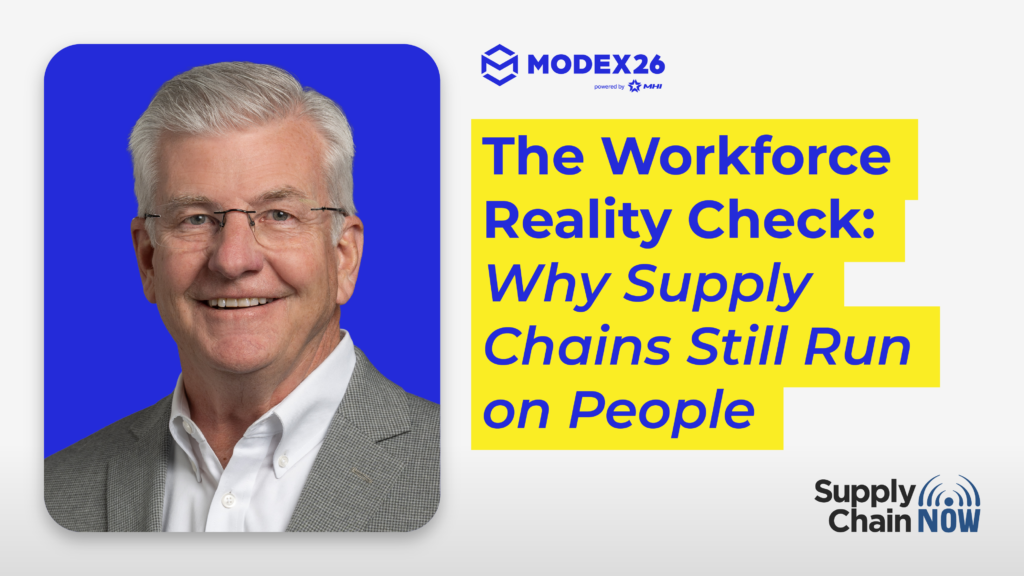
The Workforce Reality Check: Why Supply Chains Still Run on People
At the jampacked MODEX 2026 in Atlanta, Scott Luton sat down with Brian Devine, President & CEO of Ignite Industrial Professionals, for a grounded and timely conversation about one of the most pressing issues in global supply chain: the workforce. While automation continues to dominate headlines, Devine makes one thing clear: people are still at the center of it all. And finding them is getting harder by the day. “Fingerprints on Every Box” Despite rapid advancements in robotics and automation, Devine emphasizes a fundamental truth that often gets overlooked. “There’s still… fingerprints on boxes. Somebody’s putting their fingerprints on tons of boxes to move it to the next phase of the supply chain,” he explains. Even in many highly automated environments, human labor remains essential. Devine shares an example of a cutting-edge facility where autonomous forklifts handle part of the process, but still rely on human operators to complete the job. The takeaway? Automation is largely augmenting, rather than replacing, the workforce. And that makes the labor shortage even more critical to address. A Shrinking Labor Pool One of the most compelling parts of the discussion centers on simple supply-and-demand economics. The labor pool isn’t just tight. It’s…