

More
October 29, 2021
This Week In Supply Chain Now: October 25th – 29th
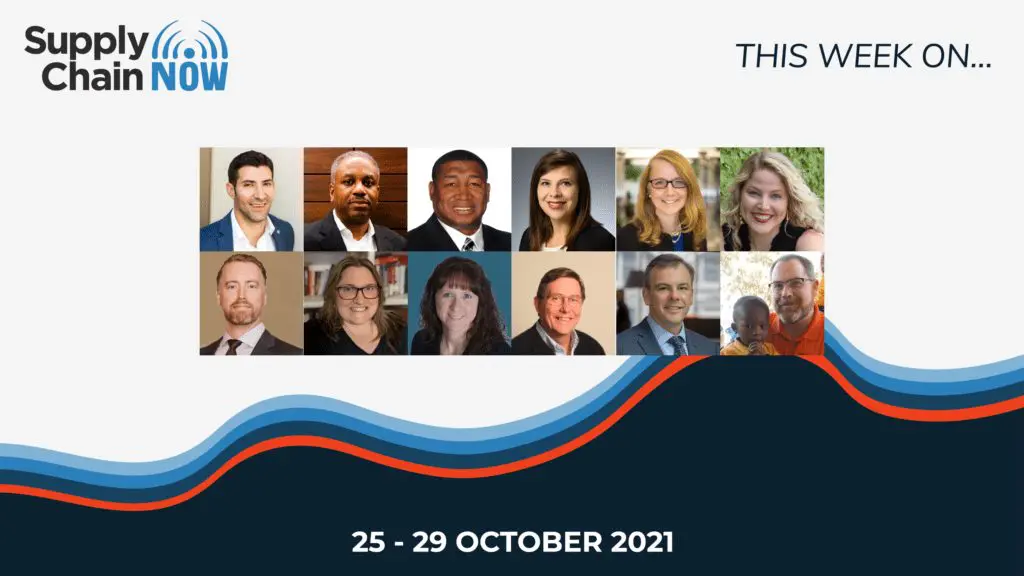
Stay up to date on all the latest conversations, interviews, and episodes we released this week here at Supply Chain Now! We started this week off with an episode of Digital Transformers with host Kevin L. Jackson. During this episode, Kevin sits down with three digital experts to discuss new approaches to establishing trust and provenance within a supply chain that is increasingly both digital and physical. This episode features Dustin McIntire the CTO of COMSovereign Holding Corporation. Eric Adolphe the CEO of Forward Edge-AI and Joshua Pendrick the CEO and Co-founder of Rypplzz. For Monday’s This Week In Business History episode, Kelly Barner talks about the political act that led to an increase in organized crime and the end of the Great Depression. On Tuesday, we released a new episode of Supply Chain Now with host Scott Luton and guest host Allison Giddens. They welcomed the head of Global Supply Chain for Peloton, Jennifer McKeehan, to the show. They discussed how the hybrid work environment is allowing the best leaders to shine by continuing to build strong, meaningful relationships, and much more. This week we released an episode of Logistics With Purpose with hosts Enrique Alvarez and Kristi Porter.…
February 17, 2021
This Week on Supply Chain Now: February 8th – 14th
Listen up to the latest episodes, interviews, conversations, and livestreams from Supply Chain Now this week! On Monday, Scott Luton and guest host Will Haraway welcomed JP Wiggins with 3Gtms for a conversation on transportation management and even a little baseball! On Tuesday, Host Karin Bursa welcomed supply chain genius Criag Ablin to TEK TOK to discuss the 6 levers that drive digital and physical success. On Wednesday, we kicked off our Reverse Logistics series in partnership with the Reverse Logistics Association featuring Chuck Johnson, COO of goTRG. Tune in for a great conversation about peak returns season, with passionate opinions from Chuck, our hosts Scott, Greg, and Tony Sciarrotta, and our audience! On Thursday, Scott Luton, Greg White, and Enrique Alvarez sat down to discuss all the top news and biggest stories in supply chain this week on The Supply Chain Buzz. On Friday, Scott Luton dived into the top news in business, including industry developments in the tech and talent sector, aviation, the beverage industry, and more! And we wrapped up with a bonus livestream this Saturday to discuss Supply Chain leadership across Africa. Which was your favorite episode? Make sure…