

More

April 16, 2021
This Week In Supply Chain Now: April 12th – 16th
Stay in the loop with Supply Chain Now! We’ve got all the latest episodes, interviews, conversations, and livestreams from this week right here. On Monday, we released 2 new episodes! On Supply Chain Now, hosts Scott Luton and Ben Harris welcomed two bold and innovative CEOs to the podcast: Cloe Guidry-Reed with Hire Ground and Pierre Laguerre with Fleeting. On This Week in Business History, guest host Kelly Barner remembers key innovations, inventions, and firsts that took place between April 12th and the 16th, including Metallica’s legal stand against Napster, the relative advantages and costs of the Pony Express and postage stamps, and two ‘Titanic’ operations – the RMS Titanic and McDonald’s Inc. On Tuesday, we released 2 new episodes. On this episode of Logistics with Purpose, powered in partnership with Vector Global Logistics, our hosts Scott Luton, Enrique Alvarez, and Kevin Brown sat down with Good360 CEO Matt Connelly to learn more about delivering goods – and good – in the era of disruption, globalization, and digitization. On TECHquila Sunrise, host Greg White sat down with Peter Stangeland, Chief Commercial Officer of DB Schenker, to talk about the exciting progress his teams have made in clearing the path to…
May 12, 2025
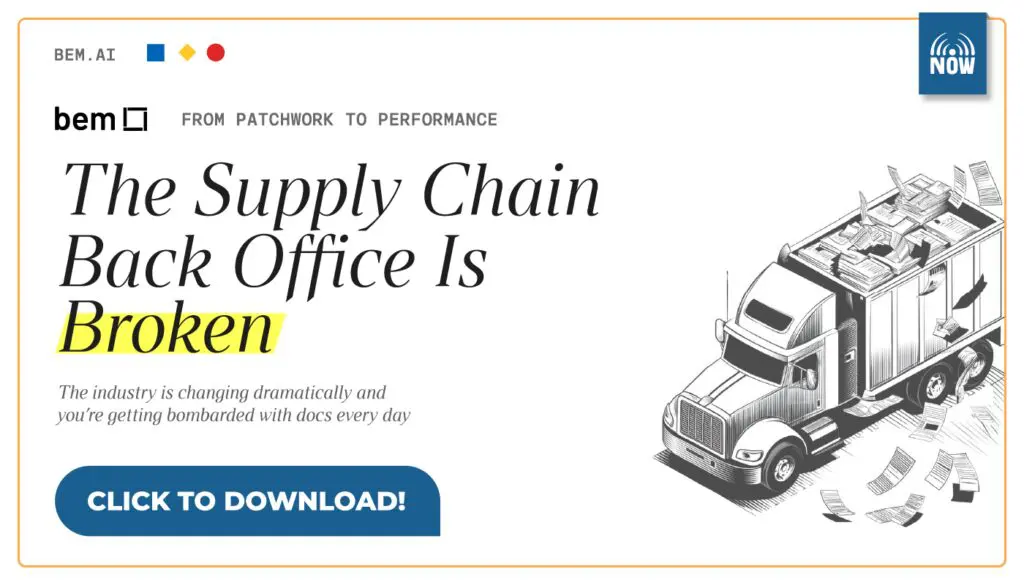
The Supply Chain Back Office Is Broken
Your TMS and ERP aren’t enough. Despite billions spent on supply chain tech, most teams still run on PDFs, spreadsheets, and email threads—creating manual chaos that slows everything down. This eye-opening white paper reveals how top supply chain teams are using an invisible layer of AI to streamline operations—no dashboards, no extra headcount, no noise. Download now to learn how to eliminate manual bottlenecks and give logistics teams their time—and sanity—back. Uncover the hidden gems – Manual workflows waste hours and create delays. Learn how to fix it fast. See real results – Cut shipment intake from 30 minutes to 10 seconds, without new tools or extra headcount. Discover smart automation – Learn how to turn messy emails and PDFs into structured data that flows seamlessly into your systems. Ditch manual chaos and see how an ambient back office that never sleeps can save your team thousands of hours, eliminate costly errors, and unlock the true potential of your supply chain. Download the white paper here to learn more