

More
October 8, 2021
This Week In Supply Chain Now: October 4th – 8th
Stay up to date on all the latest conversations, interviews, and episodes we released this week here at Supply Chain Now! Kelly Barner and Scott Luton brought in the week with an episode of Dial P for Procurement on Supply Chain Now. For this episode, the P in Dial P is for payments. Kelly and Scott welcome Kris Lance with Una and Jim Luff with Chosen Payments, to the show. For Monday’s This Week In Business History, Scott covers the many hats that Ray Kroc wore as he built the Mcdonald’s global brand. On Tuesday, we released another episode of TEKTOK with Karin Bursa and special host Kevin L. Jackson. This episode is all about BLOCKCHAIN, from the basics to process improvements. On Wednesday’s episode of Supply Chain Now, Scott and Greg welcomed Tim Holland, Contingent Workforce and Talent Acquisition Leader and Barb Sexton Vice President, Partner Development for Corporate Services with OMNIA Partners, LIVE to the show as they broadcast from the OMNIA Partners 2021 Connections Event in Miami. Scott and Greg had another opportunity to chat with OMNIA Partners leaders at the 2021 Connections Event as they welcomed Stephen Laratta, Vice President of Partner Development, MRO and Facilities…
leadership
October 28, 2025
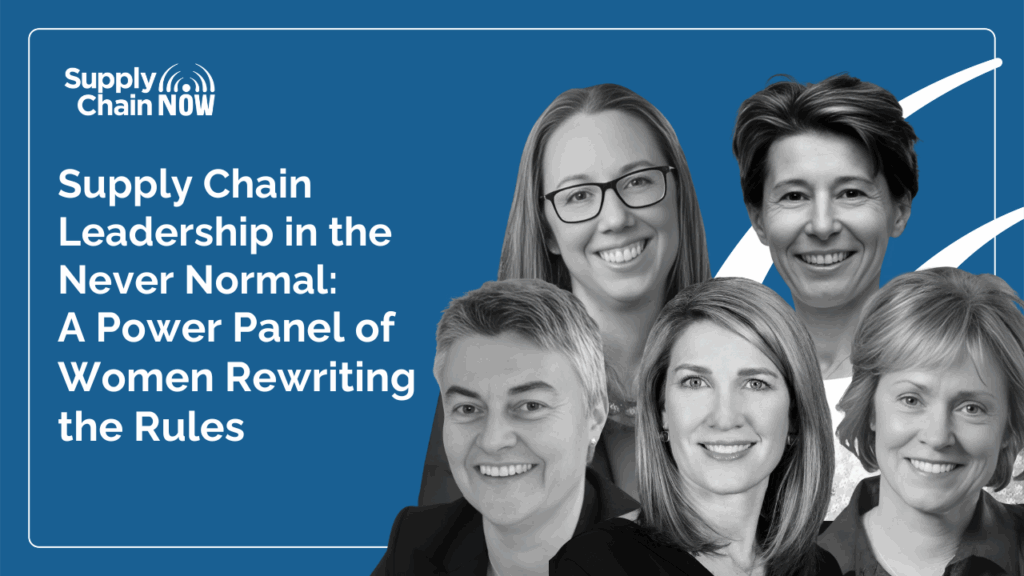
Thriving in the Never Normal – Lessons Learned from 5 Women Supply Chain Leaders
Written by Karin Bursa, Founder and CEO of NIRAKIO and Supply Chain Now Host If you know me, you know I’m a supply chain nerd. I love talking about it, thinking about what’s next, and sharing success stories to inspire others who may feel overwhelmed or unsure where to start. So, when I stepped into the moderator’s chair for our recent Supply Chain Now livestream, I knew we were in for a powerful conversation. Five extraordinary women — each leading global supply chains at some of the world’s most iconic brands — came together to share how they are navigating disruption, embracing innovation, and shaping the future of supply chain leadership. As a fellow Woman in Supply Chain for over 30 years, I had to resist acting like a true ‘Fan Girl’ — I could have talked with them for hours. The world we live in is the “Never Normal.” Volatility is constant. Technology is advancing faster than our operating models. Yet, what struck me most during our panel was the optimism and resilience each leader displayed. These women are proof that even in the face of complexity, supply chains can be transformed into engines of business growth, agility, and…