

More
Red Sea
April 14, 2025
Supply Chain Now’s Guide to the Red Sea Crisis
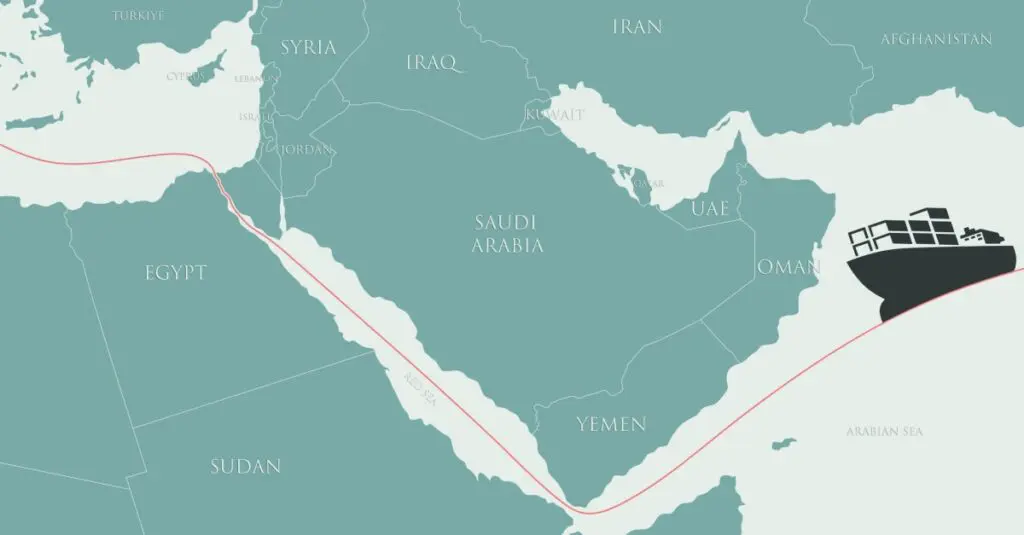
An estimated 12% of global trade worth more than $1 trillion traverses the Red Sea each year. When Houthi rebels started attacking commercial vessels in November 2023, ocean carriers began rerouting container ships around Africa’s Cape of Good Horn rather than through the Suez Canal on voyages from Asia to Europe. That greatly increased travel time and costs. As of March of this year, shipping through the Red Sea was still down 70% from before the attacks began, according to The Economist, with many ocean carriers still avoiding the Bab el-Mandeb Strait, which separates the Red Sea from the Gulf of Aden and the Arabian Peninsula. Maritime Industry Caught in the Crosshairs Houthi rebels launched attacks on ships in the Red Sea in response to Israel’s military operations in Gaza. The Houthis attacked more than 100 cargo ships between November 2023 and January 2025. The attacks, with missiles and drones, sunk two vessels and killed four sailors. In late October 2024, a headline in gCaptain read, “Red Sea Is Now So Dangerous Even NATO Warships Are Avoiding It.” “The United States Navy continues to send warships through the Red Sea, but its mission to protect merchant ships – Operation Prosperity…
November 20, 2020
This Week on Supply Chain Now: November 16th – November 20th
Supply Chain Now has been full of great conversations, key takeaways, and inspiring stories from some amazing business leaders this week. Make sure you catch all the latest episodes, interviews, conversations, and livestreams right here for all the hottest supply chain news! On Saturday, Steve Britt, senior manager for customs at Fiat Chrysler Automobiles, joins us in partnership with AIAG – Automotive Industry Action Group’s 2020 Supply Chain Summit to talk about his role and thepartnership between industry and US Customs and Border Protection. On Monday, Scott and the Vector Global Logistics team sat down with Steven Stirling from MAP International for an episode of our Logistics with Purpose series to hear Steven’s inspiring story that made him dedicate his life to bringing critical medicines and health supplies to some of the world’s poorest people. On Tuesday, TEK TOK Digital Supply Chain Podcast with host Karin Bursa welcomed industry trailblazer Lora Cecere, CEO of Supply Chain Insights, to hear about Lora’s career path On Wednesday, Scott and Greg sit down with Bob Bova from AccuSpeechMobile to the Supply Chain Buzz to talk about how voice automation in the warehouse is increasing producitivity and announcing na…