

More
Red Sea
April 14, 2025
Supply Chain Now’s Guide to the Red Sea Crisis
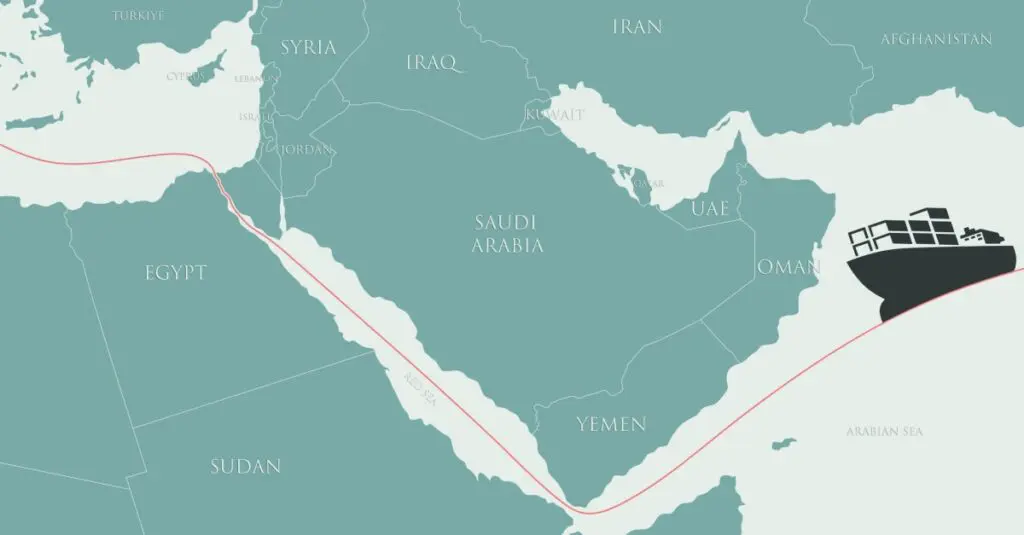
An estimated 12% of global trade worth more than $1 trillion traverses the Red Sea each year. When Houthi rebels started attacking commercial vessels in November 2023, ocean carriers began rerouting container ships around Africa’s Cape of Good Horn rather than through the Suez Canal on voyages from Asia to Europe. That greatly increased travel time and costs. As of March of this year, shipping through the Red Sea was still down 70% from before the attacks began, according to The Economist, with many ocean carriers still avoiding the Bab el-Mandeb Strait, which separates the Red Sea from the Gulf of Aden and the Arabian Peninsula. Maritime Industry Caught in the Crosshairs Houthi rebels launched attacks on ships in the Red Sea in response to Israel’s military operations in Gaza. The Houthis attacked more than 100 cargo ships between November 2023 and January 2025. The attacks, with missiles and drones, sunk two vessels and killed four sailors. In late October 2024, a headline in gCaptain read, “Red Sea Is Now So Dangerous Even NATO Warships Are Avoiding It.” “The United States Navy continues to send warships through the Red Sea, but its mission to protect merchant ships – Operation Prosperity…
May 7, 2025
Understanding the Foundation of Visibility
Most organizations talk about visibility—but few truly achieve it. Are you one of them? In today’s fast-paced, disruption-prone environment, having real-time visibility across your supply chain isn’t a luxury—it’s a necessity. Yet, fewer than 10% of companies surveyed can say they have end-to-end insight into their supply chain operations. So what’s standing in the way? And more importantly—how do you overcome it? “Understanding the Foundation of Visibility” is the first whitepaper in a powerful new series by NCS Partners, designed to help supply chain leaders break down silos, align teams, and turn fragmented data into actionable insight. Download this white paper to learn how to: Identify the five most impactful focus areas for building end-to-end visibility Align leadership and secure cross-functional buy-in to drive transformation Build a clear vision and roadmap to avoid common visibility pitfalls Integrate distributed data sources to enable real-time, actionable insight Promote continuous improvement and communication across teams Whether you’re just beginning your visbility journey or ready to refine your approach, this foundational guide offers expert-backed strategies used by top-performing organizations. Download the “Understanding the Foundation of Visbility” white paper here to learn more