

More
procurement
April 15, 2025
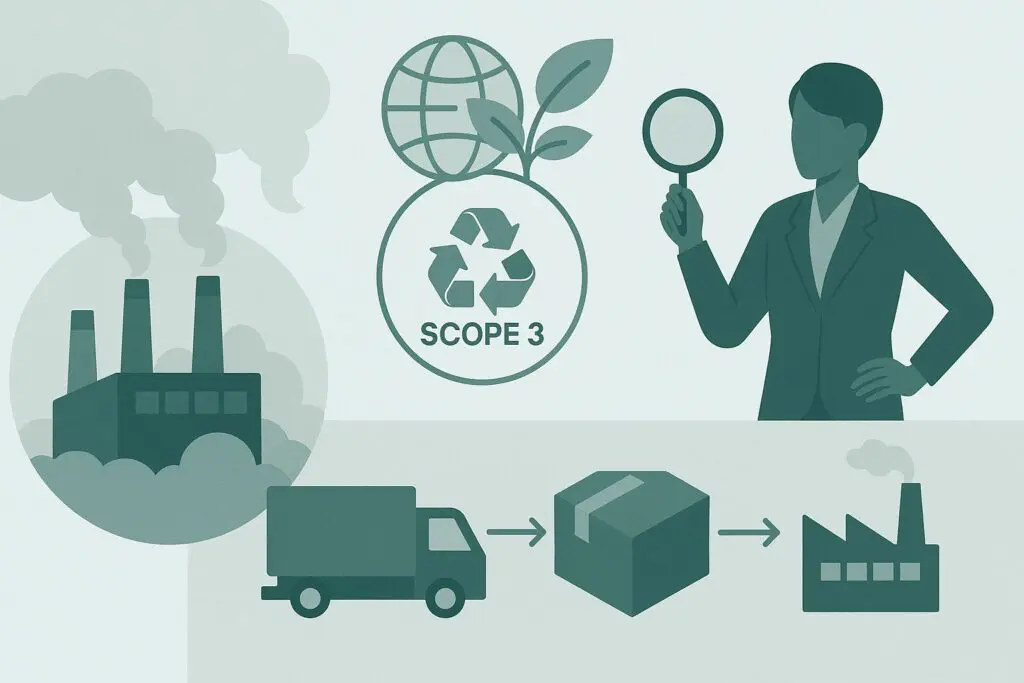
Enabling Procurement Professions to Tackle Scope 3 Emissions
Special Guest Blog Post written by Memory Mathema Tackling climate change is one of the defining challenges of our lifetime. Understanding the implications of decarbonization is imperative to eliminating the risks that come with taking a complacent approach. Our responsibility lies in understanding the impact of our operations and acknowledging the escalating urgency to transition to a carbon neutral future and reduce the environmental footprint of all business undertakings. This is not only right for individual organizations but for the good of the whole society. South Africa ranks 14th globally in carbon emissions and stands as Africa’s leading polluter. The nation’s energy intense economy highlights its crucial role in spearheading efforts to reduce the continent’s carbon footprint and achieve net zero goals. Outdated energy generation methods, particularly coal reliance for 80% of energy needs, overshadow the country’s vast potential in hydrogen, solar and wind power. Both public and private sectors are recognizing the need for sustainable alternatives and are transitioning towards greener energy sources, fostering a shift towards sustainable carbon neutral supply chains. Addressing Scope 3 emissions, which constitute a significant portion of global greenhouse gas emissions, is necessary to delivering carbon neutrality across operations. Organizations must entrench an…
September 4, 2020
This Week on Supply Chain Now: August 31st – September 4th
Another busy week full of new episodes and livestreams at Supply Chain Now! If you missed an episode, get a quick summary and listen here. On Monday, our very own Clay “The Dawg” Phillips gives some insight on his job at Supply Chain Now. Supply Chain Now · “Recent Key Takeaways with Clay “The Dawg” Phillips” On Tuesday, Scott & Greg welcomed Shannon Vaillancourt with RateLinx and Tim Judge with Agillitics to the show to share about optimizing supply chain decision making. Supply Chain Now · “Optimizing Decision-Making in Supply Chain in 2020 & Beyond” On Wednesday, we published this week’s Supply Chain Buzz, complete with the Retail Rundown and with special guest Chris Lingamfelter with 6 River Systems. Supply Chain Now · “The Supply Chain Buzz for August 31st: The Retail Rundown & Chris Lingamfelter” On Thursday, Scott and Greg welcomed co-host Paul Noble with Verusen to the show and featured Scott Armstrong with CONA Services LLC as their special guest. Supply Chain Now · ” A View from the CFO’s Office: Scott Armstrong with CONA Services LLC” And we wrapped up the week with Greg’s TECHquila Sunrise as he gives some…