

Laura Lopez
Laura Lopez serves as our Supply Chain Now Marketing Coordinator. She graduated from Instituto Tecnológico y de Estudios Superiores de Occidente in Mexico with a degree in marketing. Laura loves everything digital because she sees the potential it holds for companies in the marketing industry. Her passion for creativity and thinking outside the box led her to pursue a career in marketing. With experience in fields like accounting, digital marketing, and restaurants, she clearly enjoys taking on challenges. Laura lives the best of both worlds – you’ll either catch her hanging out with her friends soaking up the sun in Mexico or flying out to visit her family in California!
More

AI
January 9, 2026
John Galt’s Justin Siefert on Planning, Uncertainty, and Making AI Practical for Everyone
At the 2025 Gartner Supply Chain Planning Summit in Denver, Scott Luton caught up with Justin Siefert, a familiar face in the supply chain community and a leader at John Galt Solutions, a global provider of end-to-end supply chain planning software. From demand and supply planning to inventory and S&OP, John Galt supports organizations across industries with the holistic capabilities needed to thrive in an increasingly unpredictable landscape. A Company Investing in the Next Generation Before diving into industry trends, Siefert shared an update on one of the programs that sets John Galt apart: its supply chain scholarship program, which awards $10,000 to students pursuing supply chain degrees. This year’s cycle brought in a record number of nominations, with new winners set to be announced in January. It’s an initiative Siefert is proud of—and one that reflects John Galt’s belief in cultivating tomorrow’s leaders. Old Problems, New Pressures: Planning in a World of Uncertainty When asked about the biggest challenges facing planners today, Siefert didn’t hesitate: uncertainty. While the forms of disruption change—pandemics, geopolitical shifts, demand shocks, evolving portfolios—the underlying challenge remains the same. Planners must anticipate what’s next and respond quickly, often in real time. “No day…
June 12, 2020
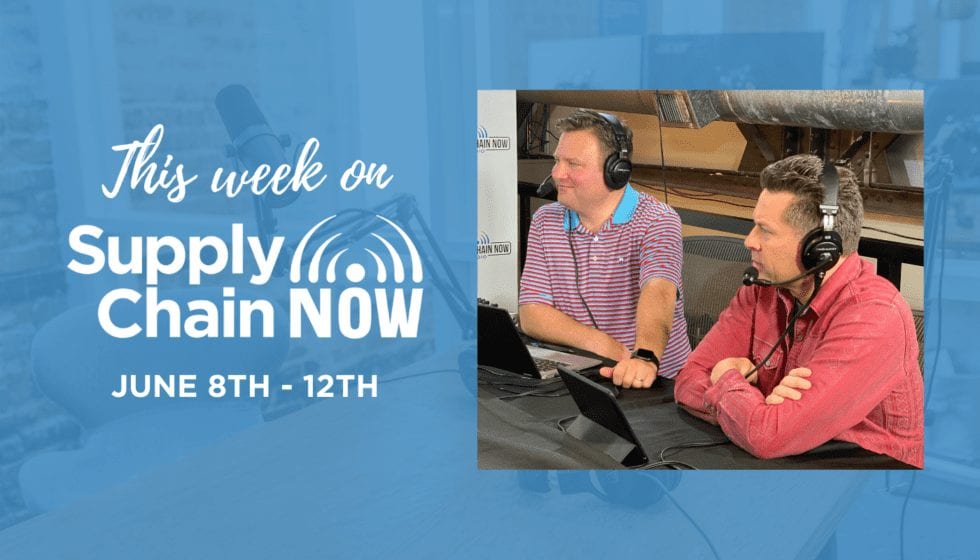
This Week on Supply Chain Now: June 8th – 12th
Another great week here at Supply Chain Now! Have you listened to all the episodes? If not, you can check them all out here: On Monday, Scott and Greg chatted with Jenny Froome and Dominique Zwinkels. Supply Chain Now · “Supply Chain Front & Center: Jenny Froome & Dominique Zwinkels” Then on Tuesday, we continued in the Logistics with Purpose series and welcomed Jeremy Newhouse with MATTER to the podcast. Supply Chain Now · “Logistics with Purpose: Jeremy Newhouse with MATTER” On Wednesday, Scott and Greg tackled the top news in supply chain on the Buzz, and welcomed special guest Rob Lopez with Peach Tree Commercial Capital. Supply Chain Now · “Supply Chain Buzz with Rob Lopez & Peach Tree Commercial Captial: Manufacturing, Money & More” Scott and Greg were joined by Lynne Johnson and Joe Barto with AME on Thursday: Supply Chain Now · “Helping Manufacturers Share, Learn, & Grow: Joe Barto & Lynne Johnson with AME” And we wrapped up the week as Scott and Greg were joined by Ricahrd Schrade with Automation Intelligence: Supply Chain Now · “Tomorrow’s Automation Today: Richard Schrade, Co-Founder & President of Automation Intelligence” Which…