
From Planning to Decision Making
More
foundational industries investment
February 23, 2026
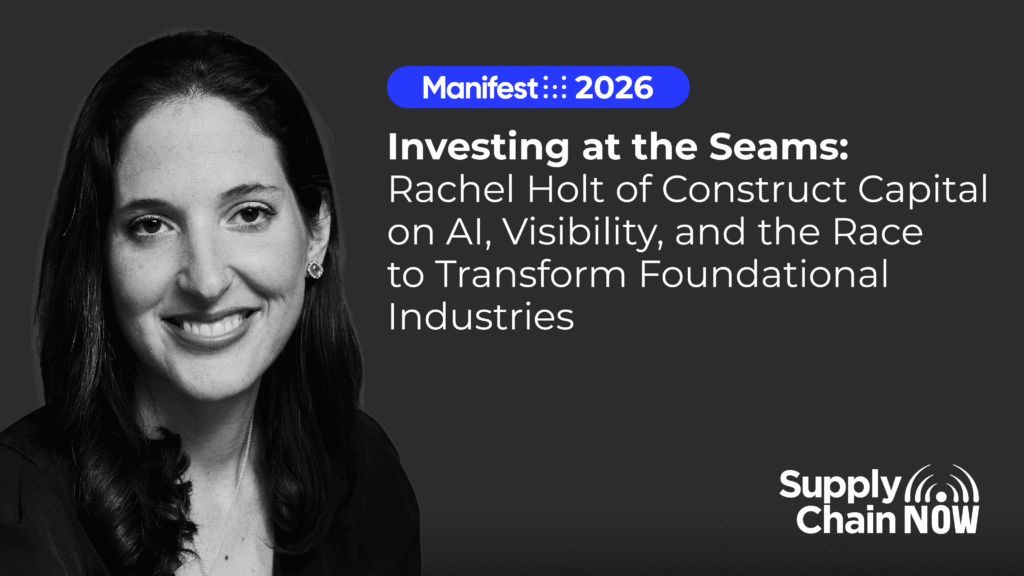
Investing at the Seams: Rachel Holt of Construct Capital on AI, Visibility, and the Race to Transform Foundational Industries
From Uber to Foundational Industries At Manifest 2026, Scott Luton sat down with Rachel Holt, Co-Founder and Managing Partner of Construct Capital, to explore how venture capital is fueling the next era of supply chain innovation. Construct Capital, now six years old, was founded in early 2020 with a bold thesis: transform foundational industries that represent nearly half of GDP: supply chain, logistics, manufacturing, mobility, infrastructure, and defense. When the fund launched, Holt recalls many skeptics asking whether supply chain and logistics were truly venture-scale opportunities. It echoed what she heard when she joined Uber in 2011, when transportation was considered slow moving and heavily regulated. Yet Uber went on to redefine personal logistics. Her final years at Uber brought a pivotal lesson. While the rides business operated with second-by-second visibility, the company’s e-bike and scooter supply chain operated in near darkness. Products shipped from China would disappear for weeks at sea, briefly reappear at ports, then stall again in customs. “We had no visibility, we had no ability to reroute,” Holt shared, as this Eureka moment would go on to help shape her investment focus. The Visibility Gap at the Seams Supply chain, Holt emphasized, is not monolithic.…
July 30, 2021
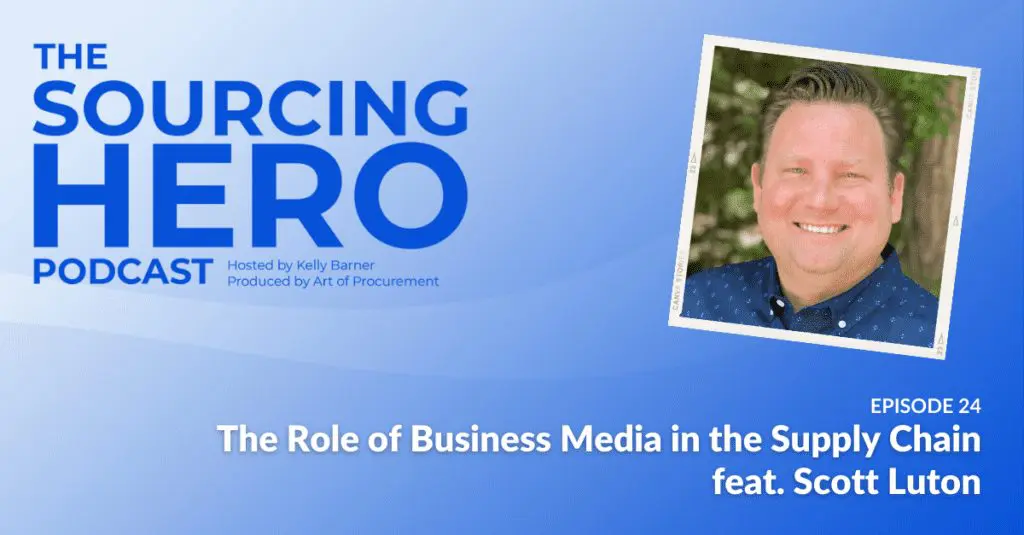
Supply Chain Now CEO, Scott Luton, Featured on The Sourcing Hero Podcast
As Kelly Barner, host of Dial P for Procurement here on Supply Chain Now and host of The Sourcing Hero, says, “The volume of business content being created, shared and discussed every day can feel overwhelming, especially if you are trying to stay on top of best practices and make the most of your professional network. How we choose to spend our scarce listening and watching time is an important decision, and with many (many!) options, each content creator has to find a way to bring unique perspectives and value to their community.” Our CEO, Scott Luton, was recently invited to be Kelly’s guest on The Sourcing Hero podcast, and shares why it is just as important to understand a professional’s journey as it is to listen to their point of view on their area of expertise, the role of business media in helping individuals and teams deal with the challenges they face on a daily basis, and why we all need to look for and celebrate good news as often as we can. Listen to the Podcast Episode Here.