Share:

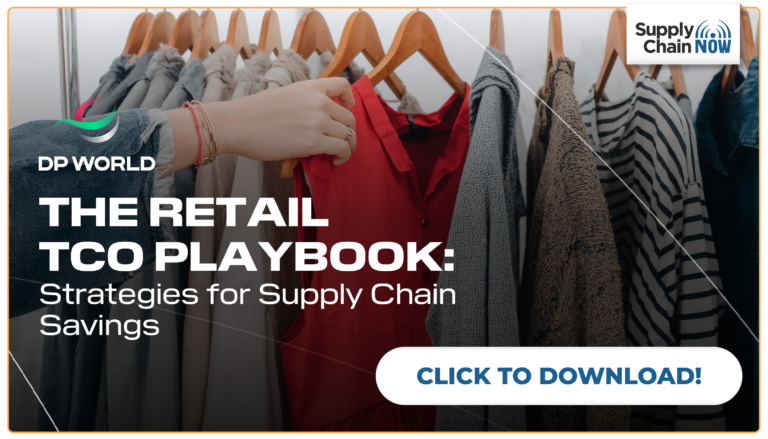
The Retail TCO Playbook: Strategies for Supply Chain Savings

Retail margins rarely disappear all at once, they leak out quietly across transportation, inventory, and returns. As ecommerce grows and return rates rise, retailers are facing higher logistics costs, volatile freight spend, and inventory positioned in the wrong places at the wrong time. Many organizations still operate without true end-to-end visibility, making it difficult to control cost or respond proactively to disruption.

This playbook shows how leading retailers are addressing total cost of ownership (TCO) as a strategic priority, not just an operational metric. Instead of massive transformation programs, it outlines practical actions that can uncover measurable savings in as little as 90 days through better purchase order control, improved visibility, and smarter network design.

Why download this white paper:

  • Identify where margin is leaking across transportation, inventory, and returns
  • Understand the three most effective levers for reducing supply chain cost
  • Learn how to reduce premium freight, improve utilization, and avoid markdowns
  • See how real-time visibility improves planning and service levels
  • Get a step-by-step 90-day pilot roadmap to validate savings
  • Build a finance-ready business case for scalable TCO improvement

By the end, you’ll have a clear framework to evaluate your current operations, prioritize improvements, and turn hidden supply chain inefficiencies into recurring savings.

Click here to download 

More White Papers

White Papers
May 29, 2025

Empowering Smarter Distribution: The Critical Role of Integrator Consultants in Your Automation Strategy

As logistics leaders look to future-proof their operations, they face a complex landscape filled with critical decisions ranging from navigating supply chain volatility and shifting customer expectations to evaluating fast-changing automation technologies. Successfully planning, designing and implementing large-scale automation solutions requires specialized expertise that many organizations don’t have in-house. This white paper from Bastian Solutions is designed to help you understand how the right consulting partner can make a meaningful difference in the success of your automation initiatives. It outlines the strategic role integration consultants play in optimizing distribution operations and provides practical guidance on how to assess their capabilities—so you can confidently choose a partner that aligns with your goals and complexity.   Why download this guide? Find the right partner – Learn how to evaluate and choose a consulting partner that fits your goals and complexity. Go beyond the tech – Understand why process-focused strategies, not just automation, drive real results. Know what OEMs and traditional consultants miss – See the value of objective, end-to-end expertise that prioritizes your full operation. Leverage data & design – Explore how advanced analytics and simulation tools lead to smarter decisions. Follow a proven roadmap – Use a four-phase framework to confidently…
competitive advantage
White Papers
November 5, 2025

Ensuring Forced Labor Compliance in Automotive Supply Chains

Turn data into insight – map, monitor, and mitigate fortced labor risks across your value chain. Since the Uyghur Forced Labor Prevention Act (UFLPA) went into effect in 2022, sub-tier supply chain visibility has become an increasingly critical and ubiquitous prerequisite for import compliance. Automotive companies, due in no small part to their highly complex supply chains, are among the hardest hit by this requirement of anti-forced labor and ESG regulations. A recent study by Sayari analysts found that 95% of leading OEMs’ exposure to forced labor risk comes from sub-tier suppliers. The ability to identify and mitigate risks throughout their value chains is critical for OEMs aiming to minimize operational disruptions, avoid detentions, and maintain competitive advantage. Download the report to learn how Sayari is overcoming barriers to supply chain visibility, enabling OEMs to map their sub-tier supply chains, identify indirect exposure to forced labor risk, and foster greater supply chain resilience in an increasingly dynamic trade landscape. DOWNLOAD NOW