
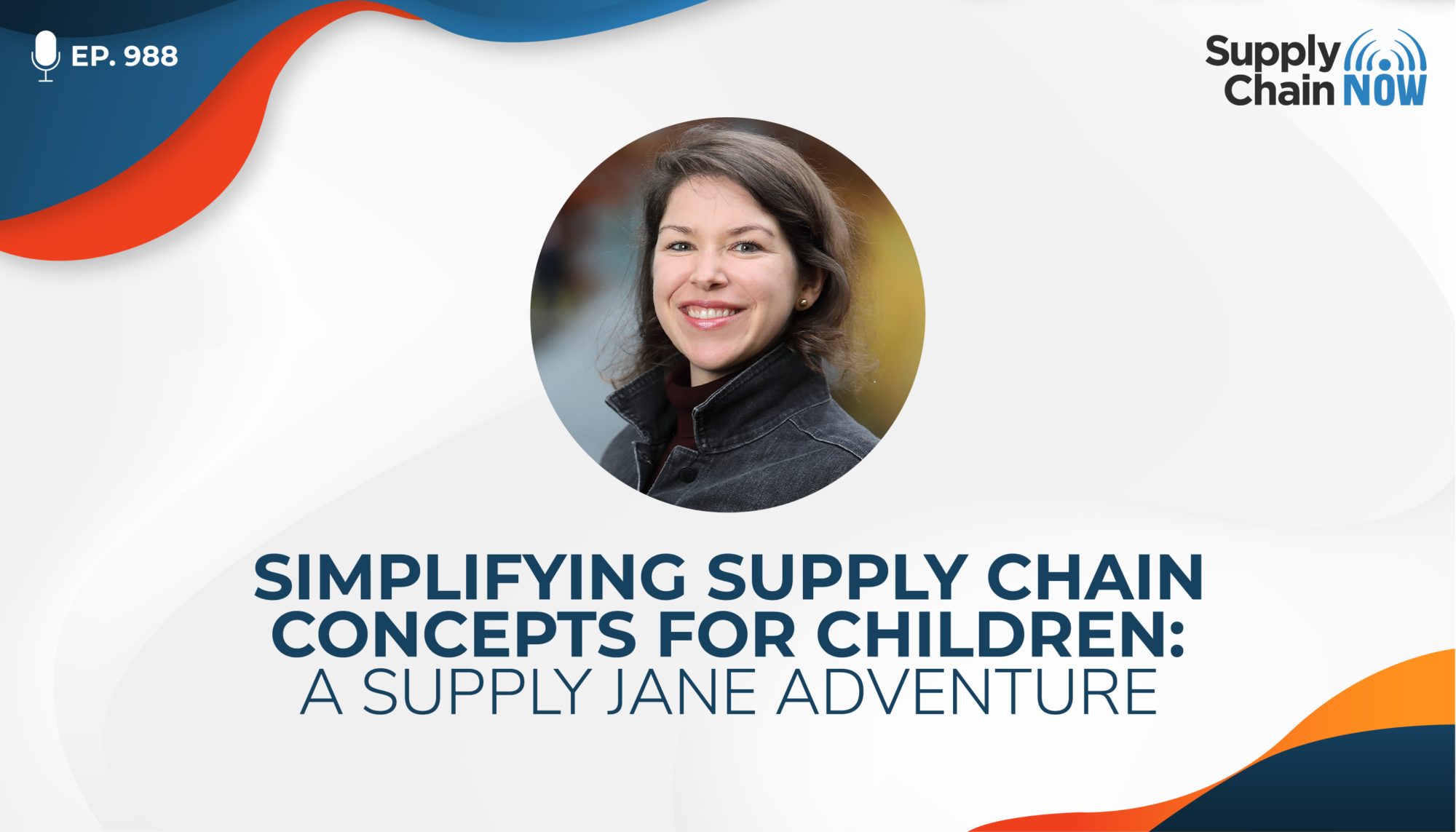

Supply chain professionals are regularly asked to save the day for their company… so does that make a career in supply chain an adventure?
In this episode, host Chris Barnes speaks with Megan Preston Meyer, a former insight analyst, about her illustrated book: FIFO Saves the Day, a Supply Jane Adventure. The purpose of the book is to teach supply chain principles – including stock rotation – to children.
The STEM movement aims to ensure that kids are exposed to the fields of science, technology, engineering, and math – and this book makes sure that supply chain is included as well.
More Podcast Episodes
manufacturing

Podcast
December 10, 2025
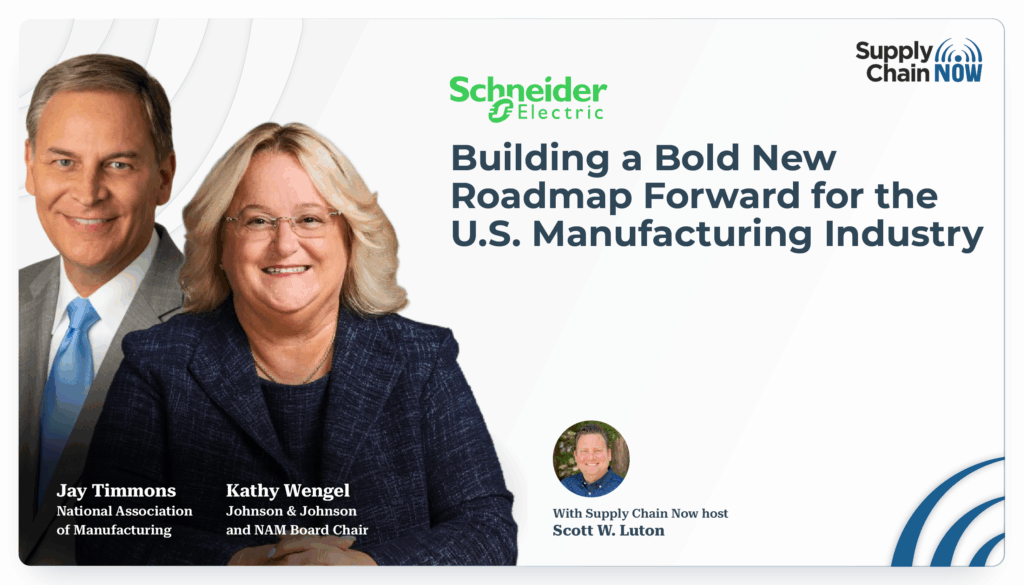
Building a Bold New Roadmap Forward for the U.S. Manufacturing Industry
Tariffs, trade uncertainty, and shifting energy demands are colliding with rapid advances in AI, medtech, and advanced manufacturing. At the same time, companies are racing to fill hundreds of thousands of open roles, rethink how they attract talent, and modernize permitting and policy frameworks that haven’t kept pace with innovation. The result is a U.S. manufacturing sector on the verge of a new chapter, but only if leaders can unlock the right mix of policy, people, and technology. In this episode of Supply Chain Now, Scott Luton sits down with Jay Timmons, President and CEO of the National Association of Manufacturers (NAM), and Kathy Wengel, Executive Vice President, Chief Technical Operations and Risk Officer at Johnson & Johnson, live from the Innovation Summit North America 2025, powered by Schneider Electric. Together, they unpack NAM’s comprehensive manufacturing strategy and the conditions needed for American industry to thrive. Scott, Jay, and Kathy explore how permitting reform, energy leadership (including nuclear), and trade certainty impact investment decisions on the factory floor, from small manufacturers to multinational enterprises. They discuss the urgent need to expand the workforce pipeline, especially for veterans and non-traditional talent, and why modern manufacturing careers offer both purpose and prosperity.…
IA en logística
Podcast
September 10, 2026
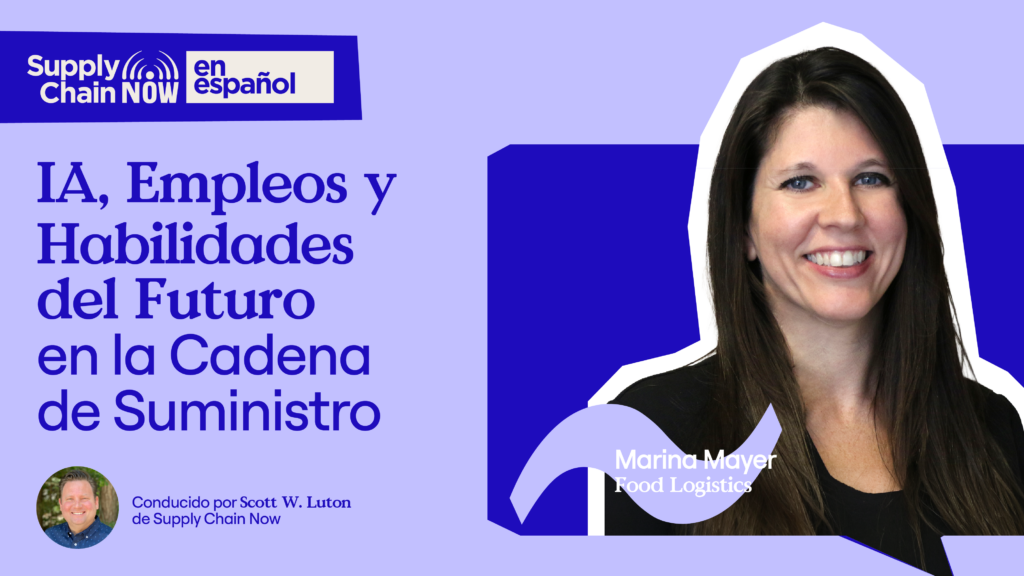
IA, Empleos y Habilidades del Futuro en la Cadena de Suministro
La etapa de entusiasmo exagerado por la inteligencia artificial ha terminado. Ahora comienza la carrera para implementarla a gran escala. En este episodio de Supply Chain Now, Scott W. Luton recibe a Marina Mayer como copresentadora invitada. Marina es Directora de Contenido de Food Logistics y Supply & Demand Chain Executive, además de Cofundadora del Women in Supply Chain Forum. Juntos analizan cómo la inteligencia artificial está cambiando realmente las cadenas de suministro, la manufactura y la fuerza laboral. Marina comparte datos que muestran que el mercado de inteligencia artificial en logística y cadena de suministro podría crecer de poco más de 20 mil millones de dólares a casi 196 mil millones para 2034. Pero el punto más importante no es simplemente adoptar inteligencia artificial. El verdadero reto es saber dónde y cómo utilizarla dentro de una empresa para obtener resultados reales. También hablan sobre un estudio de Workera de 2026 que muestra que los fabricantes que invierten en programas estructurados de capacitación tecnológica están alcanzando niveles de preparación de hasta un 79% entre su fuerza laboral. La conversación destaca algo importante: no basta con que los empleados tengan las habilidades necesarias. También necesitan sentirse seguros y confiados al utilizar…