


“Sure – Supply Chain is boring – except for the fact that 5 of the top 10 richest people in the world made their money in it.”
-Bruce Welty
Bruce Welty never wanted to build robots; Amazon.com made him do it. Starting in the 1970s, Welty, specialized in software for managing warehouses. In 2009, he shifted gears and founded Quiet Logistics, a company that used robots from Kiva Systems of North Reading to dramatically reduce warehouse operating costs. But three years later, retailing titan Amazon.com acquired Kiva, cutting off Welty’s robot supply. He saw only one hope — build his own robots.
Take a listen to Bruce’s story about his career and success tips for starting a business.
More Podcast Episodes

civilian life

Podcast
July 5, 2024
Healing Trauma Together: The Importance of a Supportive Community with Jeremy Stalnecker from the Mighty Oaks Foundation
In this episode of Veteran Voices, host Mary Kate Soliva welcomes Jeremy Stalnecker, a Marine Corps veteran and CEO of the Mighty Oaks Foundation, to the show. Listen in as Jeremy shares his journey from military service to working with the Mighty Oaks Foundation, a non-profit organization that helps veterans, active duty service members, and first responders deal with trauma. Stalnecker discusses the importance of having a supportive community during the transition from military to civilian life, and the need for veterans to take care of each other. Learn how important it is for veterans to seek help and utilize available resources during their transition period, and so much more.
autonomous freight audit
Podcast
July 21, 2026
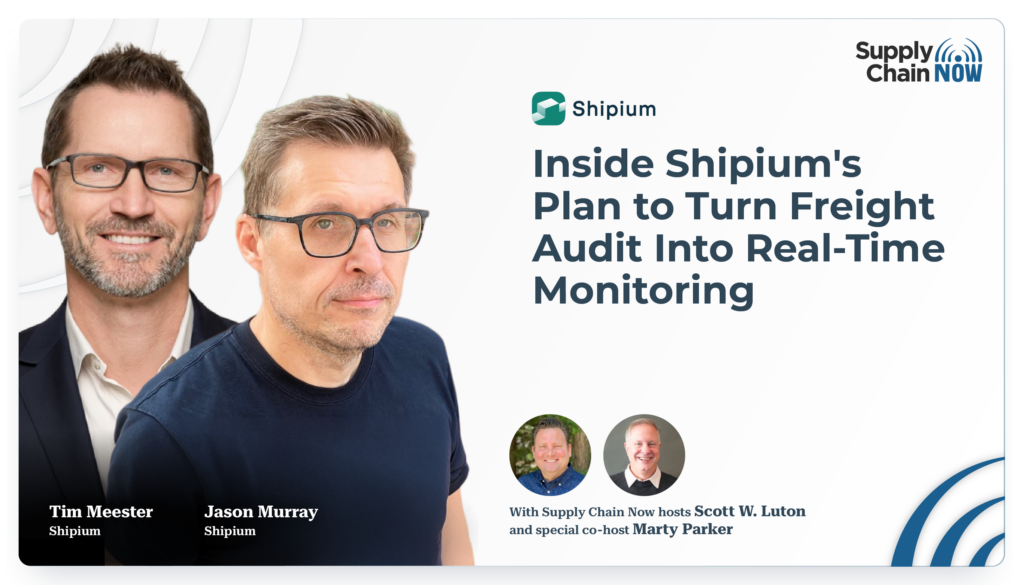
Inside Shipium’s Plan to Turn Freight Audit Into Real-Time Monitoring
Freight audit is one of supply chain’s most stubborn cost centers, and the traditional model of catching errors months after the fact is no longer good enough. In this episode of Supply Chain Now, Scott W. Luton and Marty Parker are joined by Jason Murray, CEO at Shipium, and Tim Meester, Vice President, Network Performance & Intelligence at Shipium, to discuss the shift from reactive freight audit to always-on, AI-native monitoring. The panel explores why the freight audit industry keeps growing at a 14.2% CAGR even as billing errors persist at 2 to 6% of all parcel invoices, and why every dollar lost to those errors can take 19 to 20 new revenue dollars to recover. They address how delayed, after-the-fact reconciliation lets small pricing mistakes snowball into major margin loss, outlining a vision for continuous, agentic auditing that catches issues before invoices even arrive. By leveraging live data, simulation, and autonomous AI agents, shippers can detect root causes in real time and act on them immediately rather than weeks later. Jason Murray concludes by challenging operators to start building a data-first culture now, before the competitive gap becomes impossible to close. This episode is hosted by Scott W.…