Share:

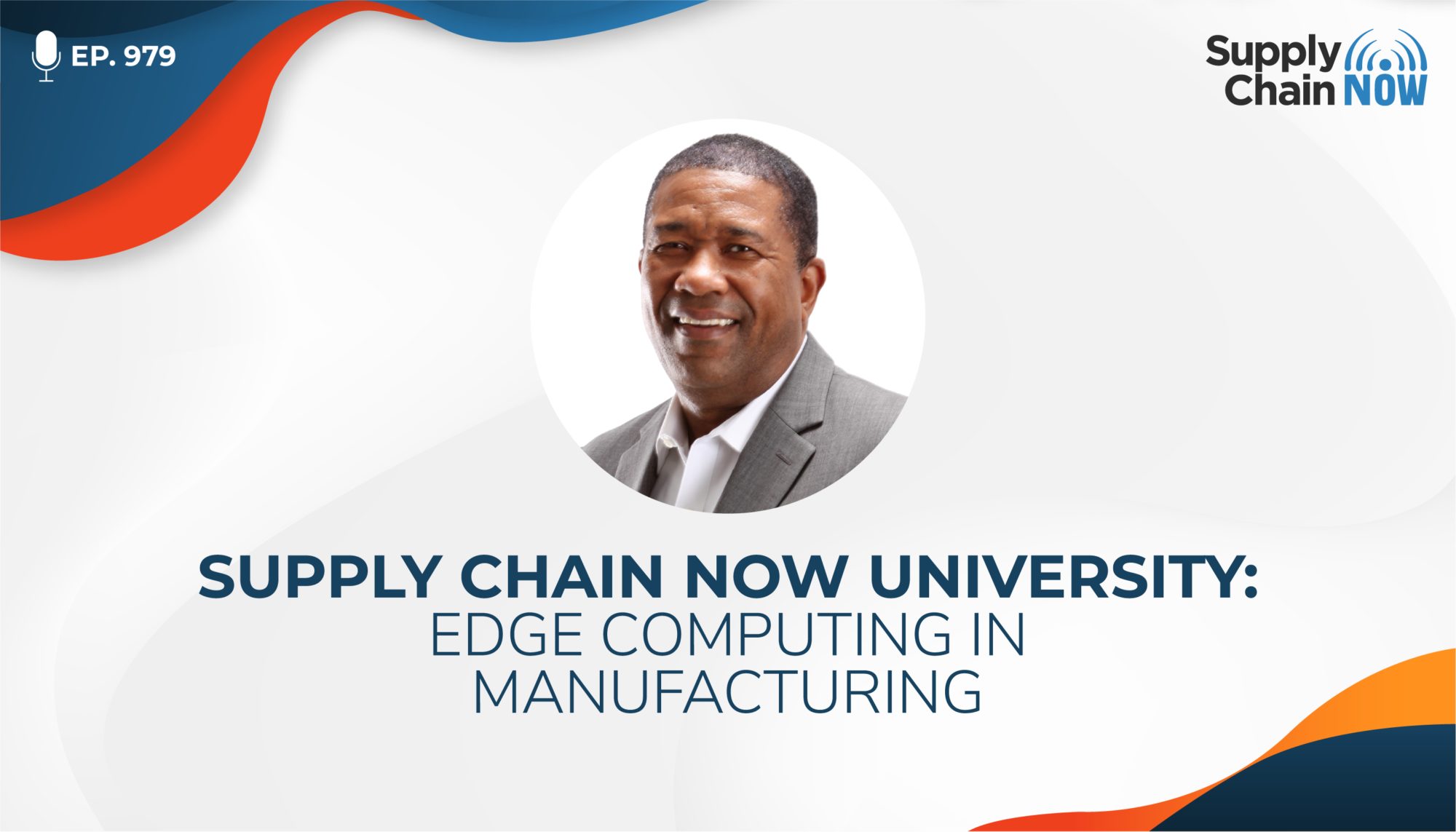
What’s going on at the edge? For manufacturing, quite a bit. Kevin L. Jackson has the scoop thanks to his recent conversation with Theresa Lanowitz of AT&T, where they reviewed the latest AT&T Cybersecurity Insights Report, Securing the Edge—A Focus on Manufacturing. Join Kevin as he discusses leading edge use cases for manufacturing, newfound benefits (like reducing friction between OT and IT) and the need for zero-trust verification at every turn.

More Podcast Episodes
play-button-podcast
podcast-blue-microphone
Podcast
October 15, 2025

El Poder de la Visibilidad

En este episodio de Supply Chain Now en español nos adentramos en una conversación que inspira y abre la mente sobre el poder de la visibilidad y trazabilidad en la cadena de suministro. Nuestro invitado, José Guillermo Suárez, director de ventas para Latinoamérica en Tive Inc., comparte con nosotros su fascinante trayectoria: desde sus primeros pasos en Australia trabajando con productos mexicanos, hasta convertirse en un referente en soluciones tecnológicas que están revolucionando la logística en todo el continente. A lo largo del episodio descubrimos que la logística no solo trata de contenedores, rutas o procesos, sino de conectar personas, crear confianza y anticipar lo que viene. José nos cuenta cómo la innovación de Tive permite tener control en tiempo real de la carga, prevenir riesgos y generar decisiones más inteligentes, incluso en contextos tan retadores como Latinoamérica. Además, exploramos cómo la lectura, la sustentabilidad y los aprendizajes personales marcan la diferencia en la forma de liderar y enfrentar desafíos. Con anécdotas sinceras, reflexiones valiosas y ejemplos prácticos, este episodio nos recuerda que la logística, más que un negocio, es un puente de confianza y transformación.   Subscríbete a nuestro canal de YouTube: https://bit.ly/SCNE_YouTube Únete a nuestro newsletter: ⁠https://bit.ly/SCNE_Newsletter Síguenos…
supply chain planning
play-button-podcast
podcast-blue-microphone
Podcast
January 23, 2026

The Future of Supply Chain Planning: Gartner Takeaways and What’s Next

Automation is showing up everywhere in supply chain planning, but the winners aren’t the ones automating the most. They’re the ones choosing the right decisions to automate, bringing people along early, and using AI to build speed and confidence in planning. In this episode of Supply Chain Now, Scott Luton and special guest host Karin Bursa, CEO of NIRAKIO, welcome Noha Samara, Senior Director, Global Supply Chain at Gartner, to share key takeaways from the Gartner Supply Chain Planning Summit in Denver. Noha unpacks why AI is shifting from “side experiment” to a core part of planning’s operating model, and why the most successful organizations define a clear human-machine strategy instead of trying to “spread AI like peanut butter.” The conversation spotlights the “people side” of transformation: change management, capability-building, and involving planners early so AI is implemented with teams, not to them. The group also dives into end-to-end data and scenario-driven range planning, including how top performers extend those range discussions with suppliers, customers, and trading partners. They close by emphasizing agility through targeted automation, clarity on humans “in/on/off the loop,” and why leaders can’t afford to sit on the sidelines as the pace of disruption and innovation accelerates.…

Supply Chain Now University: Edge Computing in Manufacturing

Share:

Intro/Outro (00:03):

Welcome to supply chain. Now the voice of global supply chain supply chain now focuses on the best in the business for our worldwide audience, the people, the technologies, the best practices, and today’s critical issues. The challenges and opportunities stay tuned to hear from those making global business happen right here on supply chain now,

Kevin L. Jackson (00:33):

Hello, my name is Kevin L. Jackson host of digital transformers. Today. I would like to share with you some new insights I’ve recently gained on cyber security on the edge edge. Computing has become an important component of digital transformation. Its advantages include improved speed and reduced network latency, improved security and privacy protections reduced operational cost, improved liability and resiliency and enhanced scalability. Although all of these improvements would be important in any industry vertical. The manufacturing industry is the surprising leader in edge computing adoption. This is just one of the important trends I learned from a conversation last month with at and T cyber security head of evangelism, Teresa Leitz during our talk, she told me about a recent at and T cyber security insights report on manufacturing for the report at and T surveyed 1,520 business executives from around the world. Although manufacturing is often cited as a laggard when it comes to adopting new technology report, data revealed that 78% of manufacturing respondents are currently implementing an edge computing use case.

Kevin L. Jackson (02:11):

When these companies move to the edge, they move through at least three identifiable stages. The first is an ideation phase when they are just thinking about moving to the edge. The second we refer to as proof of concept, the company tries out a business idea for delivering value through edge. The final or mature stage involves either a partial or full implementation of the new edge process manufacturing and retail were the two leading industries adopting edge use cases. The top retail use for edge computing, according to the report was lost prevention for manufacturing. The leading use case is visual quality inspection on assembly lines. The transformation is obvious if you have ever seen a modern shop floor, fully assembled products are no longer being manually pulled off the line and stuck into a box. The lines themselves are fully automated with the last station being composed of multiple cameras and telemetry sensors.

Kevin L. Jackson (03:40):

Manufacturing has really advanced their digital transformation and has become far more sophisticated in their internal processes. In fact, those assembly line, computer vision based quality inspections really help pinpoint the root cause of any defect. Since these defects are detected in Neo real time, inspectors can go backwards on the assembly line to really flush out causes effects and desired solutions. This very tactical use of edge computing results in a greatly reduced recall potential a very important business outcome. This is a true example of a digital transformation use case that delivers better business outcomes and a better customer experience. These changes can also help improve the assembly line working environment by shifting humans away from repetitive low value activities. With this model, humans are reserved for the important task of determining the reasons for mistakes or failures coming up with new solutions and maybe even improving the whole business process edge computing can also reduce the historic friction between operational technology, OT and information technology.

Kevin L. Jackson (05:21):

It, according to Theresa, this is rapidly turning into a sort of urban myth due to technology convergence. Although it is very business oriented and OT is really oriented towards the industrial processes. Both teams are interacting with and leveraging data and information. Recent observations have shown that the it teams are learning from the OT teams and the OT teams are learning from the it teams as technology convergence accelerates with the internet of things, adoption, both OT and it security teams buying themselves, working together to improve device security across the organization. This is even more crucial to the use in SCADA, also known as supervisory control and data acquisition devices. The operational team uses SCADA to gather data and perform near real time analysis. Since these now represent network ingress and egress points, the it team needs to implement security controls like intrusion detection systems, the joint OT it team will also need to focus on the cyber security controls that reside inside of those individual skater devices.

Kevin L. Jackson (07:04):

Technology convergence has also driven the idea of zero trust with this concept. Nothing on the network is trusted. Zero trust requires verification of every entity, persons, machines or software since every industry is currently experiencing a proliferation of IOT devices controls on the edge will need to be operated with a zero trust mindset, philosophy, strategy, and architecture. Thank you for supporting digital transformers and for being a part of our global supply chain. Now community, please check out all of our programming@supplychainnow.com. Make sure you subscribe to digital transformers anywhere you listen to or view the show and follow us on Facebook, LinkedIn, Twitter and Instagram on behalf of the entire team here at supply chain. Now this is Kevin L. Jackson wishing all of you, a bright and transformational future. We’ll see you next time on digital transformers.

Intro/Outro (08:30):

Thanks For being a part of our supply chain. Now community check out all of our programming@supplychainnow.com and make sure you subscribe to supply chain. Now anywhere you listen to podcasts and follow us on Facebook, LinkedIn, Twitter, and Instagram. See you next time on supply chain. Now.