Share:

For most companies, the entire Supply Chain Planning Process was established based on INSIDE OUT thinking. So, chances are your supply chain planning may be as well. Most planning functions – especially for manufacturing businesses – are centered around answering the question of “what can we make, move and deliver?” and put your factory or production network at the center. These plans focus on cadence-based, batch-driven processing with a bias towards long & efficient production runs across a dedicated network of available capacity. However, today’s industry leading supply chains have transformed from INSIDE OUT to OUTSIDE IN strategies that drive a competitive advantage and increase agility and resilience.

More Podcast Episodes
play-button-podcast
podcast-blue-microphone
Podcast
March 11, 2025

Movimiento B: Logística con Propósito

En este episodio entrevistamos a Javier Herrero de Sistema B México; un movimiento que nace en 2006 para impulsar empresas con propósito, promoviendo un modelo económico que considere no solo a los accionistas, sino a todos los grupos de interés; sociedad y planeta. La certificación B exige un diagnóstico riguroso y un compromiso legal para mejorar continuamente el impacto social y ambiental. Nuestro segundo invitado, Enrique Álvarez de Vector Global Logistics, nos comparte su experiencia al certificarse y cómo operar con propósito lo ha llevado a optimizar procesos y acceder a mejores oportunidades de negocio, talento y financiamiento. Javier y Enrique resaltan que, más allá del reconocimiento, la certificación impulsa la competitividad a largo plazo; mejores cadenas de suministro con un impacto positivo.
play-button-podcast
podcast-blue-microphone
Podcast
January 14, 2025

5 episodios imperdibles

Invitamos a Santiago Hernández a recordar con nosotros los 5 episodios más emblemáticos de nuestro podcast Supply Chain Now en Español. En este episodio hablamos de grandes invitados como Josué Velázquez, Director del MIT CTL Sustainable Supply Chain Lab, y Mario Rodriguez, Presidente de DHL Supply Chain. Recordamos temas como seguridad alimentaria, prácticas sostenibles en cadena de suministro, el impacto de las pequeñas y medianas empresas, así como el potencial crecimiento de América Latina en infraestructura logística. Escucha este episodio y redescubre grandes aprendizajes que nos han dejado nuestros invitados pasados. Desde consejos para emprendimiento y crecimiento profesional, hasta tendencias y áreas de enfoque para cadena de suministro en el futuro próximo. Encuentra los enlaces directos a nuestros top 5 Episodios aquí: Mario Rodriguez-DHL: https://supplychainnow.com/4scne7/ Isabel Agudelo – MIT Farol:https://supplychainnow.com/3scne12/ Paola Nuñez – Holcim MX: https://supplychainnow.com/espanol-2/ Josué Velázquez- MIT CTL: https://supplychainnow.com/scne-12/ Santiago Hernández: https://supplychainnow.com/4scne2/  

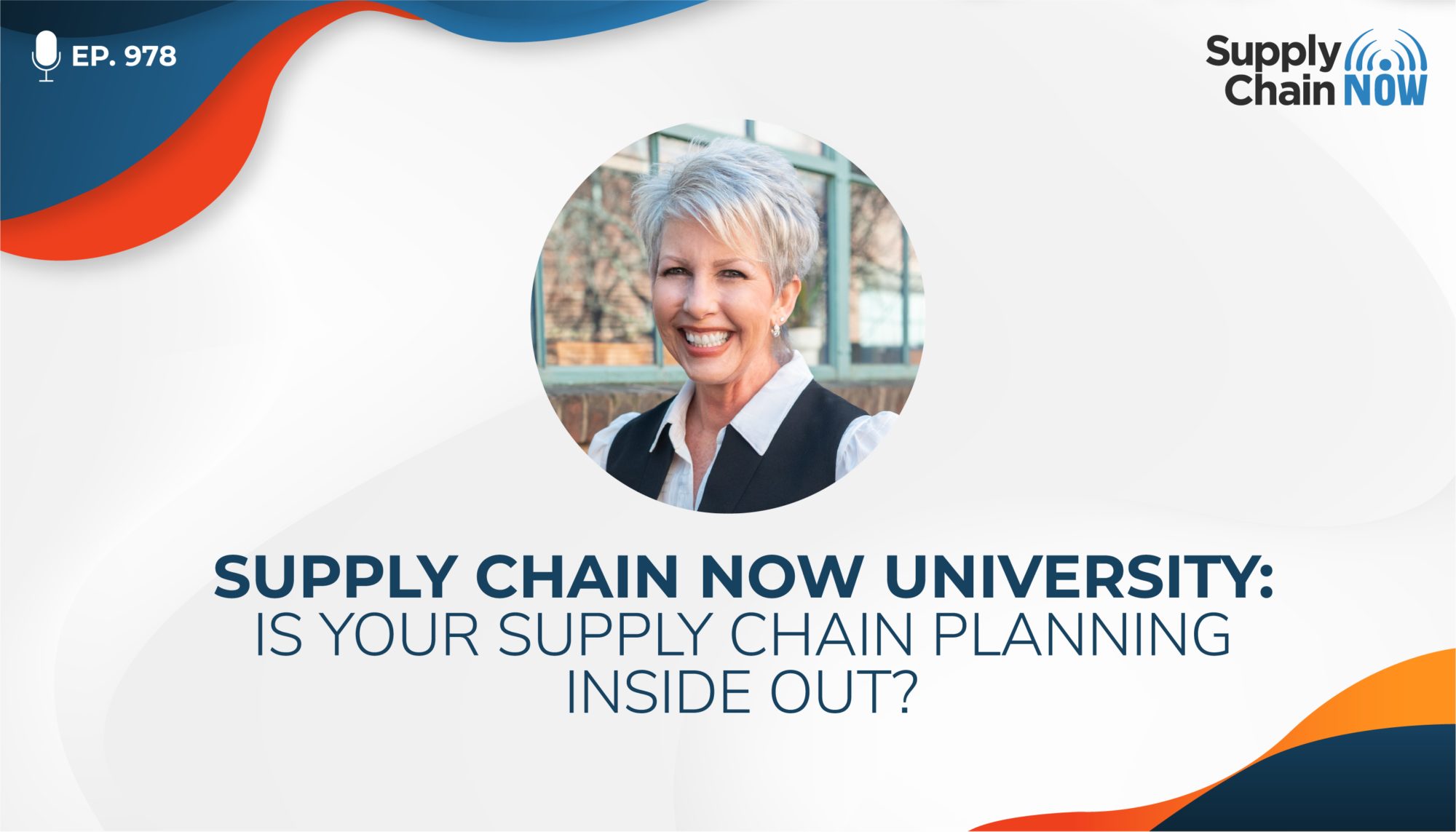
Supply Chain Now University: Is Your Supply Chain Planning Inside Out?

Share:

Intro/Outro (00:03):

Welcome to supply chain. Now the voice of global supply chain supply chain now focuses on the best in the business for our worldwide audience, the people, the technologies, the best practices, and today’s critical issues. The challenges and opportunities stay tuned to hear from those making global business happen right here on supply chain now.

Karin Bursa (00:31):

Well, hello there. Supply chain movers and shakers, Karin Bursa here. And I’m your host for TEKTOK digital supply chain podcast. All right, gotta tell you a story. Just last week I walked into a meeting. I got settled, had a hot cup of coffee, some great conversation. When I happened to look down and I realized my shirt was on inside out. That’s right. I made a few jokes about the realization and I excused myself for a quick fix, but it got me thinking is your supply chain planning inside out for most companies? The entire supply chain planning process was established based on inside, out thinking. So chances are yours may be as well. So if I got your attention, most planning functions, especially for manufacturing, businesses are centered around answering the question of what can we make, move and deliver, visualize putting your factory or your production network at the center of your planning process.

Karin Bursa (01:37):

These plans focus on cadence based batch driven processing with a bias towards long and efficient production runs across a pretty dedicated network. If you’re nodding your head. Yes, right now you may be thinking, Hey, that sounds pretty good, but you must admit that you could be producing very efficiently product that has very limited demand. So today’s industry supply chain leaders have transformed their thinking. They have transformed from inside out to outside, in to drive their supply chain planning and gain a competitive advantage. So instead of asking, what can we make industry leaders are asking, what does the customer want? And when, so, when you plan your business from the outside in context with the customer, the customer now takes center stage. They’re at the center of your decision making and your production capabilities are in service to that customer demand. So supply chain planning becomes so much more strategic as you model and analyze business opportunities.

Karin Bursa (03:01):

The result in today’s dynamic dare I say, volatile global market is that you are far more agile and far more resilient with an outside implant. You may hear terms like we are demand driven or we are market driven. And while these two phrases are closely related and convey outside in thinking, they do mean slightly different things. So if you are demand driven, it does in fact, put your customer, that customer demand at the center of the planning process. It will decrease data latency and it’s gonna help you make better decisions. This significantly increases your agility and your resilience in a dynamic marketplace. Now, if you are market driven, this goes one step further in your outside in strategy. This allows you to incorporate not just customer demand, but channel demand and supply side signals that are gonna enable you broader planning, orchestration, and even greater agility and resilience.

Karin Bursa (04:17):

So step one in transforming your supply team planning from inside out to outside in is to get clarity around customer demand, become demand driven. Now be prepared once you are truly demand driven, it is gonna result in smaller production runs, which means more frequent transitions, more agility from your manufacturing team, but it will be worth it. You will drive top line growth and bottom line profitability for your business. Now step two and becoming outside in, in your strategy will be to become market driven. In this broader context, you are going to expand your visibility and orchestration to include not just customer demand, but the supplier response you’ll start competing as a supply chain network. And as we say on TEKTOK, this is gonna give you a big advantage. You are gonna replace risky inventory with valuable insights and gain a competitive advantage that moves your business forward. So I hope that helps. And I wanna encourage you to get out, get outside, start thinking outside in. And I’d like to invite you to tune in to TEKTOK the digital supply chain podcast right here on supply chain. Now,

Intro/Outro (05:48):

Thanks for being a part of our supply chain. Now community check out all of our programming@supplychainnow.com and make sure you subscribe to supply chain. Now anywhere you listen to podcasts and follow us on Facebook, LinkedIn, Twitter, and Instagram. See you next time on supply chain. Now.