
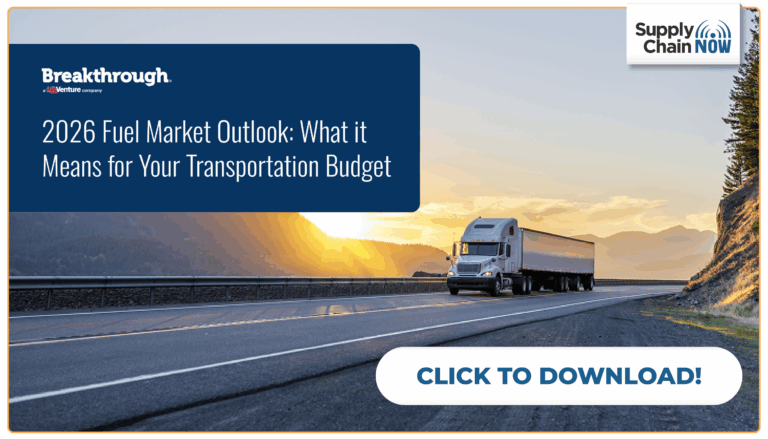
2026 Fuel Market Outlook: What it Means for Your Transportation Budget
Fuel is the second largest and most volatile operating expense in transportation, and traditional fuel surcharge programs expose your budget to unnecessary costs and risks. Forecasts for 2026 signal continued volatility, making it critical for transportation leaders to move beyond outdated, average-based reimbursement models.
Our 2026 Fuel Outlook provides the data-driven insights you need to navigate market complexities and turn your fuel spend from a volatile cost center into a powerful strategic advantage.
Key Takeaways from the Report:
- An emerging global supply surplus is creating downward pressure on crude oil prices, yet regional disruptions are adding significant volatility.
- Refinery closures on the West Coast and continued U.S. diesel exports are tightening domestic supply and creating complex pricing dynamics.
- Traditional fuel surcharge programs based on the weekly DOE index are inaccurate, leading to missed savings opportunities.
Learn why Fuel Recovery is the definitive solution for fair and accurate fuel reimbursement.
More White Papers
White Papers
May 29, 2025
Empowering Smarter Distribution: The Critical Role of Integrator Consultants in Your Automation Strategy
As logistics leaders look to future-proof their operations, they face a complex landscape filled with critical decisions ranging from navigating supply chain volatility and shifting customer expectations to evaluating fast-changing automation technologies. Successfully planning, designing and implementing large-scale automation solutions requires specialized expertise that many organizations don’t have in-house. This white paper from Bastian Solutions is designed to help you understand how the right consulting partner can make a meaningful difference in the success of your automation initiatives. It outlines the strategic role integration consultants play in optimizing distribution operations and provides practical guidance on how to assess their capabilities—so you can confidently choose a partner that aligns with your goals and complexity. Why download this guide? Find the right partner – Learn how to evaluate and choose a consulting partner that fits your goals and complexity. Go beyond the tech – Understand why process-focused strategies, not just automation, drive real results. Know what OEMs and traditional consultants miss – See the value of objective, end-to-end expertise that prioritizes your full operation. Leverage data & design – Explore how advanced analytics and simulation tools lead to smarter decisions. Follow a proven roadmap – Use a four-phase framework to confidently…
White Papers
May 12, 2025
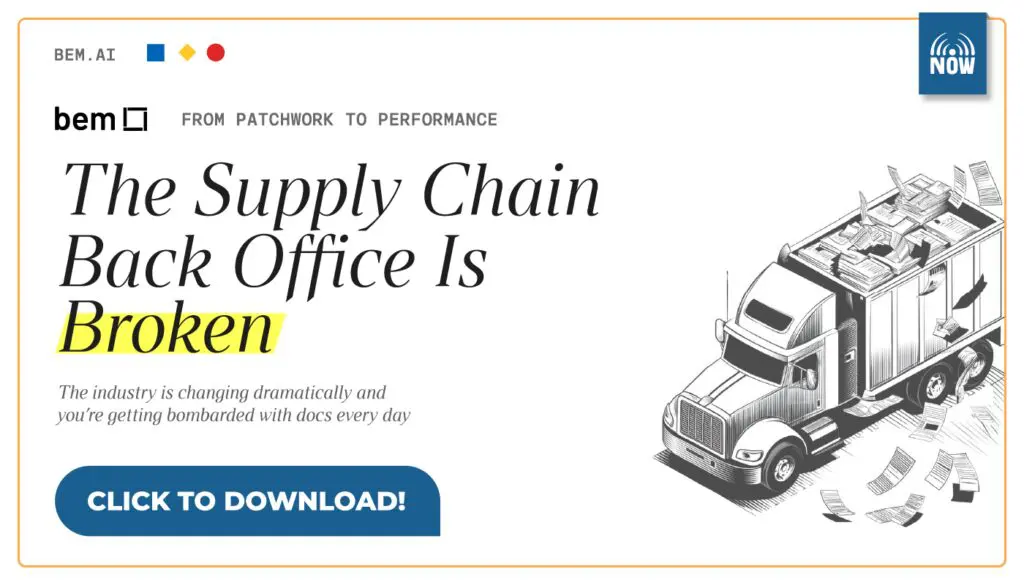
The Supply Chain Back Office Is Broken
Your TMS and ERP aren’t enough. Despite billions spent on supply chain tech, most teams still run on PDFs, spreadsheets, and email threads—creating manual chaos that slows everything down. This eye-opening white paper reveals how top supply chain teams are using an invisible layer of AI to streamline operations—no dashboards, no extra headcount, no noise. Download now to learn how to eliminate manual bottlenecks and give logistics teams their time—and sanity—back. Uncover the hidden gems – Manual workflows waste hours and create delays. Learn how to fix it fast. See real results – Cut shipment intake from 30 minutes to 10 seconds, without new tools or extra headcount. Discover smart automation – Learn how to turn messy emails and PDFs into structured data that flows seamlessly into your systems. Ditch manual chaos and see how an ambient back office that never sleeps can save your team thousands of hours, eliminate costly errors, and unlock the true potential of your supply chain. Download the white paper here to learn more