[00:00:00] Fernando Boom: The threat has shifted. Honestly, it’s from physical to identity based. It’s no longer bolt cutters in a yard or wild west style hijackings anymore. It’s spoof emails, impersonated broker carriers loads, quietly diverting in transit and using stolen identities. We actually saw that this carrier or this driver was able to bypass the bolt seal that we placed on the locking mechanism.
[00:00:25] Fernando Boom: He didn’t realize that we did have over tracking in there. That alerted us to all of these different ping points of visibility. Ultimately, the driver was arrested and he was charged with first degree felony on cargo theft over 200,000.
[00:00:40] Voiceover: Welcome to Supply Chain Now the number one voice of supply chain.
[00:00:44] Voiceover: Join us as we share critical news, key insights, and real supply chain leadership from across the globe, one conversation at a time.
[00:00:52] Scott Luton: Hey. Hey, good morning, good afternoon, good evening, wherever you may be. Scott Luton and Scott DeGroot, AKA. The professor here with you on Supply Chain Now. Welcome. Hey, Scott DeGroot, how you doing today?
[00:01:04] Scott DeGroot: I am outstanding. Scott Summer is here and I’m ready for it.
[00:01:09] Scott Luton: I’m not ready for what’s right around the corner in terms of 127 degree temps. But, uh, hey, baseball’s here. We got NBA finals, and better yet, we’ve got another terrific show. I really enjoyed, uh, our collaboration and your perspective and folks today.
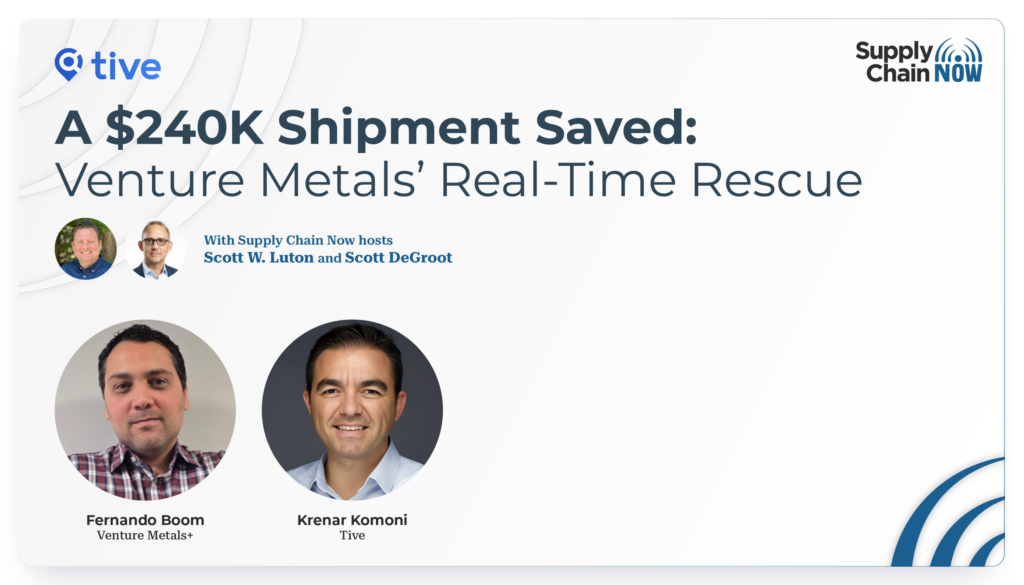
[00:01:24] Scott Luton: We’ve got a fascinating story to share with you here today. This is gonna be one of the most unique shows of the year here at Supply Chain Now. We’re gonna be sharing the story of how one fearless supply chain leader was able to stop a brazen act of cargo theft, in part using innovative modern technology.
[00:01:41] Scott Luton: Plus, we’re gonna be sharing tips, tactics, and technologies. Say that three times fast. That will enable your organization to optimize its security across the supply chain ecosystem, all that, and much, much more. Again, stay tuned for what might just be your most interesting hour of the week now, Scott, given your background and your track record of making stuff happen in global supply chain, especially in logistics and planning and distribution, I’m looking forward to your insights here today.
[00:02:09] Scott Luton: Should be a great show, huh?
[00:02:10] Scott DeGroot: Yeah. I, I agree, Scott. It’s a great topic, and I think if you’re not paying attention, you might not be aware of the, the explosion in freight fraud and, uh, it’s really a problem for all of us.
[00:02:22] Scott Luton: That’s right, that’s right. You know, as we talk about a lot, uh, the same innovative technology that they, good actors have access to, well.
[00:02:30] Scott Luton: Bad actors have access to, uh, access to it as well, but never fear. There’s things and steps you can take today to do something about it. So let’s get to work and we’ll welcome in our featured guests here today, Fernando Boom, director of Transportation at Venture Metals and backed by Popular Demand, Kran Cone founder and CEO of Todd.
[00:02:51] Scott Luton: Let’s bring them both in. Hey. Hey Fernando. How you doing today, my friend?
[00:02:55] Fernando Boom: Good morning everyone. I’m great. Fantastic. Great weather here in Philly. I’m fantastic. Thank you for having me.
[00:03:02] Scott Luton: Well, it’s terrific. We’ve really enjoyed our car, pre-show conversations. Great to have you here as well. And Klar, uh, great to to see you once again.
[00:03:10] Scott Luton: Appreciate the great work, innovative work you’re doing out in the industry. Welcome to Supply Chain Now.
[00:03:15] Krenar Komoni: Thank you Scott, and Scott and Fernando. Great seeing you. Uh, excited about this show today and it’s 70 plus in Boston, which is pretty amazing.
[00:03:23] Scott Luton: Oh, oh, 70 plus. Okay.
[00:03:25] Krenar Komoni: I think. Yes.
[00:03:26] Scott Luton: Beautiful.
[00:03:27] Krenar Komoni: That’s what it said in the morning.
[00:03:28] Krenar Komoni: Yeah, it is. 72.
[00:03:30] Scott Luton: Well, it sounds, it sounds, sounds gorgeous and Scott and the group, I’m not sure what it is, uh, temp wise up in your neck of the woods, but we got a hot conversation here today. Is that right?
[00:03:40] Scott DeGroot: Yes, yes. It’s a beautiful 75. But, um, I think the more interesting thing is, um, what’s, what’s, how, how we’re preventing freight fraud.
[00:03:49] Scott DeGroot: And that’s amazing to me.
[00:03:50] Scott Luton: It is, it is. And we got, uh, quite a lot to get into. But first, Fernando, you know, I, I was getting to know you through our pre-show conversations and there’s a lot of things we could talk about in terms of, of big things you’re doing outside of supply chain, but in particular. Art shows, when I ask you about art shows, you lit up ’cause it’s one of your favorite things to go do.
[00:04:11] Scott Luton: Tell us about that passion.
[00:04:12] Fernando Boom: My wife and I, we enjoy art shows and local artists. We frequently go to different venues and different functions that are being held in the DFW area or wherever we’re at, honestly. And we try to see if we can afford not unsuccessfully most times to purchase some of the unique pieces from the local orders.
[00:04:33] Fernando Boom: A lot of folks don’t really. Give them, give the low artists a little love. So we like to do that.
[00:04:39] Scott Luton: Uh, uh, a very admirable, um, a hobby of yours, Fernando. And I’m with you. I can’t afford that fine art. Uh, I’m, I’m still celebrating my kids, uh, crayon drawings. Um, alright, so nar, one other thing we’ve talked about in your previous appearances is, uh, many things.
[00:04:55] Scott Luton: But your son is an avid soccer player, football, and that takes my mind to the World Cup. Who is your son pulling for nar?
[00:05:05] Krenar Komoni: I asked him actually literally yesterday, ’cause uh, it, he was at tryouts, so I, he’s rooting for two. He doesn’t know which one. But France and Spain.
[00:05:15] Scott Luton: Okay.
[00:05:15] Krenar Komoni: Looks like France has, uh, some really good players and Spain obviously won World Cups recently, so they have a really good team.
[00:05:22] Krenar Komoni: So he’s between those two.
[00:05:25] Scott Luton: Well, I think those are good picks. Uh, I’m not, I wish I was more of a football pro, Scott DeGroot, but those sound like good picks to me. And I’m just, I’m probably more curious about the logistics behind the World Cup
[00:05:35] because
[00:05:36] Scott Luton: I’m a big supply chain nerd. But Scott, do you have a pick for football?
[00:05:39] Scott DeGroot: Yeah. Yeah. I, uh, can’t. Help but go with my parental favorite, which is Argentina. You know? Yes. You could think about USA and maybe they have a chance, but Argentina, you know, how can you root against Argentina? I don’t, that’s my view, but we’ll see how
[00:05:53] Scott Luton: we go. I’m with you. I’m with you. I’m, I’m ready for lots of close matches and, and I love the, um, uh, the, uh, sudden death.
[00:06:00] Scott Luton: That is probably one of the best sports experiences, uh, around the globe. But speaking. We got a lot of stuff to get into when it comes to cargo, security and Fernando’s story. Uh, so let’s level set a bit. So, Fernando, for the few folks out there that may not know, uh, venture metals and, and your role, can you level set a bit with us?
[00:06:20] Fernando Boom: Sure. Uh, venture Metals International is a global industrial recycling of headquarters outta Dallas. Since 1986, we’ve found a scrap metal recycling, reverse logistics. Material recovery for industrial manufacturing, construction, and even energy customers across the US and internationally. We supply raw materials to the mills and manufacturers.
[00:06:39] Fernando Boom: They melt those things down to the products that we all end up using on an everyday basis. And I’m the head of transportation department for the enterprise. I run the logistics to end fleet dispatch, safety, compliance, carry relationships and governance, making sure materials move reliably and they securely across our facilities and customer locations.
[00:06:58] Fernando Boom: That’s the quick elevator pitch.
[00:07:00] Scott Luton: I like it, Fernando, that that’s, that’s very helpful context. And, and Scott DeGroot, I’m not sure if you ever spent much time, um, studying the metals industry, but it is fascinating, Scott, huh?
[00:07:11] Scott DeGroot: Yes. And I think a lot of people, I, I agree with you and, uh, you know, so much of our, um, our infrastructure depends on Fernando and his team doing their jobs very well because we, we need these medals and we need them back.
[00:07:27] Scott Luton: That’s right. Uh, you know, if we, if we stop and thought about all the different parts that we don’t even think about, that requires Fernando and his team’s efforts, uh, it really is something. Um, now khar, uh, most folks, I would say, especially in our audience, uh, is familiar with Todd and the work you do, but let’s, for our new audience members, tell us what Todd does.
[00:07:46] Scott Luton: Khar.
[00:07:47] Krenar Komoni: Uh, yes. So, uh, hi everybody. My name’s Khar. I’m CEO and founder here at Tide. Started the company almost 11 years ago, June 8th, it’ll be 11 years. So time is flying by, but what we do is pretty straightforward. Uh, Scott, we help companies all over the world understand, uh, and observe what is really happening with their shipments.
[00:08:08] Krenar Komoni: So what customers do is they take these trackers, they put ’em on top of the pallet and top of the load, uh, similar to what Fernando did here, and we’re really excited to hear his story. And they get to see it in real time, what’s happening with a shipment. But our software automatically figures out if something is going wrong and then alerts customers if something’s actually about to go wrong or is going wrong so they can act upon it and be able to save a shipment.
[00:08:33] Krenar Komoni: And that’s really our goal, is to save as many shipments as possible out there.
[00:08:37] Scott Luton: Yep. Love that nar. And it’s so needed. Going back to Scott’s point about the continued rise of cargo theft, um, let, and you know, folks, the story we keep referencing by the way we’re kind of breaking up the conversation a couple different nuggets.
[00:08:49] Scott Luton: Number one, we’re about to kind of, uh, speak to the landscape of what we’re seeing out there, right? Uh, some freight trends, cargo theft trends, you, you name it, and get nar and Fernando and Scott all the way in, and then. We’re gonna talk about some of the, some of the technologies to fight the good fight, uh, to counter the risk out there and mitigate the risk out there.
[00:09:09] Scott Luton: And then the story we keep referencing, Fernando. Was able to stop bad actors from stealing about a $240,000 shipment of copper. And so that’s what we keep referencing, and it’s a, it’s a Hollywood story, maybe a movie in, in a few years. So we’ll get to that here in just a minute. Uh, but let’s do this, uh, Scott, first off, I keep referencing we’re gonna get Chrona to kind of, um, put a finer point on it, but.
[00:09:34] Scott Luton: This cargo theft, uh, environment and we see new, we see old, but also new approaches almost every single day. It poses quite the risk to supply chains everywhere. Huh?
[00:09:47] Scott DeGroot: There has been, uh, as you say, especially in the last three years, um, an exponential expansion or growth of. Cargo theft, and you know, by sophisticated actors who are using advanced technology to ghost shipments, to ghost carriers.
[00:10:05] Scott DeGroot: This. Steel, I’ll just use that word, steel information that, um, the shipper has that they, they become, and the point is these are organized, sophisticated rings of criminals who, um, every time we put a defense in, they try to come back with a, another way to get around our defense. And that’s why I’m so excited about.
[00:10:27] Scott DeGroot: Fernando story and what Ty has to offer because, um, you know, there are some things that you can’t get around. And, uh, and I appreciate the fact that, um, there’s a lot of value that could leak out of our supply chain. So if we don’t fix this problem,
[00:10:40] Scott Luton: that’s right. Elevated and, uh, uh, elevated innovation on the bad actor side requires elevated, innovative approach on the good actor, uh, side, I’ll call it now, NAR.
[00:10:52] Scott Luton: Um, as we were referencing earlier, you work with organizations across the industry, and by the way, congrats on 11 years come June 8th. That’s quite a feat. Uh, we’ll have to celebrate in some, some cool ways, but if you would, you’ve got some unique perspective here. When you think about key trends. You know, data points, uh, some of the tactics that criminals are using when it comes to cargo theft.
[00:11:13] Scott Luton: What’s important for folks to know out there? Nar
[00:11:15] Krenar Komoni: I would say as, as Scott alluded to, right, there’s some sophisticated ways that theft is happening now, but traditional, like think of many, many years ago, is, uh, somebody actually stops the truck, opens the trailer, steals the goods, and then there’s nothing happening.
[00:11:31] Krenar Komoni: And Carrier has, has nothing to do with it. The driver doesn’t have to do anything with it. That’s. That’s hard work. ’cause you really gotta be a thief. You gotta stop. You got to make sure you evade the police and nobody sees you. So how do you do that? Like how do you skip all of that is by being fraudulent.
[00:11:48] Krenar Komoni: Uh, and with artificial intelligence, there’s been a proliferation of waste to do that. So now you have chameleon carriers. Carriers that. Had frauded, they’ve done something and they just go apply for a new Mc N number. Mm. Then you have double brokering happening. So carrier broker, uh, picks up a load and then another broker, another carrier, picks up that load from the, from, from, from this broker and then suddenly you don’t know which carrier’s picking up.
[00:12:14] Krenar Komoni: And that next carrier could be fraudulent. Yeah, fraudulent mc holders. So criminals easily go and by potentially an MC number from somebody. And that mc number maybe hasn’t been used for 12 months or 24 months, and somebody has it, but they want another two, 3000 bucks in their pocket. They buy the MC number, they become a carrier.
[00:12:34] Krenar Komoni: It’s legit. ’cause that MC number has been around for X amount of years. They go and say, Hey, we’re gonna pick up the load. They accept the load and somebody goes with a truck, with a driver, just picks it up and then steals the load. So there’s. Uh, a identity theft, a fraudulent, uh, uh, a driver shows up that’s not supposed to show up at the place, but they have all the documentation, everything looks legit.
[00:12:59] Krenar Komoni: Uh, the people in the warehouse, they look at it and say, okay, fine. You’re here to pick it up. But they were able to intercept that from, from the broker, and they know exactly what the load is. Somebody may be inside a brokerage spied and told them about it. So they go pick up this load of. Gaming consoles or metals or anything, they can sell, uh, off the street and make two, three, $400,000 instead of just 2, 3, 4, $5,000 to move that load.
[00:13:25] Krenar Komoni: Now they’re making quarter million dollars potentially, uh, from one or two loads and this is happening and sometimes chippers broker, it just can’t catch ’em at this early stage. There’s a lot of technology that’s being added, but the key is to build layers on top of that, which I’m sure we’ll talk about here.
[00:13:44] Krenar Komoni: So that if it happens, how are you gonna react and actually catch. Uh, the, the, these things up to these missteps happened.
[00:13:52] Scott Luton: All right, really quick for our check in with Fernando Scott and a group that was a, uh, dizzying array. Okay. Uh, from, uh, chameleon carriers to double brokering to fraudulent mc number, uh, holders identity theft.
[00:14:06] Scott Luton: And perhaps one of the biggest things that NAR shared is the motivation for doing all that stuff has risen. Dramatically from a couple thousand ducks, uh, bucks to making quarter million dollars or more in a heist. Scott, speak to what we heard there from nar.
[00:14:21] Scott DeGroot: Yeah, no, I think that it’s right and what NAR is really reaching at is that, um, you know, you might not be aware at your company if you’re a shipper or manufacturer, um, that it’s happening.
[00:14:31] Scott DeGroot: Um, at some level, but the scale across a broad number of enterprises, especially big chip, big shippers, um, you know, it could be adding up to millions and millions of dollars for some of these criminal, um, enterprises. And, uh, and because of the speed of the technology changes, um, this is big money and you’re losing big money when you’re not fighting it.
[00:14:54] Scott DeGroot: And I, I’m, I’m very supportive of this idea of having multiple layers here. It’s not just defense of the data, gotta have defense of the actual freight. So I’d love to hear this story.
[00:15:06] Scott Luton: So, Fernando, uh, with that in mind and, and kind of hearing nar walk through some of the, the risks, some of the examples out there, your thoughts, Fernando.
[00:15:14] Fernando Boom: Yeah. What Scott and NAR describe it as exactly what we’re seeing and living the threat has shifted. Honestly, it’s from physical to identity based. It’s no longer bolt cutters in a yard or wild west style hijackings anymore. It’s spoof emails, impersonated broker carriers loads quietly diverting in transit and using stolen identities, and they’re deliberate about it too.
[00:15:37] Fernando Boom: They target high value freight and with known corridors that have these high value lanes. And the hard part is that these attacks are completely legitimate on paper. It’s a clean broker, a clean carrier, clean paperwork, real looking entities, and by the time anyone notices the load’s already gone, defense is built for that old model.
[00:15:56] Fernando Boom: Just don’t catch it. You have to modernize.
[00:15:59] Scott Luton: You have to modernize. That’s right. Someone told me at a recent industry event, uh, if you’re taking a horse and buggy approach to supply chain these days, you’re in trouble. And you know, we’re, we’re, do we still have a lot of old fashioned ways of doing things and we can’t do that.
[00:16:13] Scott Luton: We can’t afford it, especially when it comes to cargo security. So. Really to that end, the good news here today that we’re gonna be sharing are the steps you can take today to better prepare your enterprise and supply chain ecosystem to opt truly optimize cargo security. So, nar coming back to you, uh, share some of the advanced capabilities that Todd offers its customers so that they can better mitigate risk and prevent loss.
[00:16:38] Krenar Komoni: There’s multiple layers and we can dive into each in detail, but I would, I would say the, one of the first things you do, you just try and monitor the shipment of where it is, and by placing the tracker inside the trailer, inside the container where the thieves don’t even know it’s there, the carrier doesn’t even know it’s there.
[00:16:56] Krenar Komoni: You as a hipper and the warehouse loaded the truck. With this on top of it, I think is a step number one. So now you, you know where your load is, if there’s a diversion, uh, you’ll be able to catch. And the way diversion happens is what we’ve done is at Ty, we built this thing called the, uh, smart route deviation alert.
[00:17:16] Krenar Komoni: So we’ve collected billions of data points and millions of routes, and we know exactly where a truck’s supposed to do. Like you talked, uh, Fernando, about the corridors. There are in, in those corridors, you know exactly where the supposed, the truck’s supposed to go, but if it deviates from that route, we automatically know that there’s a deviation and we send an alert and customer’s able to act and, and see why it’s happening.
[00:17:39] Scott Luton: Hmm.
[00:17:39] Krenar Komoni: Then there’s a light alert in these trackers, so if somebody opened the truck, you’ll be able to send a, a, a seal light alert. Then on top of that, on the trailer, uh, customers, what they do is they place a seal. So if the seal gets cut, we’ll be able to get notified before even the trailer is open. And if the trailer is open, there’s a light alert.
[00:17:59] Krenar Komoni: If there’s a deviation, if a truck stops for 30 minutes for 45 minutes and they’re not supposed to stop, especially when they leave the area, those sometimes most thefts, uh, happen within 200 miles, uh, from the origin. Um, there’s, there’s those alerts that we can set up for customers. There’s risk zones, uh, so that they know then in these risk zone, they’re not even, first of all, not supposed to enter and let alone stop on those zones.
[00:18:25] Krenar Komoni: Um, and then on top of that, uh, by, by combining all these things together with a monitoring solution, which we provide 24 7 monitoring, or customers have their own, um, uh, teams that actually, uh, monitor these shipments. Between that, now you suddenly created multiple layers and then we can continue to add more on top of that.
[00:18:46] Krenar Komoni: But before even doing all of this, there is identity, um, uh, verification that we, we can do for customers. So when a, uh, uh, a shipment comes, when a truck comes in, a driver’s, there will anything fernan you can share that a little bit on how we can able to detect whether the carrier’s legit, whether the driver’s legit before we even let them take the load.
[00:19:10] Krenar Komoni: So between all those, now you have a layered approach. So even if you missed the first layer, you got the second, you missed the second, you got the third, you missed the third, you got the fourth.
[00:19:19] Scott Luton: Tons of valuable redundancy, uh, and, but also tons of, of unique ways of monitoring exactly what’s going on, uh, and, and get those time and notifications whether colonel, you mentioned from, from the light alerts to the seal broken, the broken seal alerts to the deviation alerts, uh, on top of the 24 7 monitoring.
[00:19:40] Scott Luton: And Fernando, uh, you know, clearly you and Todd have been collaborating for quite some time. When you think of the automation and the AI features in Todd, maybe, um, some things that NAR spoke to and didn’t speak to that you use on your shipments. What’s important for folks to understand?
[00:19:55] Fernando Boom: Scott Todd sits in our fourth of six governance layer for venture maps.
[00:20:02] Fernando Boom: For us, it comes down to visibility that we can actually act on. We run T for real time in transit, telemetry, light sensors, route aviations alerts, and GPSs, just like NAR was, was suggesting we know exactly where our loads are, what’s happening through it throughout the life cycle of that shipment. The piece that matters most to us is that we can act fast on anomaly detection.
[00:20:25] Fernando Boom: That moment sometimes deviates, and I’m alerted when those loads still moving, not in postmortem after the loss. We know in real time when something is happening, if, if a door is open, light comes in, enters in, we get an alert immediately. If the route deviates, we get an alert and we act accordingly. That window being able to respond midtrans, instead of just filing a claim afterwards is the whole game.
[00:20:51] Fernando Boom: It’s our last fail safe layer. And the reason why we’re here today,
[00:20:55] Scott Luton: I think so too. Uh, and we’re gonna shove some more light on that in just a second. So here, there’s an alert for y’all, folks. Uh, alright, so Scott, uh, we just heard a lot of modern, what I’ll call modern day. Um. Uh, approaches, technology driven approaches that are really effective at countering this incredible increase, right?
[00:21:16] Scott Luton: Between what NAR and Fernanda both shared. What’d you hear there, Scott?
[00:21:19] Scott DeGroot: Yeah, I, I learned a lot, you know, and I certainly, I kind of had an expectation that this would be mostly about, um, route, route variance detection. Like, we know that go from A to B, this is the route or maybe that route. So I kind of was expecting that, but I love the fact that, okay, if the door is open, well we can see that too.
[00:21:38] Scott DeGroot: This idea of extended stops, like, Hey, what are you doing on this part of this city that you shouldn’t be in? You know, that’s, that’s very interesting. You know, drivers, drivers are people too. So this idea of, um, layered protection is very, very interesting. And, um, I think very practical when it comes to fighting against the criminals.
[00:22:01] Scott Luton: Well, I do too. Uh, and, and all in real time, which is really important. Very important. And Scott, really quick clarification. I mean, when you, you spent 38 years, uh, leading logistics and distribution and planning, so, you know, firsthand, uh, some of the risks that NAR and Fernando are both speaking to, right?
[00:22:19] Scott DeGroot: Yeah, I do. And you know, I think, um, NAR put it, well, in the old days it was just, um, you know, put on spotlights in your yard and, and make sure you have the right kind of seals. Uh, nowadays it’s, you have to be much more sophisticated than that. And, and I also appreciate the fact that, um, we are in a battle in some degree to make sure that we know in real time, because after the fact is fine for insurance, but doesn’t save the freight, it doesn’t save the shipment.
[00:22:47] Scott DeGroot: We wanna save the.
[00:22:49] Scott Luton: Hmm, that’s right. Uh, all right, so Kna, before we prompt Fernando to tell us his firsthand experience that we’re all waiting for, where, uh, he’s basically the MacGyver of global supply chain. We’re get that. Is there anything else Kna you would like to share, uh, especially in, in these, uh, countermeasures that folks can take, uh, nar before we get into this story?
[00:23:11] Krenar Komoni: Yeah, I think I mentioned all of ’em, but I think the key is really to, it’s, it’s better to be prepared than not to be prepared. I think. People think, oh, I’ll deal with it some other time. I’ll deal with it some other day. Until then event happens, and then when the event happens, it’s too late. Then everybody starts to hit us on inbound and call us and.
[00:23:31] Krenar Komoni: Yes, we’re gonna help everybody, but I’d rather help them earlier before the fraud happens.
[00:23:36] Scott Luton: That’s right. Good advice. Uh, what’s that Benjamin Franklin, uh, phrase? Uh, an ounce. Don’t
[00:23:42] Krenar Komoni: leave the job of today. Tomorrow.
[00:23:45] Scott Luton: That’s a good one too. I was thinking an, an ounce of prevention’s worth a pound, a cure. Uh, it kind of goes to the point you’re talking about too.
[00:23:52] Scott Luton: Uh, but you gotta act now, folks, and we’re gonna, we’re on the other side of this great story from Fernando. We’re going to. Share how you can take action today. So stay tuned on that. Um, alright. Fernando Boone, uh, you, uh, I, I’ve been reading, you know, ’cause your story’s been published in a couple media, uh, pieces out there very eloquently by the way, and, and, um, uh, enlightening and amazing really.
[00:24:16] Scott Luton: Tell us, we’re gonna break the story up in two halves, right? Let’s start with the first half. Uh, so tell us what happened, what went down, what prompted you to take action? Tell us more, Fernando.
[00:24:27] Fernando Boom: Okay, so this was on March 23rd, and I was actually driving home with my wife and my, our preaching sons and our dog coming home from a family trip in Arkansas.
[00:24:36] Fernando Boom: We were traveling southbound on 75, nearing home about 35, maybe 40 minutes away from home. And, uh, I, I got a couple of phone calls from our logistics staff alerting us that there was a, uh, a light alert on one of our outbound shipments from one of our locations in Wills point. And that’s really strange because the level of like that occurred on that alert mirrored the, the light that was entering in when the Lord was being loaded.
[00:25:05] Fernando Boom: So instead of it being a small ambient light seeking through a crack. This was an actual event that the doors were opened, so that’s number one. And this happened twice, within five minutes from each other. So multiple different logistics staff started contacting me and uh, I then decided to open the, the, uh, application out.
[00:25:26] Fernando Boom: Well, I had my wife open the application. She was sitting in the passenger side. And she was, she was a little slow for me because she wasn’t, she doesn’t really, sorry. Sorry baby. She didn’t really, uh, know the platform like I do, so I decided to just let her drive and. I said Jessica Drive, and I told Jesus, take the will because she’s a native Texan, born with a lead foot, so, and she is, I hope she’s not well
[00:25:51] Scott Luton: for fernan though.
[00:25:52] Scott Luton: Really quick, really quick, I wanna make sure that folks know how big of a shipment this was. This was a shipment of copper.
[00:25:58] Fernando Boom: That’s
[00:25:58] Scott Luton: right. 240 worth, I think $240,000. Is that right, Fernando?
[00:26:03] Fernando Boom: That’s right. The load was $240,000 worth. That was the replacement cost of that material.
[00:26:09] Scott Luton: Wow. Okay. Alright, so, so you’re driving your wife is, is, uh, working the, uh, the, uh, application and whatnot,
[00:26:17] Fernando Boom: right?
[00:26:18] Scott Luton: Pick it up from there, Fernando.
[00:26:19] Fernando Boom: So, yeah, so I, I called over, let her drive and I started, I opened the application correctly and I looked at all the alerts and this load was intended to be shipping from Wills point to East Alton, Illinois, into a known copper corridor. The pings, they gave the alerts that.
[00:26:36] Fernando Boom: It was opened shortly after it was loaded. Maybe by 20 minutes, 30 minutes after it was loaded, it was reopened. So at that point, I started following our, our protocols and escalation processes, contacting the people that were, um, touching this freight, whether it’s the broker and the carrier that was on record that we had from the broker.
[00:26:55] Fernando Boom: And we were getting very conflicting information from what the carrier driver was stating to what telemetry was alerting us to, which is a major red flag. So at that point, I just escalated to an active hijacking. Asked the broker to contact his risk management team and alert all law enforcement author authorities.
[00:27:14] Fernando Boom: And by the time I did that, the, the load was tr broke, the deviated route. What, when, what Scott was, was Colonel was suggesting and he entered westbound instead of going north, northeast, he had no business going westbound past Dallas into towards California basically. So then I decided to just. Drive northwest.
[00:27:35] Fernando Boom: Try to intercept them myself because I was closest. I wasn’t intending on this happening. I was just in the right place at the right time. Hmm.
[00:27:42] Scott Luton: Okay. And that, and, and quick clarification, we wouldn’t advise folks to take Fernando’s No. Uh, very fearless actions. Um, alright, so Nar uh, I wanna bring you back in ’cause we heard a couple things there.
[00:27:56] Scott Luton: That we, that you’d mentioned earlier, that light alert, the route deviation alert, uh, and right there at Fernando’s fingertips to the point, real time to the point where he felt he could interdict, uh, the shipment. Uh, comment on what we heard there. Nar
[00:28:12] Krenar Komoni: Yeah, I think one thing that I want to just make clear ’cause, ’cause sometimes there’s, uh, customer, uh, noise out there and like, yes, our system, as Fernando alluded, does what it’s supposed to do.
[00:28:25] Krenar Komoni: Right. There is a light alert, there’s a deviation alert. But imagine if Fernando didn’t take any action. He was like, his wife didn’t open up the laptop, he didn’t even look at the laptop, he didn’t get an email. Nobody acting on it. Uh, so I think that’s one thing that’s very important, and I’m sure Fernando’s gonna talk about, to be able to establish a team or have a monitoring team that’s actually gonna take action on this.
[00:28:50] Krenar Komoni: Now in the future, obviously with ai, we’re gonna take voice action with ai. AI is gonna do, AI agents are gonna follow up on a lot of these things, but just a light alert just to route a deviation. It doesn’t do much unless there’s actually action being taken. And I’m very excited to hear the rest of the story here, but I think just wanted to point that out because some, sometimes systems do what they’re supposed to do, but systems need to be interlocked on all the SOPs and processes that NDA talks about, and that’s very important.
[00:29:20] Scott Luton: That’s right. And we’re gonna get into what Paul, Paul Harvey famously said, the rest of the story in just a second. But Scott, weigh in on what we’ve heard thus far.
[00:29:30] Scott DeGroot: Yeah, no, it’s a, it’s a great story. I feel it’s a little bit like a cliffhanger. I have to tune in for the second half here to see what happens.
[00:29:36] Scott DeGroot: But, uh, I, I, I, I love it. And this idea that, um, action is required to change the, the trajectory of things and, um, I’m. Excited to hear the story.
[00:29:47] Scott Luton: I am too. Alright, so Fernando, kind of where you stopped is you realized through those, um, real time notifications, uh, that uh, things weren’t taking place as they should and you were very close.
[00:30:01] Scott Luton: I think in reading the coverage, I think. Every time you relay information to the authorities that the truck had moved. So you had real time visibility and you are off to, um, interdict this shipment of Renegade Copper. So pick back up on there, Fernando, and kind of tell us the rest.
[00:30:19] Fernando Boom: So, sure. Um, as we were traveling behind, we were telling him about 25 minutes out from the truck.
[00:30:27] Fernando Boom: From the last ping of the telemetry and during that time I was coordinating with multiple different law enforcement entities. As the truck was crossing counties, I had to be re-dispatch different county authorities because the jurisdiction problems. So we ended up finally catching him at uh, Wichita Falls, Texas loved trucks truck stop the Wichita Police Department.
[00:30:50] Fernando Boom: Kudos to them. I cannot sing their races enough. For respondent and acting, all of them, for that matter, even the dispatcher that was handling our phone call, they intercepted the carrier based on the information that I, I gave those officers the truck license plates and the trailer numbers and all the information that we had during our dock level verification processes that we did capture.
[00:31:11] Fernando Boom: And I arrived 12 minutes later after that. Once I arrived, I con, I spoke with officers on scene. The supervisor came out. We gave them all the evidence that we had. And all the telemetry upping that we were seeing, and we actually saw that this carrier or this driver was able to bypass the seal, uh, the bolt seal that we placed on the locking mechanism, because the locking mechanism was not a traditional rivet.
[00:31:38] Fernando Boom: It was a inverted both screw pattern. Where you can just remove the, the nuts from the outside and remove the actual locking mechanism from the door with the bolt in intact and gain access to the door. He didn’t realize that. We did have over tracking in there that alert us to all of these different ping and points of, uh, of visibility.
[00:32:02] Fernando Boom: So this was really one of our saving rates for the last resort that we had on this layer. Ultimately, the driver was, uh, was, um, arrested. And he was charged with first degree felony, um, cargo theft over 200,000. And the load was impounded, the truck was impounded. We got, we recovered our, our material and uh, we are now await trial.
[00:32:20] Fernando Boom: So it was a success story. One I never wanna repeat again though,
[00:32:24] Scott Luton: the shipment. I mean, Scott, you mentioned earlier, we wanna save the shipment and in this case, uh, I mean, can you imagine if, if this was all traditional, you know, how we did it in the eighties or whatever decade we want to pick on that thing would’ve been long gone.
[00:32:39] Scott Luton: Right? And then the only action we could have take place is like post post theft litigation, which is, can be very, very challenging. Uh, nar. Uh, on the second half of the story, he shared a couple of things I think is really important. What else would you like folks to really under understand from Fernando’s story?
[00:32:57] Krenar Komoni: I, uh, I mean Fernando was very courageous here and obvi like obviously this truck was close by and he took that action. But obviously I think Fernando, you probably would say thing, this is not something we would recommend. To anybody to do. But I think being close, being in the moment totally understand what, what you did, and then him stopping at the truck stop made sense.
[00:33:22] Krenar Komoni: But the law enforcement is key here. And working closely with law enforcement and then being there, and when you showed up, they were already there, uh, 10, 12 minutes earlier. Uh, and they were able to trust the data. You showed ’em the data, you understood what was happening, and then all those facts obviously then checked out.
[00:33:42] Krenar Komoni: I think that’s the biggest, um, the biggest lesson here is work closely don’t, yes. Potentially what for now. But you, you cannot be the hero all the way. The end law enforcement needs to take that. And that’s, I think, the key. ’cause $200,000 there are definitely, uh, important, but life is more important than anything else.
[00:34:04] Krenar Komoni: And I think Fernando, the, the steps you took are definitely the, the, the right ones there. And I’m glad that. This resulted, the way it resulted in the data that you got from Ty was something that you trusted and law enforcement finally trusted to act on.
[00:34:20] Scott Luton: Well, and I’ll pick up where you left off there, NAR because, uh, Scott DeGroot, uh, way back when I was a young married couple before our kids came along, we lived in Atlanta.
[00:34:31] Scott Luton: Mm-hmm. And my Honda Accord was stolen and it, it wasn’t quite worth it. Uh, 20th of what the copper load here was worth. Right. But, um, like we called the authorities and of course we had no information to give them much less real-time information. And I can’t stress enough that the information that Fernanda was able to have at his fingertips to provide the authorities that took Bernard’s point, they have to be the ones to, you know, um, really intervene and, and capture the, the bad guys, so to speak.
[00:35:02] Scott Luton: Um. That’s, that’s a key takeaway from the story for me at least. Scott, weigh in on what you heard there from Fernando.
[00:35:07] Scott DeGroot: Yeah, no, I agree with you and Fernando, glad you’re safe, mate, and, uh, agree with NAR and Scott. Uh, like, don’t take law into your own hands, generally speaking, but you had data, right? And you trusted the information, the information you helped directed police activity.
[00:35:22] Scott DeGroot: And, um, Scott lut, and I will tell you, I had, um. An accident in my vehicle and the driver left, you hit my vehicle and then left, you know, filed a police report and all that. But that’s a lot of, that’s, you have to have the data. And I think what, um, Bernard and the type team are providing for us is, um, verifiable, multi-layered data that we can use to take action or hand over to the authorities to take action.
[00:35:49] Scott DeGroot: That’s right. And that’s, that’s amazing.
[00:35:52] Scott Luton: Uh, you know, we, we’ve gotta be able to empower our team members, uh, to, um, save the shipment, right? And the real, the, the power here is the real time, uh, information on a variety of, of levels and channels that we were describing earlier. And Corona, I wanna ask you about this, uh, the driver behavior.
[00:36:14] Scott Luton: Is obviously with deviation alerts is one example of how we’re monitoring, uh, driver behavior. Anything else you want to add? Nar to that question
[00:36:24] Krenar Komoni: from our vantage point, there’s many other ways that driver behavior is monitored, like, but the, from our vantage point is the identification in the beginning and then deviation.
[00:36:35] Krenar Komoni: But if you are a carrier, there’s a lot of technologies that carriers can actually utilize for that. So there’s cameras that are dash cams that monitor the outside and how they’re driving. And also the inside is the driver now suddenly texting while driving, and then they can alert like buzzes and flashes, like, Hey, stop texting.
[00:36:56] Krenar Komoni: Uh, while you’re driving, uh, you can be on a call but you cannot be texting. So there’s a lot of, uh, ways to do that, and I think some carriers have actually implemented technologies like that. And finding carriers like that is sometimes difficult. Maybe one way to mitigate these things is make sure that these carriers have that tech.
[00:37:15] Scott Luton: That’s excellent advice. Nar, excellent advice. Uh, you know, drivers listening to the music too loud, turn that radio down, all kinds of alerts. Uh, Scott, um, really quick before I get advice from Fernando and Nar, uh, you know, K’s kind of speaking a little bit to carrier selection, uh. Right, because there’s, there’s all sorts of different questions and, and, uh, that we need to be posing to our carrier partners.
[00:37:37] Scott Luton: Yeah, old and new. Your quick thoughts there, Scott?
[00:37:40] Scott DeGroot: Well, yeah, I would just highlight the fact that what we’re talking about is on top of what is a very dynamic and now expensive freight market, fuel surging. Surcharges of spot rates have gone up substantially, three, almost $4 a mile, and the Supreme Court is ruling on litigation that now makes brokers and broker safety checks more important.
[00:38:00] Scott DeGroot: So I, I think it’s a very dynamic marketplace and one hassle you do not need is your freight being stolen. So, at least one piece of this puzzle you can help, can help fix by taking some of the steps we’re talking about here today.
[00:38:14] Scott Luton: That’s right, Scott. Uh, all right. So, uh, Fernando, again, we’re, we’re so delighted, uh, and, and, uh, relieved that you and your family safe and sound.
[00:38:25] Scott Luton: Uh, but still the story is remarkable. Uh, it really is. I’m sure the venture metals team is, is very proud of, of your, uh, brave actions and of course the results too. But Fernando, given everything we’ve packed, unpacked here today, both the, um. Industry perspective, some of the, some of the, uh, observations NAR was sharing to some of the technology that is now at our fingertips of, of, of, you know, where organizations can lean into that and do business like it’s 2026 versus 1986 to the story itself.
[00:38:55] Scott Luton: What would you recommend that supply chain leaders do today to secure their organizations and of course, our cargo?
[00:39:02] Fernando Boom: Yeah, so I can tell you what is working for venture metals. Um, I believe that a, a layered approach, just like everyone here is suggesting is the correct approach. Our adversaries are using very sophisticated knowledge of the industry workflows.
[00:39:23] Fernando Boom: The tactics that they’re using are easily identifiable, but the, the, the way that they’re using it is what their sophistication lies. The, the information is being intercepted upstream where the goal is the cargo, but the target is the information and the attack lies with the weakest link. Those carriers and brokers that have weak processes and don’t have those, the sophisticated educational training on spoofing URLs or other, uh.
[00:39:54] Fernando Boom: Cyber cyber theft, um, practices that our adversaries are using. We have developed a six layered system for venture metals that starts upstream with verification and validation from the carrier and broker level to do deterministic dock level, ver validation at our docks to con to communication and ultimately escalation and response.
[00:40:15] Fernando Boom: Third party task force with law enforcement connections so that. We don’t have to perform these heroics. It’s not sustainable and it’s not scalable. The recovery was real. It was a real win, but prevention is the real goal.
[00:40:28] Scott Luton: Hmm, Fernando, that is very practical advice there and I, I really appreciate the, um, where you ended your comments there because it’s not, you know, we can’t put the cape on and, and save shipment after shipment in the manner you did that, that isn’t sustainable.
[00:40:43] Scott Luton: Um, and also I wanna point out the folks Fernando’s not telling you stuff that he thinks he’s telling you stuff that he knows because clearly, uh, the Venture Metals organization does not take this lightly. Uh, alright, so nar, same question. Um, and then we’ll get Scott’s comments. What would you recommend that, uh, the actions supply chain leaders should take out there based on today’s conversation?
[00:41:04] Krenar Komoni: I, I mean, I’m not gonna reiterate all the things that Fernando said, but I would say I a hundred percent agree with what Fernando’s saying there. It’s a layered approach. And just start with one layer and build that, write it down. Understand exactly the processes that are going into your supply chain or what, how your loads actually move from.
[00:41:25] Krenar Komoni: Where you are, where it needs to go. As Fernando said there, this is not a one person show. It’s a chain of folks and a chain of companies that are moving this load. And make sure that wherever that start with the weakest ling work on that, then the next weakest ling, then the next weakest ling add those layers that we’ve talked about.
[00:41:46] Krenar Komoni: Um, that’s the best thing you can do, but looking at the weakest links is key.
[00:41:51] Scott Luton: Hmm.
[00:41:51] Krenar Komoni: Because no matter how much you add, if that weakest link, if that broker, that carrier is hacked, uh, they don’t have protection, they don’t know that there’s theft happening, uh, you’re directly, uh. Uh, just faced with that.
[00:42:09] Scott Luton: Yep.
[00:42:10] Scott Luton: And I would just add to that, um, you know, there’s an old 1980s commercial that would come on regularly and, and kind of riffing on that, if you don’t get your cargo security from Todd, get your cargo security from somewhere. ’cause a threat is very real. Um, now Scott, again, I wanna reference all of your time in the, um, what CPG or, or, um Yeah, do it yourself industry.
[00:42:33] Scott Luton: Uh, so there really. Talk in your language in terms of threats that, that you saw throughout your career, um, in light of what Fernando and NAR is, is recommending to our, the smartest audience of global supply chain, what would, what Recomme recommendation would you have, Scott?
[00:42:47] Scott DeGroot: Yeah, I would, I would add and build on what they said.
[00:42:50] Scott DeGroot: Number one, if you are, uh, shipper or a carrier, make sure. You’re not ignoring these problems or you feel like, um, your contracts have you covered or you have the right liability or, or insurance protection in place. Don’t assume that. Go back and do a check. Number two, make sure that you are implementing some sort of layered approach in, in all the ways that were just articulated.
[00:43:12] Scott DeGroot: Number three, build into your relationships with, um, your carriers and your brokers. Or you use asset carriers. Um, you know, what is the impact and have dialogue about this because you know, your insurance or their insurance and their driver pay and all these things will be tied up in.
[00:43:29] Fernando Boom: If
[00:43:29] Scott DeGroot: someone has to pay these bills.
[00:43:31] Scott DeGroot: And so let’s have collaborative relationships with some of the carriers and brokers out there so we can jointly solve these problems, including taking the steps of multi-layer security that, um, Gnar and Fernando have been talking about today. You owe it to yourselves to do that.
[00:43:48] Scott Luton: That’s right. You look to yourselves or your customers, your suppliers, your ecosystem, especially your team members.
[00:43:54] Scott Luton: Um, alright, so we got some good practical advice from the three of y’all there. And folks, if you’re curious. Uh, we were talking about what crime pays, uh, I guess when the bad actors get away, but when they get caught, if you’re curious about what the driver was charged with, uh, there’s a great transport topics right up on this, on Fernando’s story, and it looks like the driver was charged with a first degree felony of cargo theft above 200,000 and get this as punishable.
[00:44:20] Scott Luton: Uh, from five to 99 years, or even life imprisonment. How about that? Serious business. Serious business. Um, okay, so nar uh, again, you, this is one example, one organization, one sector that you work with, you work across sectors, especially, um, high value goods, which we’re gonna touch on in just a second. Uh, if folks want to start working with time today.
[00:44:44] Scott Luton: And, and talk about, you know, that first layer that you and Scott both spoke to. How easy is that? What would you suggest? Nar?
[00:44:52] Krenar Komoni: Yeah, I just want to say something. You’re right. This was one sector one, but just, uh, I have it here. Just on, uh, a few days ago, May 31st, we saved a million dollar load for a very large retailer.
[00:45:07] Krenar Komoni: Because of the, the GPS showing that it was stopped for a long time at a place where we’re not supposed to be stopped and law enforcement and, and saved a million dollar load. Then I have a little bit of a sad one recently then this was just I think, uh, yesterday morning where this customer didn’t turn the route deviation alert.
[00:45:29] Krenar Komoni: They got the light alerts. But when they went there, the load was already gone. Um, and we could have easily detected few hours earlier or an hour earlier before the route deviation was on. Uh, if they had enabled it, and this was customer, they didn’t expect theft at all. So it was, it’s, so now they’re expecting this, and this is something that they’re gonna continue to actively monitor, but there’s cases where customers come in and join Tide, not because of theft.
[00:45:56] Krenar Komoni: And then theft happens like in this case. Then there’s customers that join because of that. So I would say please reach out type.com. You can easily reach out there. You can find us on LinkedIn, but the website is the easiest and do it before anything bad happens.
[00:46:12] Scott Luton: That’s right. Do it. Act now, folks, uh, uh, nar, can we trust that you’ll be bringing those stories, especially that million dollar shipment, uh, to Supply Chain Now in the weeks ahead?
[00:46:23] Scott Luton: Maybe. That’d be terrific.
[00:46:24] Krenar Komoni: It’s a very big retailer. I don’t know. They would, yes.
[00:46:28] Scott DeGroot: Maybe.
[00:46:29] Scott Luton: We’ll see. We’ll, we’ll work on it, but, uh, Fernando, I’ll tell you what, I’m
[00:46:33] Krenar Komoni: glad we.
[00:46:33] Scott Luton: Yes. Well, no doubt and I can’t wait to
[00:46:35] Krenar Komoni: learn more. More. And, and Fernando, thank you Matt, for, for sharing this story. I just really commend you.
[00:46:41] Krenar Komoni: Thank you for partnering with me. Nar, with all your device, it would’ve been gone.
[00:46:45] Scott Luton: Mm, man. Uh, stakes are real folks. Stakes are real. Well, Fernando, it, it’s, it’s remarkable what you’ve shared here today. It really is. And, and, you know, between breeding. The story and hearing you describe it, I can almost see it in my brain.
[00:47:01] Scott Luton: Uh, and, and you know, the steps you took was just as remarkable. And, and you know, folks, the information, realtime information on a variety of channels, variety of levels. So you can, you know, even if you don’t wanna pull your inner MacGyver like Fernando did, you provided to the authorities. So we save each and every shipment, like the, whether it’s a million dollars, whether it’s 20,000.
[00:47:21] Scott Luton: Right. Um, alright, so Scott, I’m about to ask your. Patent a key takeaway after I share a couple resources, and we also make sure folks know how to connect with Fernando and nar. But first I wanna share those resources that we, uh mentioned earlier. Folks, high value goods, right? There’s so many things that we ship as we all know, but we invite you to check out a library of resources from our friends at Tive that will help you better understand how you can protect your hive value goods.
[00:47:49] Scott Luton: Uh, amongst information, you’re gonna find some compelling use cases from industry as well. So go check that out. You one, click away. And also, uh, NAR mentioned the the TAV website. There’s lots of different resources and perspectives, tools, you name it, uh, go check that out. You’re gonna be able to learn how TIV can help you actively manage your shipments in real time, as we’ve been really stressing here today across road rail air.
[00:48:13] Scott Luton: And ocean. And really that’s just the tip of the iceberg. Again, learn more@ta.com. And one last thing before we get Scott’s pat and q, take away. Um, if you’re curious about Venture Metals and Fernando’s organization and possibly how you might work with, uh, his team, uh, go connect with Kelly Fairchild and I know Kelly would be, uh, more than happy to tell you about the services that they offer in the critical industry.
[00:48:39] Scott Luton: So, Scott, before we make sure we know how to connect with Fernando and K Arm, you’ve got the toughest question because we’ve gotten. Some actionable, some invigorating, some amazing perspective here today. Yes. What is your patent and key takeaway here today, Scott?
[00:48:55] Scott DeGroot: It’s great. The story of that is do not assume that you’re safe or that you’re covered, or that you’re one step ahead of the bad actors because, um, they are working to defeat every day, all the defenses you put up.
[00:49:09] Scott DeGroot: So don’t make an assumption, don’t assume that it’s happening in some far away place. It’s likely happening on your freight, in your lanes, and you, you need to take some action. Um, so that you can prevent yourself from being in this movie script.
[00:49:24] Scott Luton: Mm. Scott, that’s good. That is good. And I, and I just wanna take one thing you shared and really spike the football on it, you know, uh, kna, Fernando and Scott, I met, uh, a couple years ago with a, an attorney that has been a part of hundreds of, um, ransom discussions, negotiations with a lot of cyber bad actors, and one of the biggest things that he stressed, based on all his experience was.
[00:49:48] Scott Luton: Until we realize and kind of, Scott, you’re talking about the assumptions. We got a challenge until we realize as an industry that these bad actors, it’s not like a, a once here, an hour here, an hour there. They think about 24 7, how to penetrate the weakest, um, spots in our supply chain ecosystems. And until we realize it’s, it’s a job for them, it is a passionate, uh, mission that they’re on.
[00:50:13] Scott Luton: We, we will always be less than safe. So folks, uh, take, take what you heard here from Scott and Fernando and nar and take action. Uh, NAR Kaon. How can folks connect with you, my friend, and with our friends at Todd
[00:50:28] Krenar Komoni: as uh, todd.com, on LinkedIn? You can find us. You can find me on LinkedIn. Feel free to message me.
[00:50:33] Krenar Komoni: Um. That’s it.
[00:50:35] Scott Luton: It’s just that easy. Very
[00:50:35] Krenar Komoni: straightforward.
[00:50:37] Scott Luton: Very straightforward. Just like you always are to the point. Fernando, boom. And you notice, Fernando, I just wanna point this out. I’ve made it a whole hour with no Abba joke. No Abba joke at all. On on.
[00:50:50] Fernando Boom: Is this the Abba joke?
[00:50:54] Scott Luton: Every time I said Fernando, I think of the une.
[00:50:56] Scott Luton: But hey, Fernando, boom. Again. Thank you for taking time outta your busy schedule to come share your perspective and your story here today. How can folks connect with you in Venture Metals?
[00:51:06] Fernando Boom: You gave it us. Kelly Fairchild, she’s our VP of our marketing. You can connect with her for anything venture metals related.
[00:51:12] Fernando Boom: I can be found on LinkedIn just as like, like Carnar said, look me up.
[00:51:17] Scott Luton: Outstanding. Outstanding. I really appreciate that. Uh, alright, so Fernando Boom, director of transportation at Venture Metals, Krenar Komoni, founder and CEO at Tive. Scott DeGroot, always a pleasure. Thanks to our entire panel for being here today.
[00:51:32] Scott Luton: Big thanks to our global audience for tuning in. I bet y’all have a million questions too. Hey, reach out to our panel. Uh, they enjoy, especially nar, who sees this across industries, reach out. Tee up a conversation. Whatever you do, take action. ’cause the risk is real. Um, but I hope y’all enjoy the conversation today.
[00:51:50] Scott Luton: You know, the homework, uh, we had so much actual perspective. Take one thing that Fernando or Carnar or Scott shared here today, do something with it, right? And with all that said. These not words, folks. With all that said, on behalf of the whole Supply Chain Now, team Scott Luden challenge. You do good, give forward, be the change that’s needed, and we’ll see you next time.
[00:52:08] Scott Luton: Right back here on Supply Chain Now. Thanks. Bye.
[00:52:12] Voiceover: Join the Supply Chain Now community. For more supply chain perspectives, news and innovation, check out supplychainnow.com. Subscribe to Supply Chain Now on YouTube and follow and listen to Supply Chain Now wherever you get your podcasts.