

More
execution
May 4, 2026
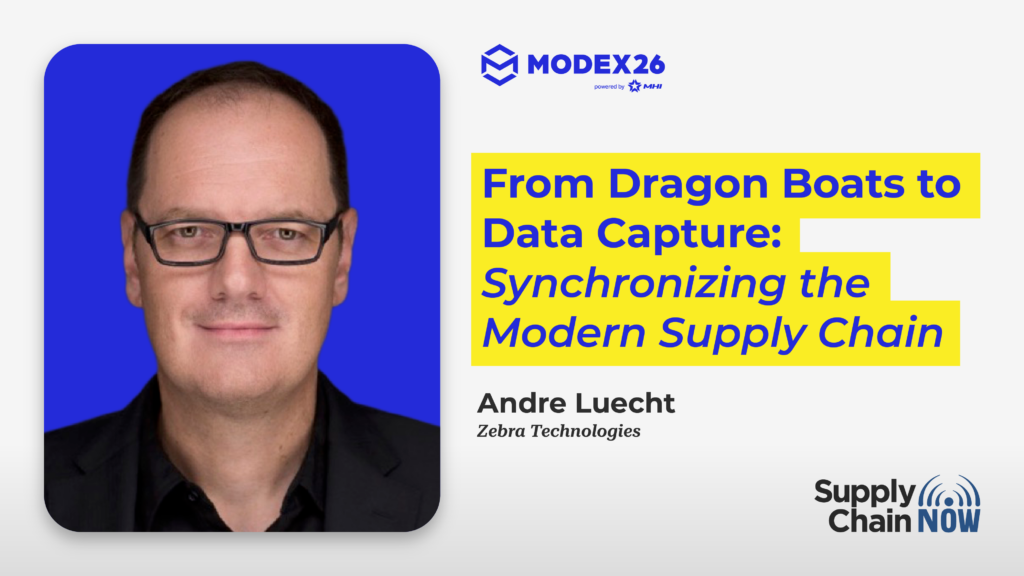
From Dragon Boats to Data Capture: Synchronizing the Modern Supply Chain
At MODEX 2026 in Atlanta, Scott Luton sat down with Andre Luecht, Global Strategy Lead for Transportation, Logistics & Warehousing at Zebra Technologies, to explore how synchronization, visibility, and practical innovation are shaping the next phase of supply chain performance. Interestingly, the conversation began not with technology, but with competitive dragon boat racing, a hobby of Andre Luecht’s that he enjoys in his free time. For Luecht, the analogy is clear: success depends on alignment. “The team that is the most synchronized team is the one that wins,” he explains, a principle that applies just as much to supply chains as it does to sport. Turning Data Into Decisions At the Edge Zebra Technologies has long been known for enabling visibility across supply chains, from barcode scanning to RFID and beyond. But today, the focus is evolving toward something more powerful: decision-making at the edge. Luecht describes a world where frontline workers are empowered with real-time intelligence directly on their devices. “AI… is what you can build into a device in the hand of someone who has to decide what truck a certain pallet goes onto,” he says. This concept, what Zebra calls “frontline AI”, brings intelligence closer to…
supply chain analytics
August 25, 2026
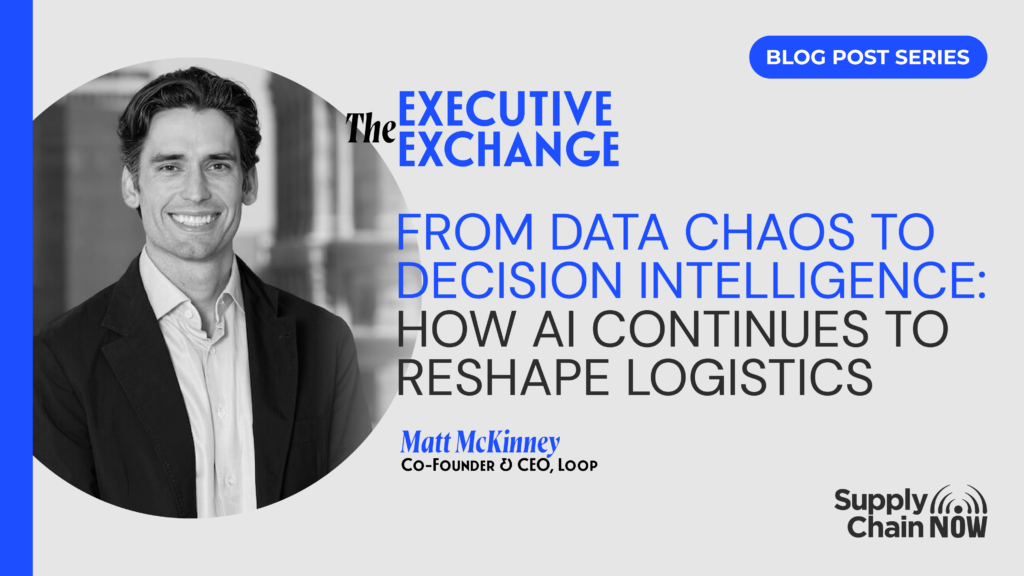
From Data Chaos To Decision Intelligence: How AI Continues To Reshape Logistics
Supply chain organizations have never lacked data. What they have often lacked is the ability to connect it, normalize it, trust it, and turn it into better decisions. That was one of the central themes in a recent conversation between Scott Luton and Matt McKinney, Co-Founder and CEO of Loop. Drawing on his experience helping build Uber Freight and now leading a logistics technology company, McKinney offered a clear-eyed view of where AI is already creating value, as well as why the data foundation still matters more than the model itself. The Real Problem Is Not Data Volume McKinney traces Loop’s origins back to a recurring problem he and his co-founder (Shaosu Liu) saw at Uber Freight: rapid growth on the revenue side paired with a back office still dependent on people manually reconciling invoices, contracts, proofs of delivery, and surcharges. The bigger realization was that this was not unique to Uber. “The thing people miss is that the value isn’t in the quantity of data, it’s in the utility of it,” McKinney explained. “Most companies have plenty of data. What they don’t have is data that connects.” That disconnect is especially painful in logistics, where data is scattered across…